
OTDA Hosts 2026 Winter Conference
Autosphere » Tires »
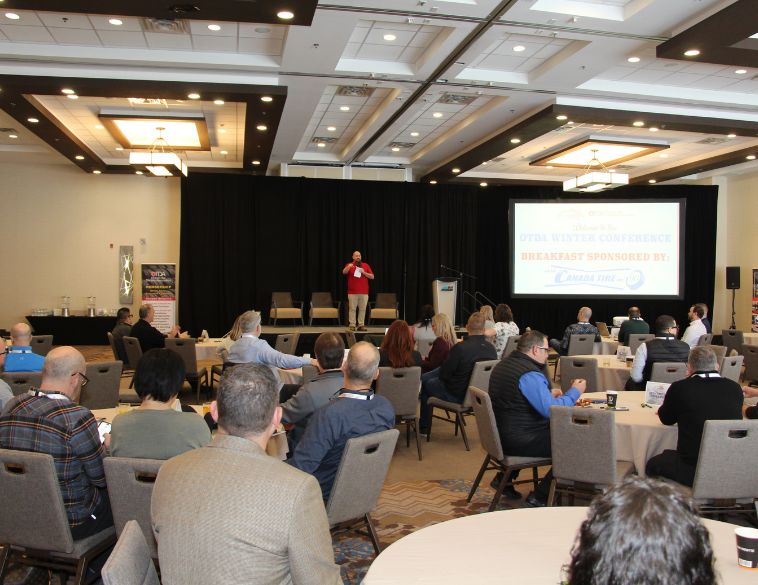
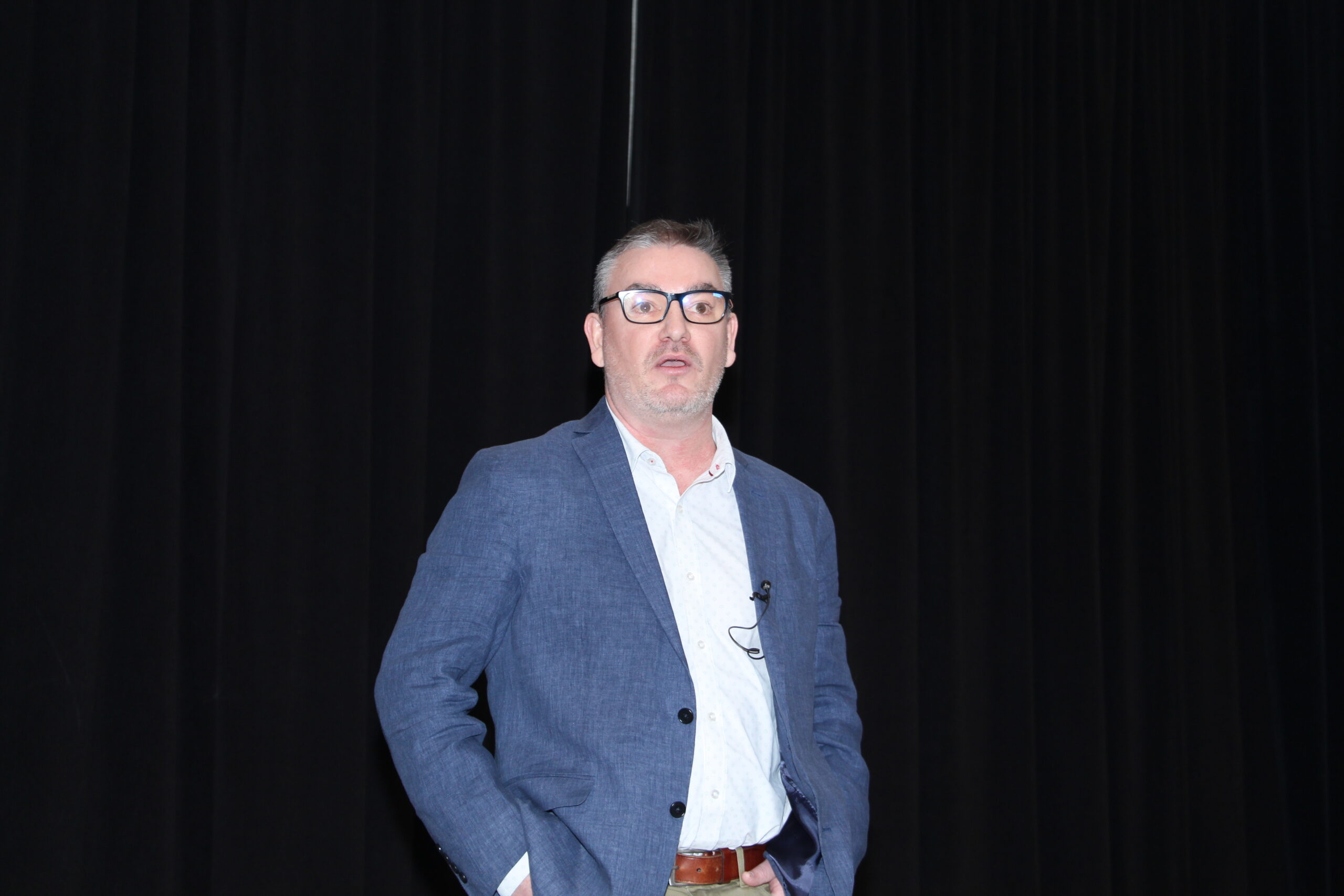
From Feb 5-7, OTDA hosted its 2026 Winter Conference at Blue Mountain near Collingwood. (Credit : Huw Evans)
From February 5-7, the Ontario Tire Dealers Association (OTDA) hosted its 2026 Winter Conference at the Blue Mountain Resort near Collingwood. This event continues to expand, and over 130 attendees registered this year.
Charley Kriksic, OTDA President, and Director of Sales and Marketing at Consumers Tire, welcomed attendees to what proved to be a highly interactive and thought provoking event. In addition to the general sessions and panel discussions, there was a also a vibrant tabletop vendor showcase, providing a great opportunity for those at the event to meet with industry suppliers, conduct business and sample the latest products and services available.
Randy O’Connor from D2D Development Group, delivered an interactive session where he not only talked about the importance and relevance of independent tire retailers in today’s environment, and how they differ significantly from big box locations in the services they can provide and how they engage with their customers.
O’Connor said that the spirit of independent operators is truly unique and it’s something they need to capitalize on despite consolidation, big-box competitors, margin pressures and other factors that are changing the tire retail landscape.
A real opportunity
He noted a real opportunity for independents to work with associations like OTDA that represent their interests and collectively advance the industry forward. He noted that independent operators have a major advantage in that they are often nimble and can enact major changes much faster than large consolidators or big box operations.
He stressed the importance of tire dealers joining 20 Groups, so they can share experiences with other operators and work together to enhance performance and realize different opportunities. A key one is training. During the COVID-19 era, a lot of senior technicians retired from the industry leaving a major gap in knowledge and skills. O’Connor noted that 20 Groups can make a big difference in addressing issues like this, by coming together and developing their own training programs and career progression plans.
O’Connor said that a key issue facing the tire industry, is that the role of a tire technician is not widely recognized and there is no universal standard. That’s why it’s essential for the industry to develop proper career progression plans for young people coming into the trade. He noted that the shops which are taking this approach are seeing massive gains in productivity and retention, though he said, it’s important to have people that are the right ‘fit’ for the organization’s culture and operating environment.
In a Rotating Round Table, O’Connor encouraged the audience to get up and move around the room, introducing themselves to new people and talk about the biggest challenges they currently face and potential ways to solve them. He also said that it was essential that businesses identified toxic people in their workplace and took steps to remove them, even if they might be top performers in terms of numbers.
He also said that in today’s environment, independent tire retailers need to look at diversifying their business to take on more mechanical work and selling parts, in addition to tire sales and installation. “Profitability changes significantly when you start getting into other areas, such as mechanical servicing and parts.”
This year’s highly anticipated Retail Panel was hosted by Charmaine Carvalho, OTDA Board Director and Vice President, Chloride Canada and featured Chris Singleton, President, Niagara Tire and Battery, Levi Latimer Co-Owner, In the Shop Auto Repairs & Sales and Meg Leitenberger, Regional Manager for Tirecraft.
Effective promotion
A key topic of discussion was effective promotion, ensuring that the message is getting out there regarding the services tire retailers offer as well as the opportunities they can provide for young people in having a viable and rewarding career. Leitenberger said there are plenty of opportunities out there for independent retailers to solicit new business, including targeting local small businesses and fleets. “As retailers, we often don’t get out from behind the counter and target these business customers,” she said, noting there’s a real opportunity today, particularly for local operators involved in last-mile delivery—a business that has boomed in the last decade with the growth in online retailing.
Levi Latimer said that growing the number of services your business offers, not only allows more revenue opportunities, but also increases customer retention, since if clients can visit your location for a range of different items, from tire service to rustproofing, accessory installation including items like floor mats, truck caps, bed liners, remote starters, window tinting, as well as vehicle detailing and towing services, it can go a long way to not only making your business a go to location in your community, but also bringing different types of customers.
Effective staffing is also a major factor. Chris Singleton talked about the importance of engaging with local high schools and technical colleges to promote awareness of the tire industry and provide opportunities to bring young people into the business and learn via co-ops and apprenticeships. He said it was important to have people that are eager to promote the business and can excite and engage youth, stressing that it is not just a job but a solid and viable long-term career path.
Latimer and Leitenberger also talked about the tire industry’s perceived image in the eyes of the general public, and how having clean, organized facilities, good amenities and embracing technologies like AI can really elevate that perception. Latimer noted that AI is changing the way in stores can engage with their customers and provides major opportunities to boost retention via consistent follow ups and engagement with clients. When combined with trained, knowledgeable staff and effective processes, the result is a wining combination.
Leitenberger also said that with AI, it was critical to have good, clean data to support the technology, otherwise it can’t be used effectively.
Successful campaign
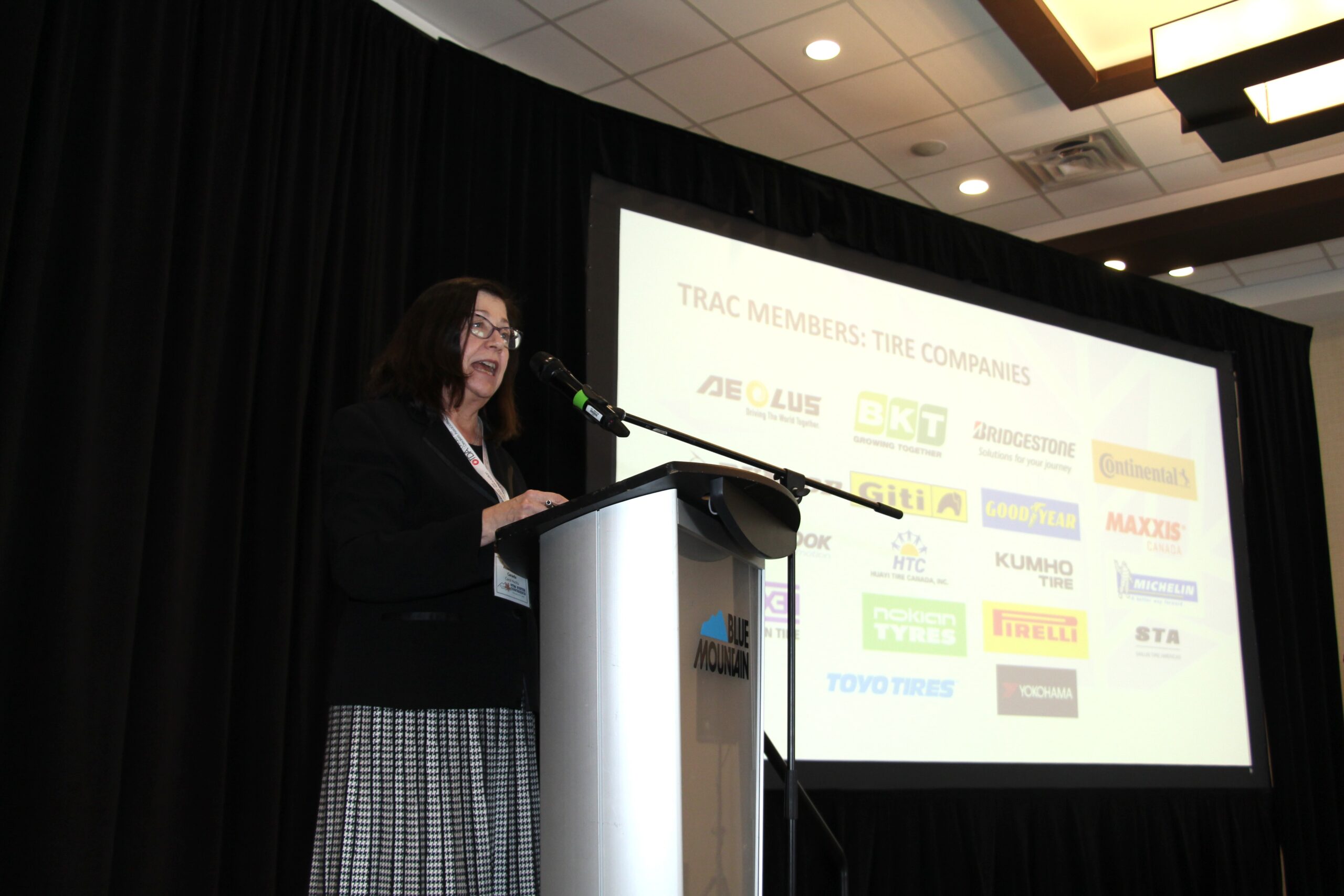
Carol Hochu, President & CEO of the Tire and Rubber Association of Canada (and Autopshere columnist), took to the stage to discuss the results of TRAC’s most recent Winter Tire Campaign, which proved to be highly successful. She said, that winter’s early arrival helped boost the campaign this year, and that today, 80% of Canadian drivers now use winter tires. She said that the key to having a successful campaign is effectively raising awareness, maximizing reach and driving behavioural change. Hochu explained that solid data is essential in supporting effective campaigns, and TRAC has become a go-to-source for tire usage data.
Brett Leggatt from Just Quote Me/Elavon discussed payment best practices, including how shops use their payment terminals, how they train their counter staff, and how they need to have solid payment polices in place, particularly when it comes to combatting fraud, since terminal theft is a significant and growing problem.
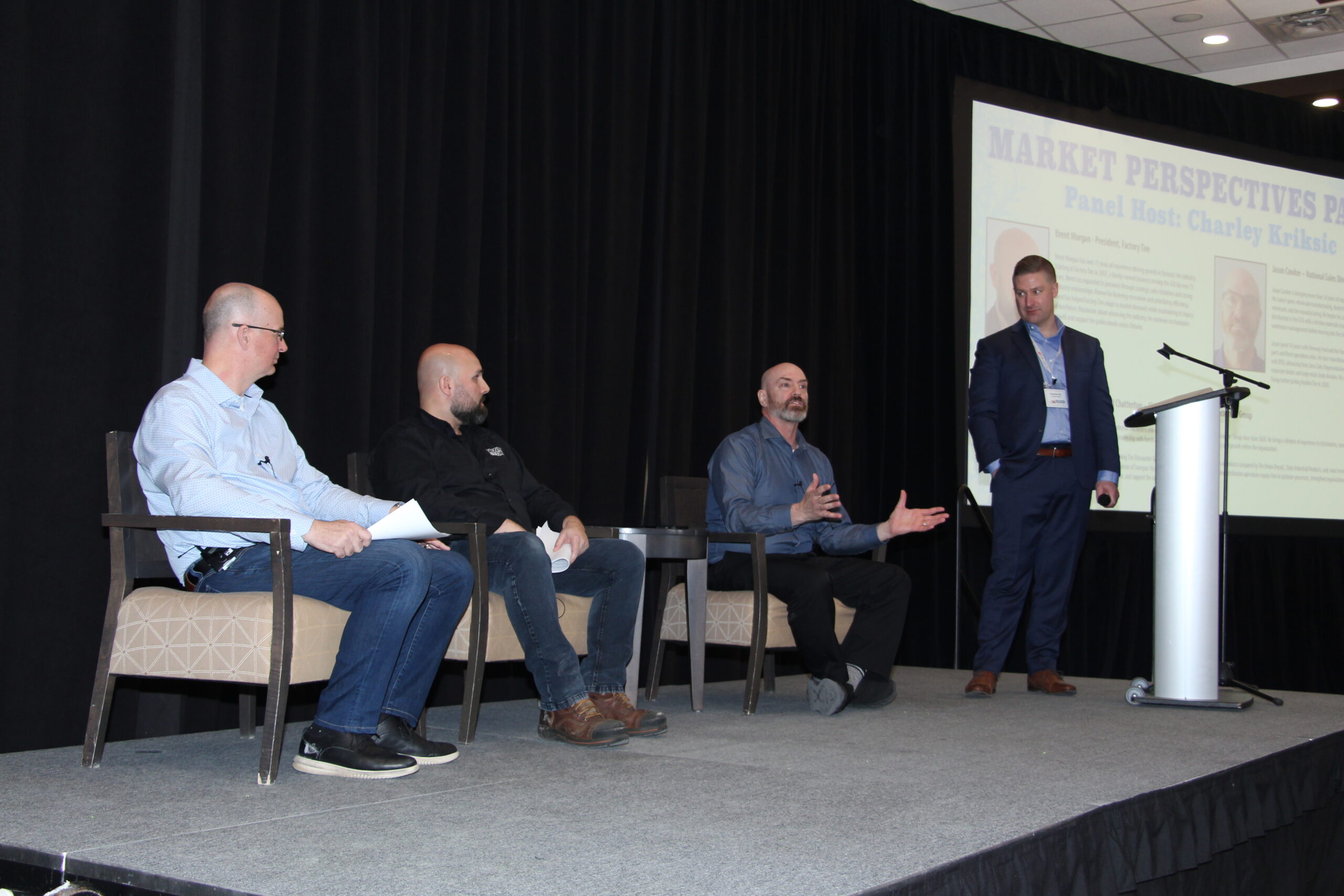
The second panel of the day featured representatives from the manufacturing, distribution and retailing sides of the tire industry. Taking to the stage were Brent Morgan, President, Factory Tire (retailer), Paul Chatterton, COO Tire Discounter Group (distributor) and Jay Cawker, National Sales Director, Canada, for Kumho Tire, with Charley Kriksic serving as moderator.
SKU proliferation is a trend that’s accelerated over the last decade as more unique sizes and fitments have been introduced. While it can seem challenging to maintain supply for so many different tire fitments, Cawker said that for manufacturers, distributors and retailers there are opportunities to own the market in unique sized tires, some of which are found on relatively popular vehicles.
Cawker also discussed the increasing number of All-Weather tires hitting the market, that are marketed as an alternative to true winter tires and traditional all-seasons. From his perspective, Cawker said that in most cases, tire retailers should stick to offering traditional winter tires and all-seasons, stressing that in many parts of Canada that experience true winter conditions, all-weather tires are too much of a compromise and by offering them, tire retailers aren’t necessarily helping themselves, nor their customers. It all comes down to knowing your market and understanding your customers true needs.
Morgan noted that effective marketing is also becoming ever more important, especially given current market conditions and price pressures. Digital marketing needs to be targeted and relevant to the audience, and messages need to be properly aligned with staff able to answer any questions. This becomes particularly important, given that today’s customers are armed with a wealth knowledge and are looking for answers the second they engage with a tire retailer.
Pricing considerations
On the pricing front, the panelists all concurred that right now, things are challenging. The current high tax and high tariff environment is impacting the entire supply chain and there have been noticeable trends in consumers looking at lower tier offerings when it comes selecting their next set of tires. Jay Cawker noted that tier shifts can be very difficult for retailers, leading to a range of problems, notably margin squeeze. His suggestion was to try and maintain margin on the product as much as possible, and look at subsidizing in other areas of the business, particularly during volatile economic periods like that which the industry is currently experiencing.
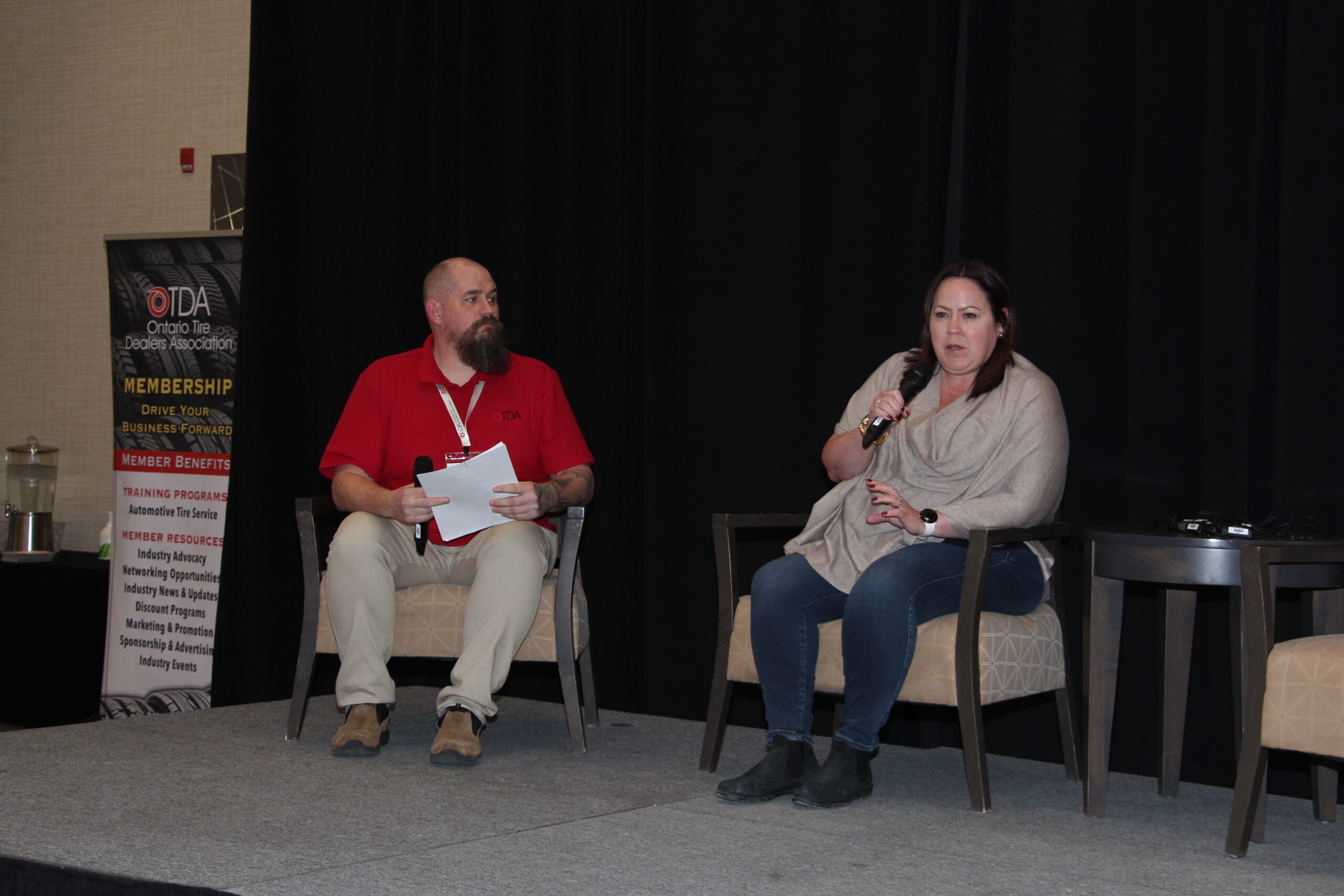
A key topic currently impacting the tire sector in Ontario, is recycling, and Adam Moffatt, Executive Director of OTDA, sat down with Mary Cummings from RPRA (Resource Productivity and Recovery Authority) to discuss the current regulations regarding recycling. Cummings said, that currently, RPRA can only enforce existing regulations, and that haulers need to register with RPRA in order for producers and processors in the province to be able to work with them.
The current regulations with the 65 percent% threshold target have been raising significant concerns over the last few years, as processors reached their required limits for recycled tires faster, leaving growing stockpiles, while consumers are still having to pay environmental fees for tires that aren’t being properly disposed of.
OTDA continues to raise awareness on the issue, and is engaging with government, regulators and the industry to find a workable solution. For more details on this subject, take a look at Autosphere’s interview with OTDA Executive Director Adam Moffatt here.













JOBS
 |  LAVAL LAVAL Permanent Permanent |
 | MONTRÉAL Full time |
 | LAVAL Full time |
 | JOLIETTE Full time |
 | MONT-ROYAL Permanent |