
Custom Solutions
Autosphere » Tires »
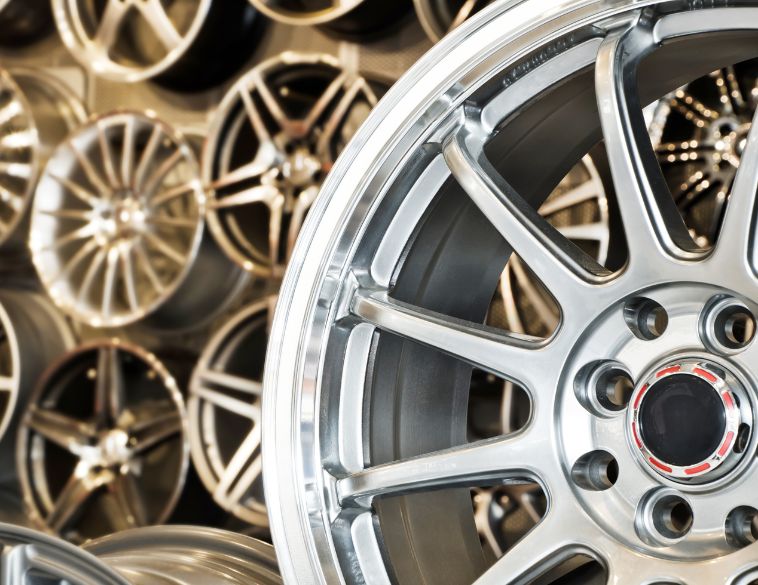
Aftermarket aluminum rims are becoming increasingly popular for both summer and winter driving. (Credit : Shutterstock)
Attention to details is key when upgrading a customer’s tire/wheel package.
Twice a year, many Canadians swap out their wheel/tire assemblies in preparation for the season ahead. While some stick with their OE rims and original tire sizes, others prefer to upsize or downsize, depending on the time of the year.
Consider the variables
In most cases, the swap is a no-brainer and easy to do. In other cases, tire retailers need to keep several important variables in mind. “When upsizing and downsizing, the overall rolling diameter has to be within 3%, plus or minus,” explains Robert Zylc, President of WheelWiz.ca, a Montreal-based online tire and wheel retailer. “That’s very important.”
That said, Zylc notes that some customers want to go for a much bigger diameter, and that’s perfectly fine, just so long as you can compensate. He offers the example of truck owners who want to upsize their tire and wheel packages to extreme levels.
“In these cases, you’ll need a tool that plugs into the OBD II port to recalibrate the truck’s computer and tell it what the new rolling diameter will be with the lager tire and wheel package installed,” he explains. “With the computer updated, the speedometer will read correctly.”
Downsizing for the winter
Not every customer will want an oversized tire/wheel package. In fact, many prefer to downsize for the winter season. “Someone might be driving a vehicle that rolled off the dealer’s lot with 20-inch rims, but they decide to downsize for the winter, either because they don’t want to spend thousands on a winter package, and because they don’t want low-profile tires for winter,” Zylc says.
Zylc might recommend that this customer invest in an 18-inch wheel/tire package for the winter, especially if they’re planning to keep their vehicle for another five years or so. “Five years is the breakeven point,” he says, “when you factor in spending maybe $150 twice a year to get tires removed and installed on a single set of rims.”
Downsizing for the winter season also means that the winter tires will have a taller sidewall, Zylc adds. “So, if you hit a pothole or a road hazard, the tire has a bit more give than you’d get with a low-profile tire on a larger rim. This will reduce the chances of damaging the tire or the rim.”
Depending on the vehicle, Zylc typically advises his customers to downsize an inch or two, although some will downsize by as much as three or four inches. However, he warns that a three- or four-inch difference will impact the performance and handling of a vehicle.
“Some of our customers will downsize on the conservative side,” he adds, “while other customers want the least expensive option available, and will choose to downsize as much as they possibly can.”
Steel vs. alloy
With every new tire package comes the age-old question: steel or alloy. Zylc says that the vast majority of his customers opt for alloy. “Steel wheels have their place,” he admits, “but only about one out of every 20 orders includes steel wheels.”
Zylc notes that consumers who are very price-oriented, or on a tight budget, tend to opt for steel wheels. “There’s nothing wrong with a steel wheels,” he adds, “but in terms of a long-term investment, steel wheels can corrode and rust, even though the paint and the coatings on steel wheels have gotten better.”
He says that when consumers are already paying for a set of new tires and rims, the price difference between steel wheels and alloy wheels isn’t that big. “For that extra bit of money, they usually get the alloy wheels, knowing that they’re not going to rust,” he adds.
Although the lifespan of an alloy wheel is typically a lot longer than a steel wheel, Zylc notes that how long a wheel lasts depends on where a customer lives and drives. In parts of Canada where sand is spread on roads instead of salt, for instance, wheels tend to last longer.
Upgrading EVs
Electric vehicles are heavier than their ICE counterparts, which means they need tires and rims that can handle the extra weight, and that’s a key consideration when your customers want a new tire/wheel package.
“The load rating is the key consideration,” Zylc says, “but to be perfectly frank, most tires on the market already meet and exceed those standards, so it’s not a major consideration, although we always double-check when fulfilling an order.”
On the other hand, he adds, when it comes to alloy wheels, the load rating is a key consideration that retailers must pay particular attention to. “We want to make sure that the gross axle rating of the vehicle does not exceed the load capacity of the wheel,” he says.
He explains that the aftermarket wheel industry needs to catch up, when it comes to ensuring that the load ratings of aftermarket rims are sufficient for the vehicles that those rims can fit on.
“As an example, an alloy wheel part number can potentially fit 60 different vehicles,” he says, “but if 10 of those are electric vehicles, and five of those are heavy, then they need to make sure that the load rating meets or exceeds the gross weight capacity of those vehicles.”
High-end vehicles
If you’re catering to the needs of very high-end customers who drive exotic vehicles, Billy Lau, President of Tires 23, a tire and wheel retailer with two locations in the Greater Toronto Area, offers the following advice.
“Some of these vehicles have carbon ceramic brakes and very big calipers, so clearance is an issue,” Lau says. “That means you won’t be able to sell them off-the-shelf wheels. Their only option will be custom wheels.”
Lau says that when a customer comes in with a Lamborghini Urus, or even a Porsche Cayenne Turbo S, he knows he won’t be able to sell them anything he might have in stock.
“These vehicles can have massive eight-piston callipers,” he adds, “so they need custom rims that will fit. The problem is that custom wheels normally take between eight to 12 weeks to deliver, and people with money don’t want to wait that long. They want their rims now.”
Lau points out that these custom rims are often in stock and ready to ship with retailers in places like Miami or Los Angeles where the market for exotics is much bigger. So many of these customers are willing to order their wheels from the U.S., pay the taxes and tariffs, and get their wheels now.
Fortunately for Canadian retailers, that’s only a tiny part of the overall market. Most consumers here in the great white north are content upsizing and downsizing by an inch or two as they prepare for the season ahead.

JOBS
 |  DORVAL DORVAL Full time Full time |
| ST-HUBERT Full time |
 | MONTRÉAL Permanent |
 | SASKATOON Full time |
| MONTRÉAL-NORD Permanent |