
A “Shift” in Demand
Autosphere » Tires »
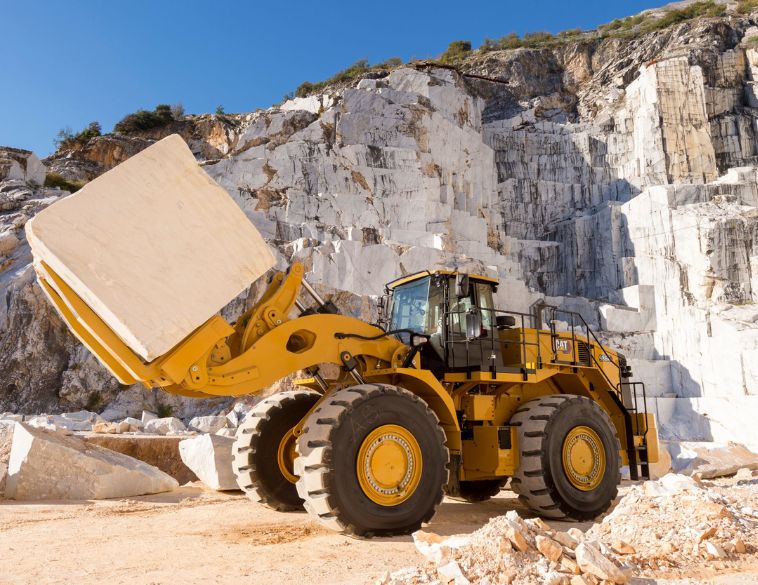
OTR demand continues to grow in Canada. (Credit : Caterpillar)
Today’s OTR tire customers are looking for performance, value, and support.
Although the OTR tire market has definitely been affected by tariffs and the subsequent economic pressures, the news isn’t as grim as some might have predicted. The experts we spoke with admit that there’s a definite “shift” in OTR tire demand. However, there are many reasons to remain optimistic about the future.
“The OTR tire market in Canada is experiencing notable shifts,” says Robert Vetter, VP Sales Eastern Canada, Huayi Tire Canada / Double Coin. “Due to tariffs being imposed on many other countries, more tire manufacturers are redirecting supply into the Canadian market. This has temporarily increased tire availability and, in some cases, eased pricing pressure. However, for buyers, this influx of new and unfamiliar suppliers has created uncertainty regarding product quality, warranty coverage, local technical support, and long-term supplier relationships.”
Vetter says that while gold and critical mineral mining are helping to steady demand, weaker commodity prices for coal and certain base metals continue to delay some expansion projects, which has an impact on demand. “Overall, the market remains active, but buyers are exercising greater caution in their procurement, focusing on supplier reliability, consistency, and after-sales service as key decision-making factors,” he adds.
James McIntyre, VP Sales at MAXAM Tire says that we’re seeing a strong shift toward value-priced OTR tires in Canada. “Higher value brands are leading growth, and customers have become much more familiar, and comfortable, with newer brands that didn’t exist 15 to 20 years ago,” he explains. “Price sensitivity remains high, but buyers are increasingly confident in the performance and reliability of these emerging options.”
The good news, he adds, is that we are seeing demand for OTR tires in Canada remain strong, largely because mining and heavy-equipment activity are still good.
“At the same time,” McIntyre says, “trade/tariff dynamics are creating opportunity: U.S. export restrictions and tariffs are prompting manufacturers to seek alternative markets, and value-brand tire suppliers are becoming more aggressive in Canada. In short, demand fundamentals are good, and the competitive landscape is shifting—especially in the value tier.”
Gregory Pickering, Product Segment Manager, Non DOT at Dynamic Tire agrees. “Despite a broader industry focus on cost reduction, demand for tires within our tier continues to rise,” he says. “As customers seek to manage expenses and slow down overall tire spending, many are turning to reliable, cost-effective solutions that still meet the performance demands of their operations.”
Key trends
Pickering says that Canada’s OTR tire market is undergoing a noticeable transformation, driven by evolving customer demands and technological advancements.
“One of the most prominent shifts,” he adds, “is the move away from traditional tire sizes toward larger 65-series options. Sizes such as 650/65R25 (replacing 20.5R25) and 875/65R29 (replacing 29.5R29) are gaining traction, offering enhanced performance and durability.”
Another key trend is the increasing prevalence of higher star ratings. Applications are progressing from two stars to three or even four stars, depending on the tire size and operational requirements. “This reflects a growing need for tires that can support heavier loads, higher air pressures, greater torque, and faster speeds—all while maintaining reliability under demanding conditions,” Pickering adds.
Another notable trend: Winter radial OTR tires, once seasonal, are now being used year-round. “Previously swapped out in the spring, these tires are now kept in service to reduce changeover costs and minimize inventory requirements,” Pickering explains. “This shift has been made possible by significant improvements in rubber compounding technologies, allowing winter tires to perform effectively across a broader range of conditions.”
As far as demand for certain OTR tires is concerned, Huayi Tire’s Vetter notes that the Canadian mining sector is experiencing mixed conditions. “Gold and certain critical minerals are driving vigorous activity and equipment demand, while other commodities, such as coal and base metals, are seeing slower momentum, due to weaker pricing and global economic uncertainty,” he says. “As a result, some expansion and capital projects in the precious-metal segment are moving ahead aggressively, while others are being delayed or scaled back.”
Customer demand
With all these changes taking place, tire retailers may be wondering what OTR tire customers are looking for when shopping for replacement tires in 2025, and beyond.
According to MAXAM’s McIntyre, that really depends on the size of the company. “Smaller contractors are mostly driven by the up-front price because their workload is unpredictable,” he states. “They buy what gets them through the current project. Larger fleets, and mining operations, are much more focused on durability and cost-per-hour/ROI, since downtime and tire life have a big impact on their operating costs. So price matters, but value and performance drive the bigger accounts.”
Dynamic Tire’s Pickering agrees. “While pricing remains a critical factor in tire selection, today’s customers are increasingly focused on value, specifically, cost-per-32nd-of-tread, or cost-per-hour of operation,” he says. “Reliability is essential, as tire performance directly impacts uptime and operational efficiency, but value goes beyond the tire itself. Customers are looking for added support through local sales representation, accessible inventory, and products engineered for the unique conditions found across the Canadian landscape.”
Huayi Tire’s Vetter says that OTR tire buyers have always been focused on finding a product that performs reliably in the specific application it’s used for. “The key metric remains the cost-per-hour, which significantly impacts the overall operating cost of the tire,” he adds. “When comparing different designs, compounds, and constructions, a lower cost-per-hour typically reflects better durability and performance.”
He agrees that quality service is key in this segment of the tire industry. “Buyers also place strong emphasis on local support, technical service, and consistent supply, as these factors ensure uptime, quick replacements, and long-term operational reliability,” he says. “In short, performance, value, and dependable support are the top priorities for OTR tire buyers.”
In The Spotlight
Double Coin REM-2S
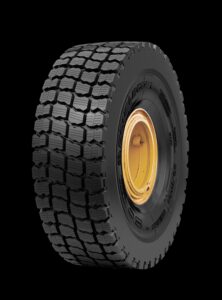
Dynamo Extreme Grip II
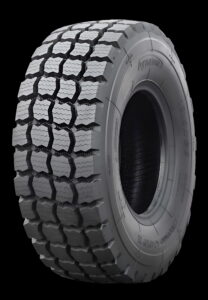
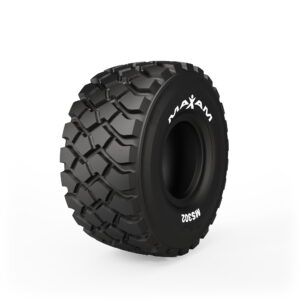
MAXAM MS302


JOBS
 |  DORVAL DORVAL Full time Full time |
| ST-HUBERT Full time |
 | MONTRÉAL Permanent |
 | SASKATOON Full time |
| MONTRÉAL-NORD Permanent |