
How Pirelli Prepares Tires for Formula 1 Races
Autosphere » Tires »
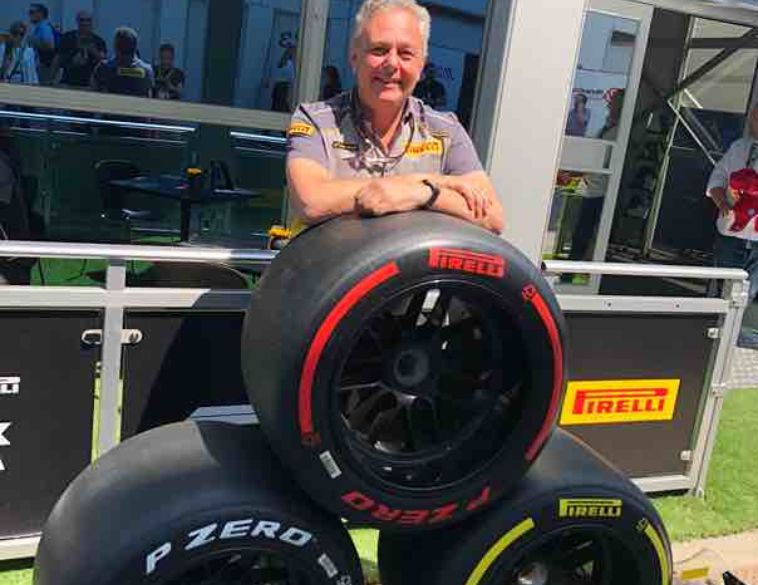
We’re stepping off the beaten path in this issue to showcase a workshop like no other—the one run by the Pirelli team responsible for supplying and preparing tires for Formula 1 teams.
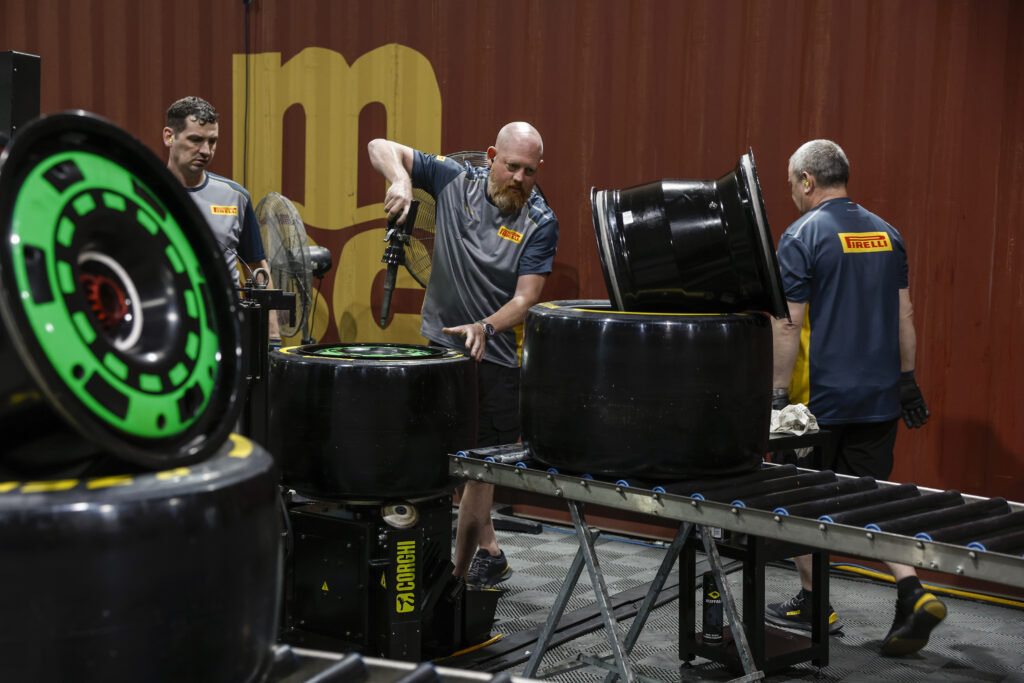
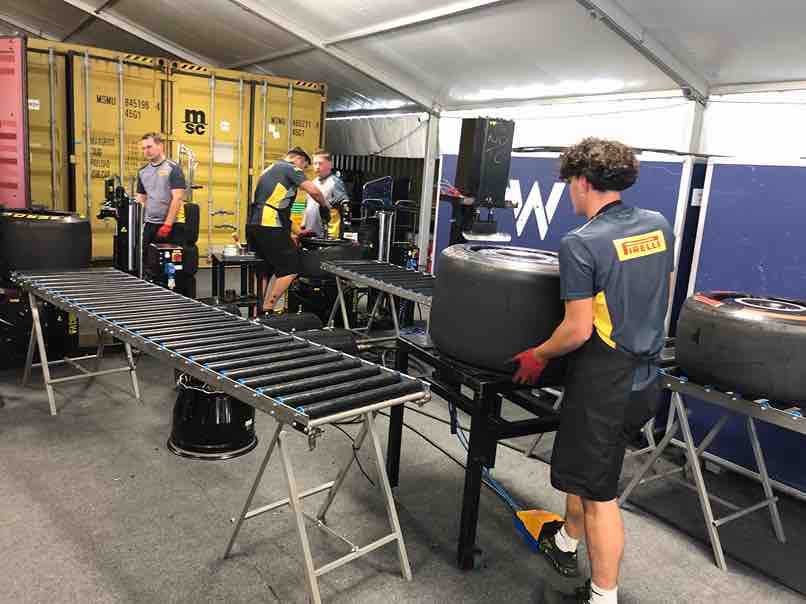
It was during the Canadian Grand Prix, held in Montreal on June 15, that Autosphere had the privilege of visiting the facility where some 1,800 wheels were prepared for the race, thanks to a generous invitation from the event’s exclusive tire supplier, Italian manufacturer Pirelli.
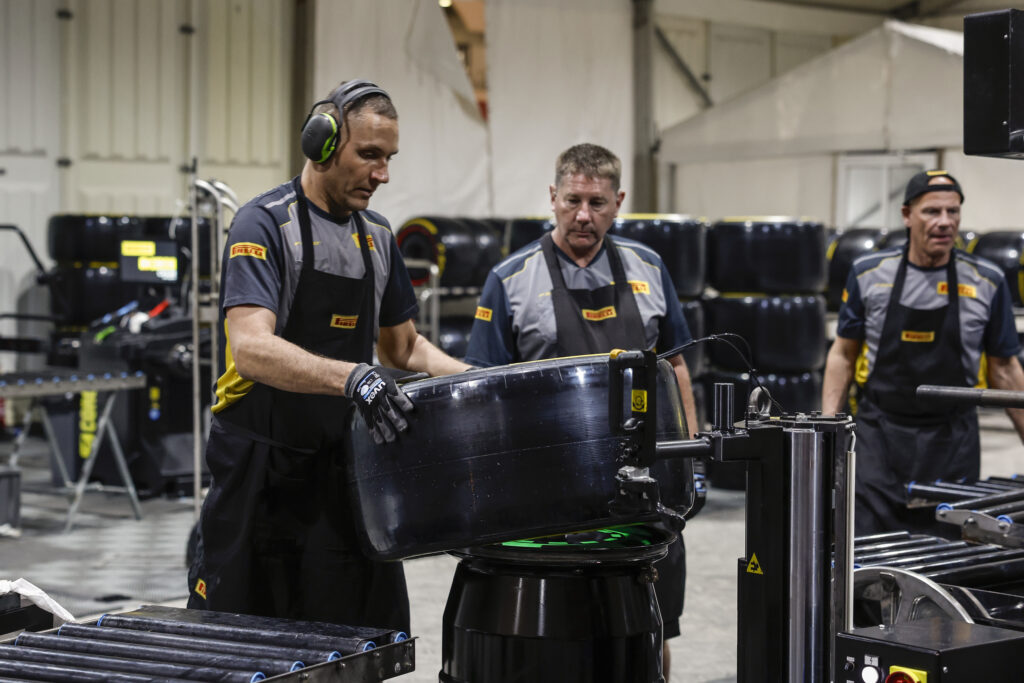
Roughly twenty technicians are assigned to prepare these tires for every Grand Prix. This elite, highly trained travelling team follows the 24 circuits of the Formula 1 championship around the globe. Like the race teams themselves, Pirelli rarely relies on local talent, instead deploying technicians trained to meet its strict requirements.
When it comes to the tires, this high-flying crew must prepare about 1,800 wheels in just a day and a half. “And every one of those wheels must be absolutely identical,” explains Mario Isola, Head of Pirelli Formula 1, whom we met in the Pirelli paddock, located in an annex at Circuit Gilles-Villeneuve, the day before the big Montreal event. The Fédération Internationale de l’Automobile (FIA), which oversees motorsport competitions, keeps a close eye on compliance. For instance, a unique barcode is applied to each tire to ensure full traceability.
All the same
Each team receives a set number of tires—typically about twenty sets—divided into slicks, intermediates, and wets.
The rims are supplied by a single manufacturer approved by the FIA, meaning they must be the same for all teams to ensure no one gains an advantage. Teams are responsible for transporting their own rims, so if one is damaged during shipping, they must provide a spare. Extra rims are also on hand in case of damage from on-track incidents. The tire preparation team receives all the rims before the weekend so they can start mounting on Wednesday.
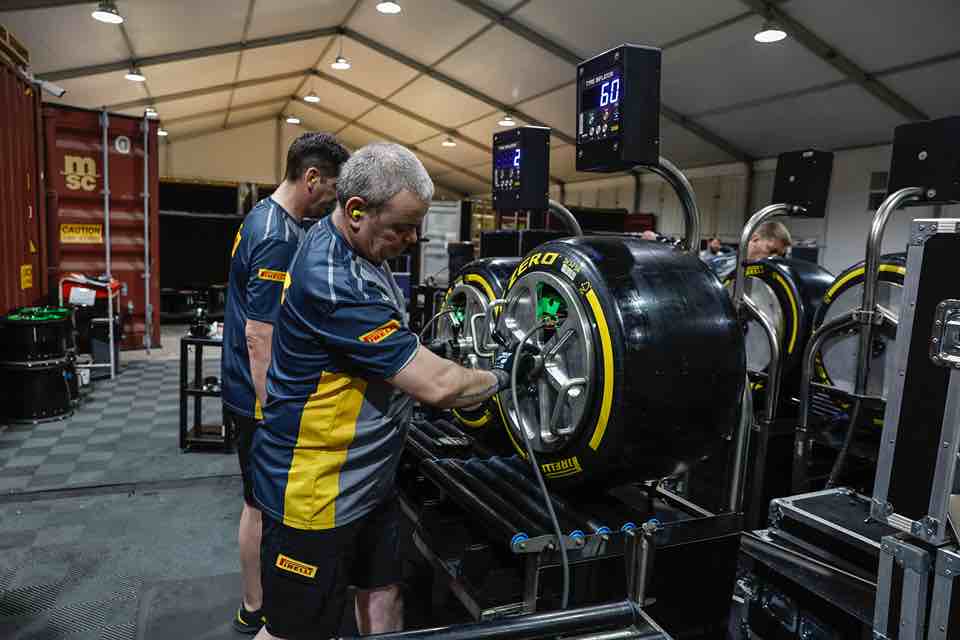
“The P Zero tires, which Pirelli is contracted to supply to the FIA through 2027, are built to very specific standards. During mounting, the tight proximity between the brakes and the rim requires a great deal of skill,” explains Isola. Balancing is also a step that demands extreme precision. Just imagine a wheel that’s out of balance on a car going over 330 kilometres per hour down a straight in Montreal!
Familiar but modified equipment
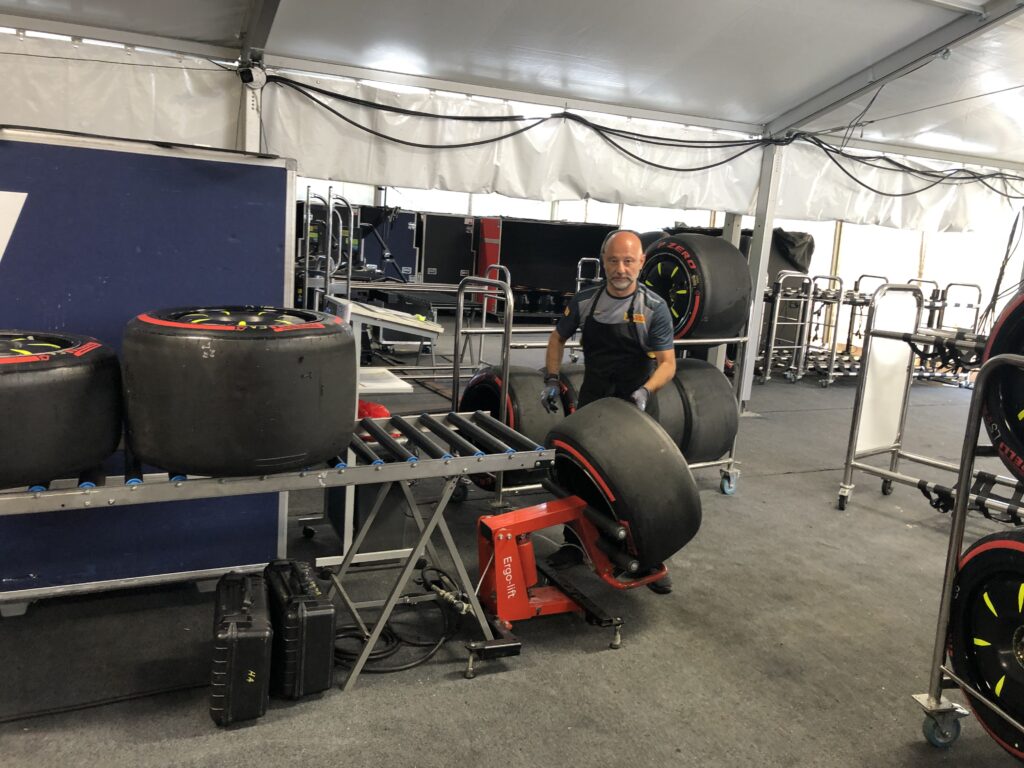
All this precision work is carried out using equipment that many of our readers in tire and service shops would recognize. Some adjustments have been made to the machines to accommodate the 18-inch rims and the unique profile of these ultra-performance tires. Ergonomics are a major focus when it comes to tire prep. With 1,800 wheels to mount in less than two days, the pace is intense, and that’s where pneumatic lifts and roller conveyors come in handy.
The dimensions of the tires are defined by the technical regulations, as the Pirelli technical team points out. They are inflated with dried air, but the teams can substitute nitrogen in their own garages, provided they meet precise specifications.
It’s worth noting that the rear tires are wider, offering a larger contact patch on the rear axle, which improves grip, acceleration, and vehicle stability. Most of the downforce generated by the race cars is also supported by the rear axle.
Technology transfer
Isola also emphasizes that Formula 1 tires developed to withstand these aerodynamic loads are helping pave the way for solutions in electric mobility. Reinforcing the sidewall structure to support heavier loads is a prime example of how racing technology trickles down into retail tires for EV drivers.
Both during qualifying and in the race itself, tire management strategies are critical. A poor decision based on track conditions can have serious consequences. Pirelli assigns an engineer to each team. These engineers monitor tire performance in real time and also share insights on tire condition with the teams. “We agree in advance on what our engineers are allowed to share in the paddocks, again in the interest of fairness,” says Isola.
Formula 1 teams are consulted when developing new tire generations, especially when the FIA modifies certain requirements. “We listen to everyone because they all have their preferences, but it’s the FIA that makes the final call to avoid favouritism.”
From virtual to real
The latest version of the P Zero tires designed for Formula 1 involved the creation of 70 virtual prototypes, tested over 5,000 hours on simulators. This process resulted in 30 physical tires, which were then validated on the track by the race teams. “This approach allows us to be more environmentally responsible,” notes Isola. On that subject, he points to the sidewall of the P Zero tire used in the championship. For this season, and through at least 2027, the tire bears the FSC logo. This certification confirms that the natural rubber used in the tire meets the FSC’s stringent standards for sustainable forestry.
After the race, the Pirelli team takes back all the wheels, removes the rims—which are returned to the teams—and places the used tires in a shipping container. They are sent to Pirelli’s facilities in England, where they are recycled, much like we do here in Quebec with end-of-life tires.
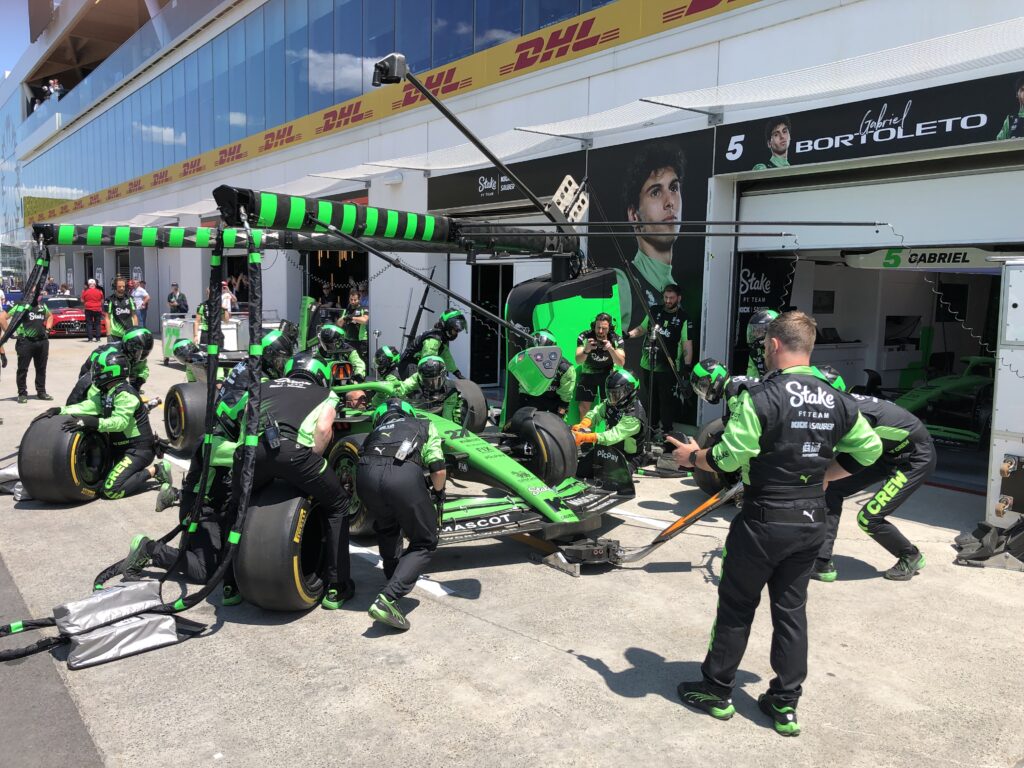
The tire preparation work continues in the teams’ paddocks. Every chance they get, team technicians practice pit stops and tire changes. With pneumatic wrenches in hand, they welcome the car. Zip zip zip zip, zip zip zip zip—and it’s done. An impressive display of coordination that can make or break a race.
It’s clear that every team works with the exact same tire lineup. That means every decision about which compound to use based on track conditions or when to make a tire change can tip the scales. The rest is up to the driver.
Pirelli shines at these events. Its branding is displayed everywhere on the circuits. That visibility and high-tech image are invaluable, which is why the Italian manufacturer invests so heavily in research and development to retain its position as the exclusive tire supplier for the Formula 1 World Championship.

JOBS
 |  DORVAL DORVAL Full time Full time |
| ST-HUBERT Full time |
 | MONTRÉAL Permanent |
 | SASKATOON Full time |
| MONTRÉAL-NORD Permanent |