
Are Cars Designed for Easy Maintenance?
Autosphere » Dealerships » Car Dealers »

Vehicle design aims to simplify maintenance, though it isn’t always successful. Credit: Daniel Rufiange
When an automaker designs a new vehicle, do they consider repair costs and the impact on owners? Do they truly care, or do they deliberately prioritize complex designs and material choices that will drive up repair bills?
It is a valid question, as the one constant we observe is the ever-increasing cost of automotive repairs. We looked into this issue and spoke with several manufacturers to get their perspective.
Do Manufacturers Think About Consumers?
The answer isn’t simple. Automakers must meet current government standards, which have pushed safety to the very top of their priority list. However, this safety comes at a price—whether we are talking about airbags, collision detection systems, or crumple zones designed to absorb impact.
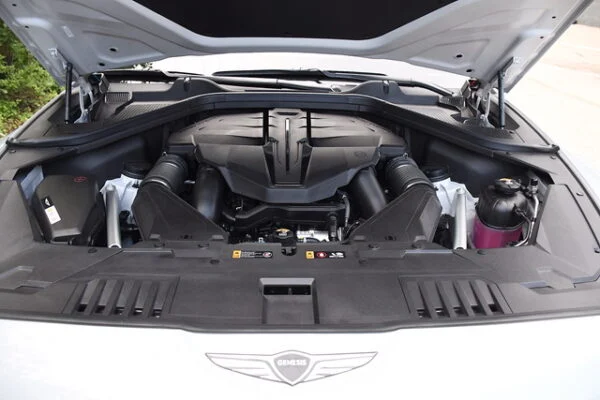
At Stellantis, we were provided with a formal response: “Stellantis is committed to designing vehicles that are safer, more durable, and more affordable. Our Advanced Services and Service Engineering teams work alongside product development to integrate the ‘voice of the customer’ and the ‘voice of the technician’ at every stage of vehicle design. These teams evaluate component layout and routine maintenance procedures to ensure that repairs can be performed efficiently and without unnecessary complexity. The goal is to reduce repair costs throughout the vehicle’s lifecycle.
“The intent is clear, but reality can be different. At Toyota, we spoke with Scott McKenzie, Director of Corporate and Government Affairs at Toyota Canada. He shared some interesting insights. For instance, if a manufacturer like Toyota opts for a door molding costing $8 instead of $4, they are forced to spend more because they must keep that part in stock for potential future repairs.
The industry standard for parts support is 10 years. Internal calculations are made to determine how many parts must be kept in inventory based on failure or replacement statistics; manufacturers build their reserves from these results. If, after 10 years, a manufacturer is stuck with remaining stock, they absorb that cost. The choice goes beyond initial pricing.
Therefore, it is not automatic to assume that a more expensive part results in a guaranteed profit for the manufacturer. Furthermore, the choice of a specific molding may have a positive effect on the model’s styling, which can help drive sales. In such cases, that molding will be chosen regardless of its price.
When Technology Complicates Things
Thirty years ago, replacing a vehicle’s headlight cost between $20 and $40. Today, with features like adaptive headlights, the bill can reach several thousand dollars. A minor fender bender that once required a simple part replacement or minor bodywork—a $100 or $200 affair—can now result in a total loss. Small collisions that damage a vehicle’s sensors can lead to repair costs of $10,000, $15,000, or even $20,000. If the model is new, the insurer will proceed with the collision repair; however, if the vehicle is five years old, the high repair cost will force it to be written off and sent to recycling.
The rise of onboard electronics has significantly increased the potential for planned obsolescence. Modern vehicles contain between 80 and 100 electronic control modules. This complexity allows manufacturers to implement digital barriers for reasons relating to security, compliance, and control of the repair ecosystem. Concrete examples are everywhere: some models require the removal of protective undertrays for simple operations or necessitate specialized tools for basic maintenance.
Electric vehicles (EVs) risk worsening this situation. While they have fewer moving parts, certain repairs—particularly those related to the battery or the structure—can be significantly more expensive.
A study by J.D. Power reveals that owners of EVs and plug-in hybrids take their new vehicles to the dealer for repairs significantly more often than owners of gas-powered vehicles. Batteries in these models add a new dimension to the problem. When an EV battery is no longer covered by warranty and needs replacement (it should be noted that protection typically lasts eight years), the replacement cost can, in some cases, exceed the value of a comparable used vehicle.

Planned Obsolescence: An Old Practice
Planned obsolescence, mentioned earlier, remains the elephant in the room. The concept dates back to the 1920s, when Alfred P. Sloan of General Motors introduced annual model changes to encourage consumers to want “something a little newer, a little better, a little sooner than is necessary.” This strategy, which began with aesthetics, has evolved into something more insidious over recent decades.
A major turning point occurred between 2000 and 2010, when manufacturers realized that a significant portion of the market was content with leasing vehicles for three to five years, and that the number of motorists capable of performing their own maintenance was in decline. In response to these trends, vehicles became more complex to service, which encouraged shop-based interventions.
According to data from the National Automobile Dealers Association (NADA), service and parts represent only 12% to 15% of a dealer’s revenue, but generate 49% to 50% of its gross profit. The mechanics are clear: new vehicle sales feed the true source of profit—the service department.
Faced with this reality, a legislative movement has emerged. Massachusetts was a pioneer in 2012 with a Right to Repair law approved by 86% of voters. France adopted laws banning planned obsolescence in 2015. Quebec followed suit in 2023. In the United States, the “REPAIR Act” was introduced in 2025 to ensure that vehicle owners and independent shops have access to the same diagnostic data as authorized dealer networks.
Conclusion
Who truly benefits from high repair costs? The answer isn’t simple. It is understood that dealers and repair shops must make a profit, as must the manufacturers. The question is where the fine line lies between what is reasonable and what is outright abuse. In the eyes of consumers, we are clearly in the second scenario. Some repair costs are simply ridiculous, which ultimately drives up insurance premiums. Once again, it is the consumer who pays.
All of this brings us back to our initial question: who is to blame?



JOBS
 |  DORVAL DORVAL Full time Full time |
| ST-HUBERT Full time |
 | MONTRÉAL Permanent |
 | SASKATOON Full time |
| MONTRÉAL-NORD Permanent |