
Same Objective, Different Conversation
Autosphere » Mechanical »

Mike Urban, Owner Operator, Urban Automotive, Oakville, Ont. Credit: Mike Urban
Asking what your technicians and staff need from you, instead of what you need from them.
As independent shop owners, we’re obsessed with numbers. Billed hours, technician efficiency, average repair orders, labour sales, gross profit and car count. We track them, measure them, compare them and, if you’re anything like me, occasionally lose sleep over them.
I recently found myself staring at our shop’s productivity numbers, wondering why we weren’t achieving the results I knew we were capable of. Same employees, same equipment, same eight-hour workday. So naturally, like most business owners, I started looking at what my employees could be doing differently.
Sounds reasonable, doesn’t it?
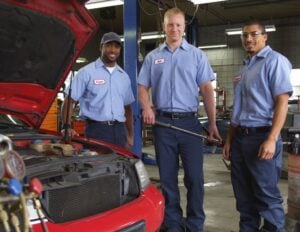
Uncomfortable thought
Then I had an uncomfortable thought: What if the biggest obstacle to improving productivity isn’t actually the employee? What if I’m the problem? Well, that’s certainly an inconvenient possibility!
It occurred to me that I was asking questions based on what I wanted from my employees, rather than asking what they needed from me.
There’s a significant difference between asking someone, “How can I make you more productive?” and “What could we change to make your job easier and help you feel more accomplished at the end of the day?” Same objective. Completely different conversation.
I’ve always believed that our employees should go home feeling they’ve accomplished something, not simply that they’ve survived another eight hours of controlled chaos. If we’re making their jobs unnecessarily difficult, what exactly are we accomplishing as leaders?
“We see lost productivity. They see lost opportunities to be productive. And somewhere in the middle, we’re both frustrated.”
– Mike Urban
From the other side of the toolbox
As owners, we look at a technician’s efficiency report and wonder why an eight-hour day only produced five or six billed hours. Meanwhile, that technician might have spent 20 minutes looking for a specialty tool, another 15 minutes waiting for parts, 10 minutes moving vehicles, and half an hour dealing with incomplete information on a repair order. Throw in a computer that freezes, an unexpected interruption from the front counter and a vehicle occupying a bay that should have been cleared hours ago, and suddenly that efficiency report tells a very different story. We see lost productivity. They see lost opportunities to be productive. And somewhere in the middle, we’re both frustrated. Sometimes You Need to Ask, Then Shut Up and Listen
Our recent employee survey provided some interesting insight. We received 17 mentions relating to tools and equipment, 11 involving training and mentorship, 10 around workflow and productivity, and eight concerning shop organization. What caught my attention wasn’t employees asking to work less. Quite the opposite. Much of the feedback centred on removing obstacles that prevented them from doing their jobs effectively.
Think about that for a moment. Here I was looking for ways to improve our operational performance, and my team was essentially handing me a roadmap. All I had to do was listen.
Feedback to action
Of course, collecting employee feedback is the easy part. Acting on it is where leadership comes into play. If we invite our teams to identify problems and then dismiss their suggestions because they’re inconvenient, expensive or challenge how we’ve always done things, why would they bother participating again?
We also need to recognize that not every suggestion can be implemented immediately. But acknowledging concerns, explaining decisions and demonstrating progress go a long way toward building trust.
I’m certainly not suggesting we abandon accountability, efficiency targets or performance expectations. We’re running businesses, not recreational automotive clubs. Payroll still needs to be met, bills need to be paid, and profitability is what allows us to reinvest in our people and facilities.
However, accountability must work in both directions.
If we expect our technicians to arrive prepared, follow established processes, complete quality inspections and produce consistently, shouldn’t they expect management to provide the equipment, training, organization and communication necessary to succeed?
Perhaps before asking a technician why they didn’t achieve their productivity target, we should ask ourselves whether we’ve provided the environment that makes achieving it possible.
And let’s not forget our service advisors. A disorganized back shop inevitably creates pressure at the front counter, just as incomplete estimates, poor scheduling and communication breakdowns can create chaos in the bays. These departments don’t operate independently, regardless of how often we treat them that way.
Ask a better question
Here’s a challenge for fellow shop owners. At your next team meeting, put the financial reports aside for fifteen minutes and ask your employees one simple question:
“What’s one thing we could change that would make it easier for you to do your job properly?”
Don’t interrupt. Don’t defend your existing processes. And, most importantly, don’t immediately explain why their suggestion won’t work. Just listen.
You might discover that improving productivity doesn’t require another motivational speech, a complicated bonus program or squeezing an additional half-hour out of someone’s day.
Sometimes it starts with purchasing the right tool, improving a process, providing additional training or simply getting a vehicle out of the bloody way!
As owners, we spend considerable time measuring what our employees produce. Perhaps we should spend a little more time examining what we’re providing them to make that production possible.
Because sometimes the problem in Bay Three isn’t standing beside the hoist. It’s sitting behind the desk.
Tags : Urban Automotive



JOBS
 |  LAVAL LAVAL Permanent Permanent |
 | COWANSVILLE Permanent |
 | ST-JEAN-SUR-RICHELIEU Permanent |
| ST-JEAN-SUR-RICHELIEU Full time |
 | BROMONT Full time |