
Same Day? No Way!
Autosphere » Tires »
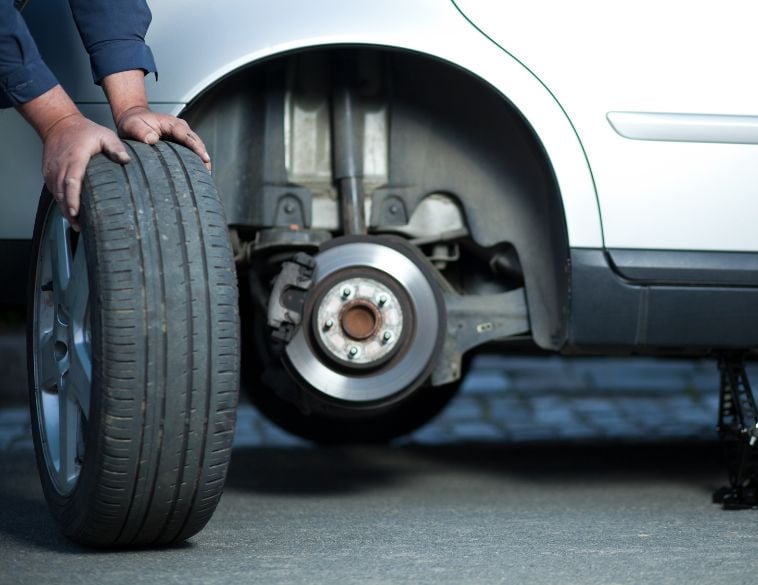
Growing vehicle and parts complexity is changing the nature of servicing and repairs. Credit: Shutterstock
Why same-day repairs are getting harder to deliver.
For decades, customers have measured good automotive service by one simple benchmark: Drop the vehicle off in the morning and pick it up before dinner. It remains the expectation for many Canadians, but for repair shops, delivering on that promise has become increasingly difficult.
While labour shortages have dominated industry headlines in recent years, another challenge has quietly emerged behind the scenes: the growing complexity of parts availability and inventory management.
Parts delays
Three years ago, many repair facilities began noticing a shift. Parts that once arrived within a couple of hours now frequently take most of the day to reach the shop. In some cases, they don’t arrive until the following day, even when the repair itself only requires an hour or two of labour.
The issue isn’t simply supply-chain disruption anymore. Rather, it’s the sheer complexity of today’s vehicles.
A single vehicle model may now be offered with multiple engine options, trim levels, wheel packages and electronic systems, each requiring different components. Even something as straightforward as tires has become significantly more complicated, and stocking every possible part has become financially unrealistic.
As a result, dealerships and aftermarket suppliers increasingly rely on centralized distribution centres, rather than maintaining extensive local inventories. If a required component isn’t available at the nearest warehouse, it may need to be transferred from another facility several hours away before it can make its way to the repair shop.
What appears to customers as a simple delay often involves multiple warehouse transfers, delivery routes and scheduling challenges before the part ever reaches a technician’s bench.
Stocking every possible part has become financially unrealistic.
Staffing challenges
While many repair facilities have worked hard to recruit and retain technicians, turnover among parts suppliers and jobbers has become increasingly common. Experienced counter staff who once knew their customers, understood regional vehicle populations and anticipated common repair needs are becoming harder to find.
Years ago, a seasoned parts representative often knew which components local repair shops needed most and could quickly locate inventory through established relationships with neighbouring dealerships or suppliers.
Today, frequent staff turnover means repair facilities are often dealing with new employees still learning both the inventory systems and the products themselves. That experience gap can translate into additional phone calls, longer searches and extended wait times.
All of this creates a growing disconnect between customer expectations and operational reality.
Customer frustrations
Customers understandably become frustrated when a repair extends into a second day, particularly during the busy summer months, when vacations and family schedules leave little room for flexibility. Repair facilities do their best to minimize the inconvenience through courtesy vehicles and constant communication, but some delays simply cannot be avoided.
Behind every vehicle that misses its promised completion time is a chain of events most customers never see: technicians waiting on deliveries, staff making multiple supplier calls, employees driving across the region to pick up a single part, and businesses absorbing additional costs to keep customers happy.
The automotive service industry has always been built around solving problems. Today, however, many of those problems begin long before a wrench is ever turned. As vehicles become more sophisticated and inventories more decentralized, success increasingly depends not just on technical expertise, but on logistics, supplier relationships and persistence behind the scenes.
For repair shops across Canada, keeping customers on the road has become as much about navigating the parts network as it is repairing the vehicle itself.
Bio: Ken Borg has been in the auto industry since 1979, and is the General Manager of Oakville Tire & Auto, which has been in business since 1946.



JOBS
 |  BROSSARD BROSSARD Temporary Temporary |
| JOLIETTE Full time |
 | MONTRÉAL Full time |
 | MONTRÉAL Permanent |