
Lifting Safety 101
Autosphere » Tires »
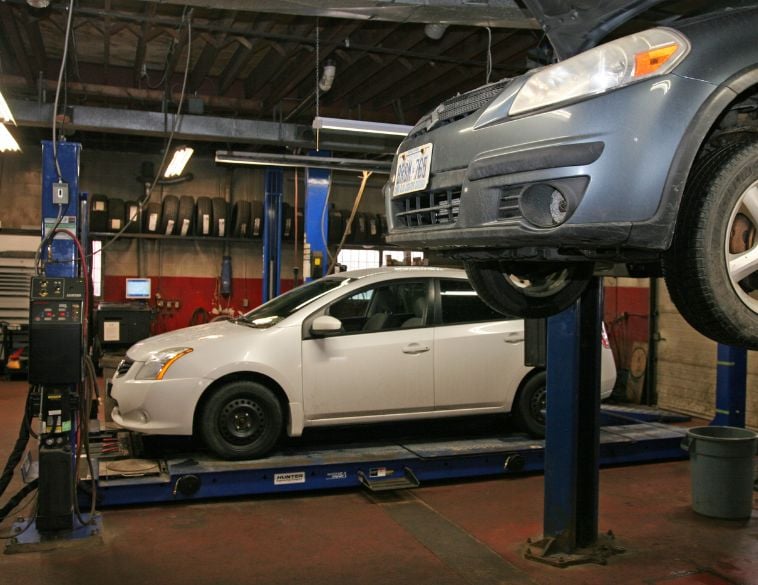
Lift safety is paramount when it comes to successful shop operations. (Credit : Huw Evans)
Lifting vehicles is just part of the job, but sometimes it can be the most dangerous and costly to a shop, if the proper procedures aren’t followed.
Before lifting, always make sure the lifts have been properly maintained. That sounds rather basic, I know, but you’d be surprised how often some of the basics are overlooked. As a reminder: Always perform recommended maintenance and proper inspections, as specified by the manufacturer.
Vehicle Lifting Points Guide
Most lift manufacturers are aligned with ALI (Automotive Lift Institute), which has inspectors who conduct annual inspections on lifts. ALI also publishes a Vehicle Lifting Points Guide that should be in all shops. As the name suggest, this guide shows lift points for vehicles by year, make and model, and in my opinion, it’s the best reference out there.
Whether you have post lifts, symmetrical or asymmetrical, in-ground or drive-on lifts, all technicians should be properly trained on all the lifts they use. Also, make sure each of your lifts is rated to handle the weight of the vehicles you’re working on.
Best practices
To assure the safety of all technicians, please consider the following procedures:
- Always perform pre-inspections on a vehicle before bringing it into one of the bays. Record vehicle and customer information, mileage, and if there is any damage, before bringing it in. If damage is found, inform the customer prior to bringing it in.
- Always use the ALI Vehicle Lifting Points Guide to identify lifting points. Make sure there are no special service bulletins on the vehicle, like the need to shut off air bags, or the need for special lift blocks.
- Bring the vehicle into the bay with the help of a spotter to correctly align the vehicle with the lift. Best practice is to align the vehicle with the centre post of a two-post lift, where the 50/50 weight split occurs.
- Place the lifting pads under the proper lift points (reference the ALI Vehicle Lifting Points Guide). Use extensions, provided by manufacturer, if needed, to clear any running boards or accessories.
- Make contact with the lift points, and look to make sure you are properly positioned, and not causing damage. If everything is properly aligned, lift the vehicle just so that the tires are off the ground.
- Do a bump test (front and rear of the vehicle) to ensure the vehicle is securely positioned. If it is, lift to the desired height, and then engage the mechanical locks to insure the lift cannot come down if something were to fail.
- After performing the needed service on the vehicle, walk around the vehicle to make sure the area is clear. If it is, announce in a loud voice, “Coming down!” so that everyone in the immediate vicinity knows to stay clear of the vehicle.
- Raise the vehicle a bit so that you can release the mechanical locks, and then proceed to lower the vehicle to the ground. Remove the extensions, place lifting arms in the stored position, and return the vehicle to the customer.
Accidents happen when proper lifting procedures are not followed, and social media is full of videos of cars and trucks falling off hoists. Do it right, and you won’t end up on anyone’s social media feed. Be safe out there!



JOBS
 |  QUÉBEC QUÉBEC Full time Full time |
 | LAURENTIDES Full time |
 | BROSSARD Full time |
 | LAVAL Permanent |