
Beat the Changeover Bottleneck
Autosphere » Tires »
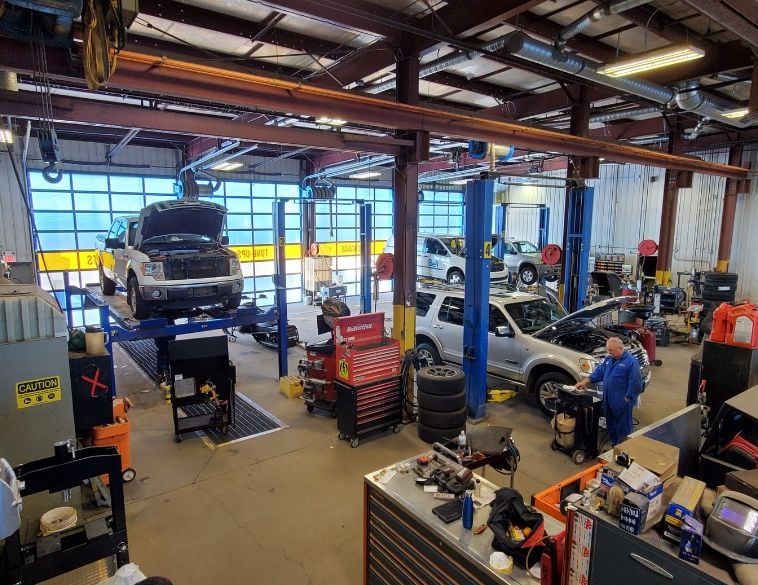
Equipment, training and capacity planning, can make a huge impact on tire shop productivity, efficiency and profitability. Credit: FTERR
Why staffing, equipment capacity and technician fatigue can determine how well a shop handles the seasonal rush.
For tire retailers in Canada, the fall tire changeover season is one of the busiest periods of the year. Customer demand can surge within a matter of weeks, putting pressure on technicians, equipment and shop capacity.
The challenge is not simply getting more vehicles through the door. Shops also need to maintain quality, safety and consistency when technicians are working at a much faster pace than during a typical week.
According to Greg Meyer, Senior Product Manager at Hunter Engineering, there are several potential bottlenecks that can cause efficiency losses when things get busy. “These issues will vary from shop to shop,” he says, although finding enough skilled workers when business suddenly doubles is a problem that all busy tire retailers have in common.
Staffing remains a major challenge
Adding temporary employees has traditionally been one way of dealing with the seasonal spike. However, finding experienced tire techs willing to work for only a few months is becoming increasingly difficult.
Billy Lau, President of GTA-based Tires 23, says his two stores typically have to increase staffing during peak season. “We always have to hire more for the peak season,” Lau says, “but it’s very difficult to find qualified workers.”
The problem is that seasonal hires don’t necessarily arrive with the skills needed to perform every task in a modern tire shop. Lau says Tires 23 provides their own training, with safety at the top of the list.
Lau explains that temporary workers may be able to handle some of the more straightforward tasks, such as removing wheels from vehicles, receiving tires and moving product around the shop. More technical work, however, is handled by more experienced staff.
At Oakville Tire & Auto, General Manager Ken Borg has taken a different approach to the seasonal staffing problem. Rather than relying heavily on people who are available for only a few months at a time, he keeps additional employees year-round and trains them to perform other work during the slower periods.
Borg argues that the traditional model of hiring people specifically for the changeover season has largely disappeared. “That’s gone,” he says, “at least for the past 10 years now.”
For shop owners, that means the answer may not be simply finding more people. It may be finding ways to allow the people already on staff be more productive throughout the year.
Equipment capacity matters
Staffing and equipment capacity are closely connected. A shop with slow or outdated equipment may need more technicians to achieve the same throughput as a shop with more modern machinery.
Meyer says retailers should consider their peak demand when evaluating capacity, rather than designing their operation around an average day.
“One way to think about your capacity is like Walmart thinks about their parking lots,” he says. “They don’t size the lot for a typical business day. They size the lot to handle the Christmas rush, so they aren’t giving away any potential revenue.”
The same principle can apply to a tire shop. If customers cannot get appointments during the peak season, some will simply go elsewhere.
Meyer argues that automation can reduce the amount of specialized labour required, and points to Hunter’s WalkAway System, which consists of the Revolution tire changer and Road Force WalkAway balancer.
“A single technician using the WalkAway System can change a set of four tires 44% faster, or about 15 minutes faster, than a single technician using a basic tire changer and balancer,” he says.
For retailers, he explains, the added benefit of this type of equipment is the fact that it can also reduce the physical effort required from technicians, allowing them to maintain a more productive pace throughout the longer days.
Don’t overlook technician fatigue
The physical demands of tire service can become particularly important during a busy changeover period. Meyer says technicians working with basic equipment may start the day at a high pace, but slow down as fatigue sets in.
“One person can only perform so much physical work in a day,” he says. “This becomes very evident when watching techs in a shop using basic equipment.”
Automation can take some of that physical work away from the technician, potentially allowing a shop to maintain a more consistent pace. It can also help deal with vehicles that require additional time or effort.
“Vehicles with run-flats, or something like a Tesla, will greatly increase effort and time required to change the tires,” Meyer says. “Vehicles like this can take 20 minutes longer to change four tires. If two of these vehicles arrive back-to-back your daily schedule can be blown.”
Don’t let balancing become an afterthought
Getting a vehicle through the tire changer quickly doesn’t mean much if the wheels aren’t properly balanced or installed.
Borg says Oakville Tire & Auto regularly sees vehicles arrive after another shop has performed an improper installation or balance. He also describes cases involving hub-centric rings that weren’t removed when wheels were changed.
The lesson for retailers is straightforward: Speed cannot come at the expense of the basics. Technicians need to follow the correct procedures, and final inspections should remain part of the process, even when the shop is busy.
Calibrate before the rush
Equipment maintenance should be completed before the busiest appointments arrive. Borg says his shop has its balancers calibrated twice a year—once in the spring, and again in the fall.
As far as investing in newer equipment goes, Borg says that wheel sizes have increased substantially on newer vehicles, which means that older equipment may not always be able to handle the larger wheel sizes.
That doesn’t necessarily mean every shop needs to replace all its machinery, but retailers should make sure their equipment and accessories are capable of handling the vehicles and wheel sizes coming through the door.
Prepare for the season, and beyond
The temptation, when changeover season approaches, is to solve every capacity problem with additional labour. However, Meyer says retailers should look beyond the immediate rush.
“I think many retailers take a brute force approach. They just add more manpower to solve the problem,” he says. “This can help, but upgrading their equipment is a solution that pays dividends all year long, not just during the busy changeover times.”
For shop owners, the best preparation may therefore involve several relatively simple steps: assess expected demand, identify the shop’s bottlenecks, service and calibrate equipment, review technician assignments, train seasonal employees on appropriate tasks, and build enough time into the schedule for difficult vehicles.



JOBS
 |  DORVAL DORVAL Full time Full time |
| ST-HUBERT Full time |
 | MONTRÉAL Permanent |
 | SASKATOON Full time |
| MONTRÉAL-NORD Permanent |