
Simple Sustainability Strategy
Autosphere » Tires »

Carol Hochu, President, TRAC. Credit: TRAC
The Greenest Tire Is the One That Lasts the Longest
When sustainability is discussed in the tire industry, the conversation often focuses on recycling programs, recovered materials, rolling resistance, fuel efficiency, and other emerging technologies. These are all important developments. But there is another environmental strategy that receives far less attention: making tires last longer.
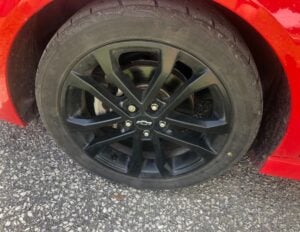
Getting the most
The most powerful sustainability strategy is the simplest one: getting the most out of every tire already on the road. It may not sound revolutionary, but extending tire life is one of the simplest and most effective ways to reduce their environmental footprint.
Every tire requires significant resources to manufacture. Natural and synthetic rubber, steel, textiles, carbon black, energy, and transportation all contribute to a tire’s environmental footprint before it ever touches the road. When a tire reaches the end of its useful life, it must also be collected, processed, recycled, or otherwise managed.
For vehicle owners and fleets, the environmental benefits of proper tire maintenance are also matched by economic advantages. Tire replacement represents a significant operating expense. Improving tire life reduces the cost per kilometre while helping businesses improve resource efficiency. In many cases, what is good for the environment is also good for the bottom line.
“In an era where businesses and consumers are looking for practical ways to reduce their environmental impact, sustainability does not always require breakthrough technology.”
– Carol Hochu, President, TRAC
Proper inflation
The good news is that tire longevity is influenced by factors that are largely within a driver’s control
Proper inflation is the most important. Both under-inflated and over-inflated tires wear prematurely and affect rolling resistance, which affects fuel efficiency. Regular pressure checks remain one of the most effective ways to maximize tire life.
Routine tire rotations also play a critical role. Because tires wear differently depending on their position on the vehicle, tire rotation helps with even wear and allows drivers to obtain the maximum value from a set of tires.
Tire service equipment also plays an important role in maximizing tire life. Modern wheel alignment systems can identify small alignment issues before they accelerate tread wear. Accurate tire pressure monitoring and calibration tools help technicians ensure inflation levels are correct, while balancing equipment can reduce irregular wear patterns. Investments in proper tire service equipment are not only about shop efficiency, they also contribute directly to tire longevity and sustainability.
Vehicle maintenance matters as well. Poor alignment, worn suspension components, and other mechanical issues can rapidly shorten tire life. A small maintenance problem can destroy thousands of kilometres of potential tread life if left uncorrected.
Driving habits
And let’s not forget another key element in extending tire longevity: driving habits. Aggressive acceleration, hard braking, and excessive cornering place additional stress on tires and contribute to faster wear. Smoother driving is not only safer but also more economical and sustainable. According to Natural Resources Canada, drivers can improve fuel efficiency by up to 25% by adopting more fuel-efficient driving habits, including accelerating gently, maintaining a steady speed, anticipating traffic, avoiding high speeds, coasting to decelerate, avoiding unnecessary idling, checking tire pressure monthly, removing unnecessary weight and roof racks, using air conditioning sparingly, planning and combining trips, and driving less when possible.
Sometimes the most effective sustainability solutions are also the simplest. If a tire can safely deliver its full lifetime range, fewer replacement tires are required. Fewer tires manufactured means fewer raw materials consumed, less energy used, and less waste generated.
In an era where businesses and consumers are looking for practical ways to reduce their environmental impact, sustainability does not always require breakthrough technology. Sometimes it starts with proper inflation, accurate alignment, regular maintenance, and driving habits that promote better fuel efficiency and less wear on the vehicle. The greenest tire may not be the one made from the newest material or supported by the latest innovation. It may simply be the one that safely stays on the road the longest.
Bio: Carol Hochu is President of the Tire and Rubber Association of Canada (TRAC) You can reach her here


JOBS
 |  DORVAL DORVAL Full time Full time |
| ST-HUBERT Full time |
 | MONTRÉAL Permanent |
 | SASKATOON Full time |
| MONTRÉAL-NORD Permanent |