
Installing aftermarket TPMS
Autosphere » Mechanical » Editorial »
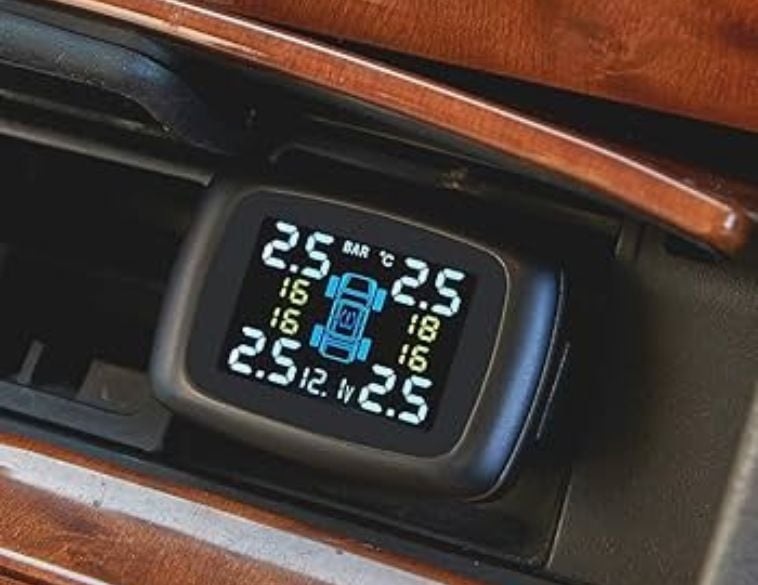
There are several TPMS solutions available in the aftermarket. (Credit : Mark Potvin)
Have you ever had the feeling that your vehicle’s handling changed overnight? Sometimes the issue is very close at hand and should never be taken lightly.
These days, most cars come equipped with a tire pressure monitoring system (TPMS) that keeps track of tire inflation levels. Can such a system be installed even if your customers’ vehicles weren’t originally equipped with one? Absolutely!
There are several suppliers of this essential tool, many of which can be found on well-known e-commerce sites. A TPMS (Tire Pressure Monitoring System) sensor is an electronic device mounted on the tire valve stems of a vehicle. It measures the air pressure inside and transmits that information to the driver via a warning light or dashboard data.
Here’s a closer look at how it works, which will help you explain to your customers why having a functioning system is so important. First and foremost, it’s a matter of safety.
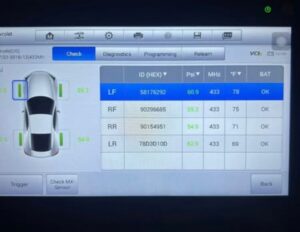
Real-time tire condition
TPMS sensors, mounted on the tire valve stems, continuously measure the air pressure inside each tire. The information is then transmitted wirelessly via radio waves to a receiver inside the vehicle, which can read only the data from sensors paired with it.
The receiver relays the information to the dashboard, where it appears as either a warning light or numerical pressure readings in both formats. If a tire’s pressure drops below a certain threshold, the TPMS triggers an alert, usually a warning light or a dashboard message. In most gasoline or electric cars, that threshold is typically between 30 and 40 PSI, while in pickup trucks or small delivery vans, it’s between 50 and 80 PSI.
There are two types of sensors: indirect and direct. Direct TPMS uses individual sensors in each tire. Indirect systems rely on wheel speed sensors from the ABS to estimate pressure, detecting differences in rotational speed between wheels.
An important accessory
The benefits of TPMS include preventing accidents caused by underinflated tires, which can lead to loss of control, longer braking distances and premature tire wear. Properly inflated tires also reduce rolling resistance, which can lower fuel consumption.
Take the time to explain to your customers the benefits of these systems and the advantages of adding these electronic components, which are essential for their safety. Happy diagnosing!



JOBS
 |  BROSSARD BROSSARD Temporary Temporary |
| JOLIETTE Full time |
 | MONTRÉAL Full time |
 | MONTRÉAL Permanent |