
Can AI Help Sell Used Vehicles?
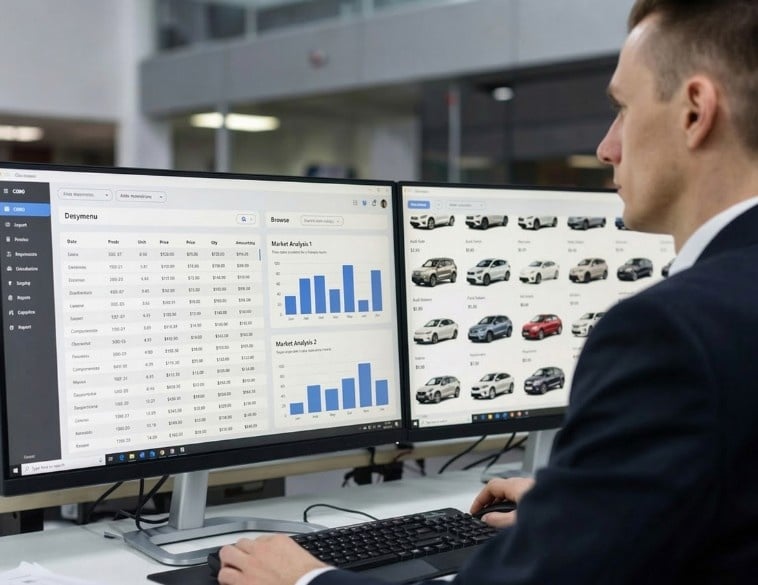
Artificial intelligence is set to play a defining role in the future of used vehicle marketing.
Why do some dealerships sell far more used vehicles than others in the same area?
The answer has less to do with the number of employees or showroom traffic than you might think. Increasingly, it comes down to AI-powered tools that analyze the market and drive smarter decision-making.
Over the past few years, the used vehicle market has changed profoundly. Consumers have access to far more information than before, compare prices more carefully, and shop across multiple platforms before ever setting foot in a dealership. In this context, used vehicle management has become increasingly complex. Unlike a new vehicle, each unit has its own history, condition, and real-world value. This is precisely where artificial intelligence is already playing a very concrete role for dealers and resellers.
For a long time, used vehicle management relied primarily on the experience of the used vehicle manager. The best ones had a knack for buying the right unit at the right price and moving it off the lot quickly. Today, AI supports that human judgement by processing volumes of data that no individual could tackle alone.
Tools such as vAuto, Torque, and Smaaart compare recent sales in a given market, competitor inventory, sell-through rate by model, and vehicle history. This analysis enables far more precise purchase and resale pricing, grounded in real market conditions.
Very soon, used vehicle sale prices will be adjusted automatically every day by AI, based on local demand, available inventory, and the number of days a vehicle has been sitting in stock. Yes, every single day.
The cross-shopping phenomenon
One significant trend in today’s market is cross-shopping. A growing number of buyers are simultaneously comparing new and used vehicles. Prices, interest rates, and model availability directly influence their decisions. In some cases, the monthly payment on a new vehicle becomes a dealbreaker, pushing customers toward the used market. That means stocking vehicles with Canadian Black Book values that are compatible with alternative financing. For dealerships, this means used vehicle inventory management must be even more strategic, and supported by intelligent tools.
Marketing and efficiency
Vehicle marketing is another area where artificial intelligence is making a real difference. The majority of buyers now begin their search online, often on automotive marketplace platforms. Quality photos, complete descriptions, and well-positioned listings have become essential to capturing attention.
Platforms such as AutoHebdo already offer AI (ChatGPT) to improve vehicle searches. AI can also automatically enhance photos and videos through solutions like Pixel Guru, generate content for vehicle listings, and optimize ad visibility. It also enables the integration of online credit pre-qualification tools such as DecisioningIT, which helps identify serious buyers more quickly and direct them to the right vehicle from the outset.
How quickly a vehicle gets listed matters just as much. Every day a vehicle sits in inventory represents a floorplan cost and a missed opportunity. Tools such as Shiftly Auto, for example, can push inventory to platforms like Facebook in under 60 seconds. Inspection and analysis services like CarInspect also help accelerate reconditioning and vehicle publication across various sales platforms.
In short, artificial intelligence is not turning used vehicle sales into a fully automated operation. Rather, it gives specialized dealers and dealerships better tools to understand the market, buy smarter, and bring their vehicles to market more effectively.
In the used vehicle business, the advantage will no longer go to the dealer with the largest inventory or the biggest team, but to the one who makes the best use of artificial intelligence tools.



JOBS
 |  POINTE-AUX-TREMBLES POINTE-AUX-TREMBLES Full time Full time |
 | SAINT-BRUNO Part time |
 | NICOLET Full time |
| VAL-DAVID Full time |
 | QUÉBEC Full time |