
Elevating the Experience
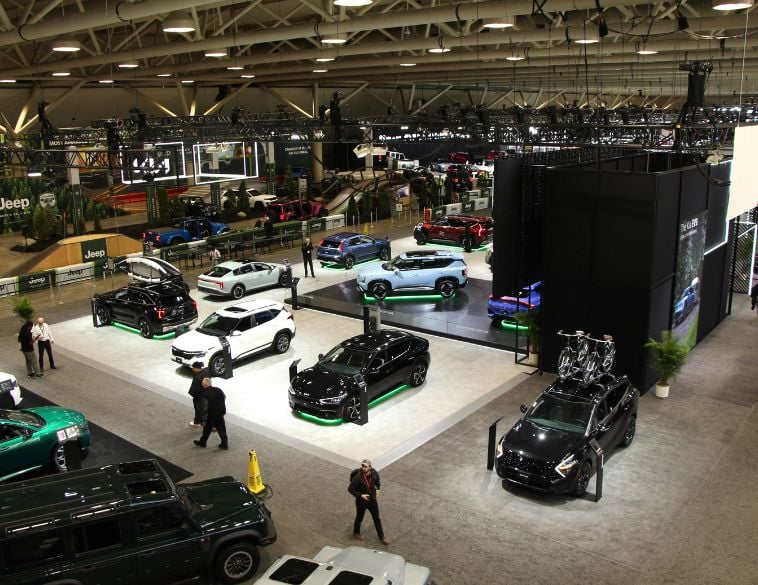
Today’s auto shows are about delivering an immersive and interactive experience. (Credit : Huw Evans)
Today’s auto shows are about more than just showcasing vehicles.
Automobiles are unique products. Not only are they are a major investment for most consumers, their purchase is often, emotionally driven. And what a potential shopper sees online may not turn out to be the most suitable vehicle for them once they’ve had a chance to experience it in the flesh.
For dealers, this represents an opportunity to not only provide a suitable transportation solution for a specific client’s needs but also build relationships long-term. Yet there is another factor that can help take this experience to the next level—auto shows.
Evolution
In Canada, auto shows represent some of the largest consumer events held each year, and, as both vehicle technology and customer expectations have evolved, so have these events themselves.
According to Jason Campbell, General Manager of the Canadian International AutoShow (CIAS), which takes place each February at the Metro Toronto Convention Centre, auto shows represent “an extremely efficient way to explore a wide range of [vehicle] brands, all under one roof and in a comfortable setting.” Campbell notes that from a consumer perspective, the auto show often provides a no pressure environment to sample vehicles, since the emphasis is on experiencing the product and not the sale. Campbell admits that even members of his own team at CIAS have used the show to conduct initial research when it comes to considering their next vehicle purchase.
Ian P. Sam Yue Chi, President of the Quebec Automobile Dealers Association (CCAQ), says that from his perspective, auto shows today, are more relevant than ever when it comes to a retail and marketing tool for OEMs and dealers. Sam Yue Chi, says that this has been reflected in the consistently high attendance levels these events have seen since the COVID-19 pandemic.
Out in force
“In both Montreal and Quebec City, the public has turned out in force over the past few years,” he says “ and I feel there’s a real need for Quebec consumers to have a variety of models under one roof that they can not only see but also touch.”
Across the country, the resurgence in auto shows has been reflected, not only in the robust attendance numbers, but also that some OEMs, after deciding not to display their products at these auto show events for several years have chosen to return, and in force.
“The support we’ve seen from OEMs and our exhibit partners has been outstanding,” says Jason Campbell.
At CIAS last year, despite a severe snowstorm that coincided with the opening of the AutoShow, 323,521 people attended the event, and for 2026, Campbell says that projections show that approximately 350,000 visitors are likely to attend. More importantly, around 40% of those attendees plan to purchase a vehicle within 12 months, which Campbell says, equates to approximately 140,000 car buyers—people directly influenced by what they experience at the show. That in turn, represents almost $6 billion in business for Ontario based-automotive retailers.
At Montreal Auto Show, organized by the Corporation des concessionnaires d’automobiles de Montréal, Executive Director Luis Pereira notes that the excitement for the 2026 event began as far back as Black Friday (November 28, 2025) and that advanced ticket sales were up by 30% compared with the previous year.
On the West Coast, the Vancouver International Auto Show (VIAS) has also witnessed some encouraging statistics. “The resurgence [since the COVID pandemic] has been striking,” explains Eric Nicholl, Executive Director of the VIAS. “When we returned [as a physical event] and set records for attendance it confirmed how much people missed shared, in-person experiences. Since then, the momentum has continued, including a 26% increase in early Black Friday ticket sales for 2026.”
Nicholl says that these trends reflect the fact that consumers want experiences “they can’t replicate online, and that the auto show delivers that in a way that feels both informative and exciting.”
Immersive experience
Part of the reason why auto shows continue to be a focal point for consumer engagement when it comes to vehicle purchases, is because they’ve evolved from static displays to an immersive, interactive automotive experience.
Charles Drouin, General Manager of the Quebec International Auto Show explains, that this evolution has been essential. When Droulin joined Corporation Mobilis (a group of 140 dealers which hosts the show) back in 2013, he noted that the show had to evolve if it was to survive and thrive long term. Today, the show has evolved into an immersive, family friendly event that takes place each March, coinciding with the school holiday break. Facilities such as on-site childcare further add to the family orientation of the show, providing parents the opportunity to have a space for their children, while simultaneously being able to sample the vehicles on display at their leisure.
For 2026, the Quebec City event sees some significant changes, namely that the two previous separate expos of conventional and electric vehicles will be combined into one event. Regional dealerships are well represented, alongside OEMs and their respective agencies.
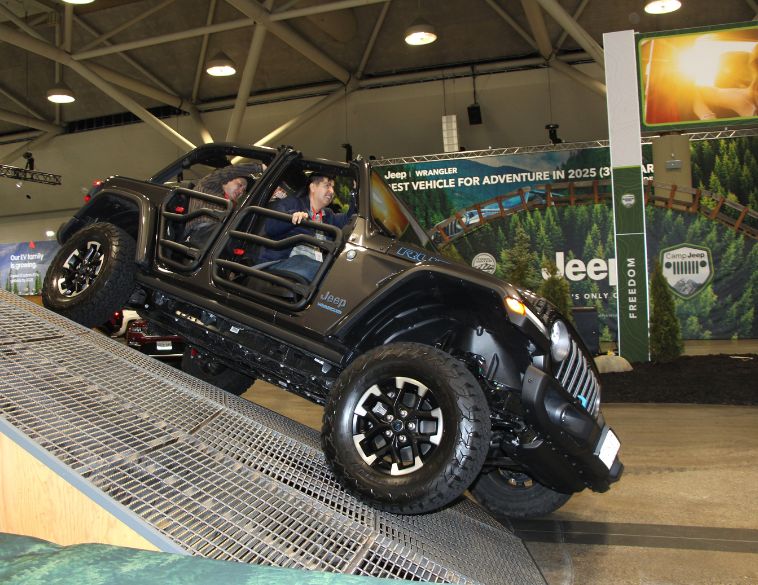
In both Montreal, Toronto and Vancouver, electric vehicles have drawn significant attention over the last several years, and onsite EV test drives, allow consumers to sample the product in a unique way at these auto shows, while taking in the wider automotive experience.
And it is the “experience” aspect that really is key. Data consistently points to the fact that besides auto shows experiencing near record attendance levels, the amount of time consumers are choosing to spend at these events is increasing.
At VIAS, Eric Nicholl notes that in terms of consumer interaction, “we’re seeing deeper engagement across the board. Attendees are spending more time on the show floor, asking more detailed questions, and actively participating in experiences like test drives.” He also notes that on the industry side, exhibitor space is also selling out faster than at any time in recent memory. “This speaks to stronger manufacturer confidence in our event,” states Nicholl.
Expanding brands and exhibits
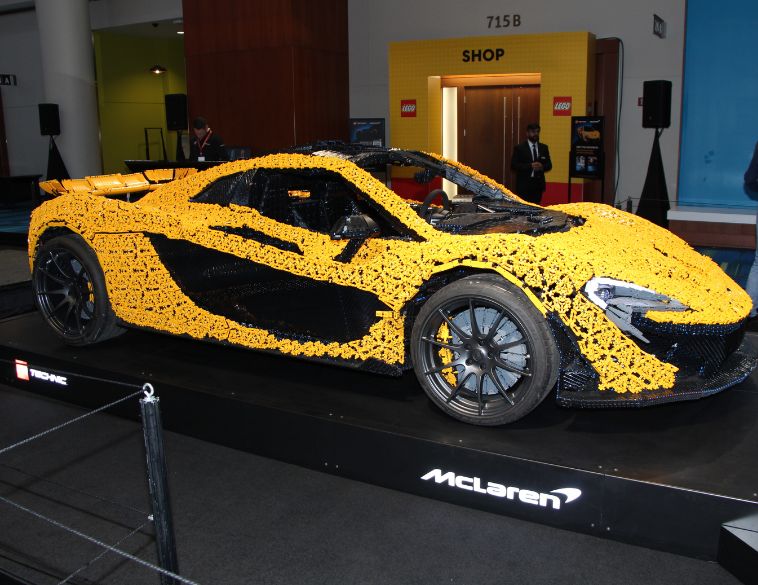
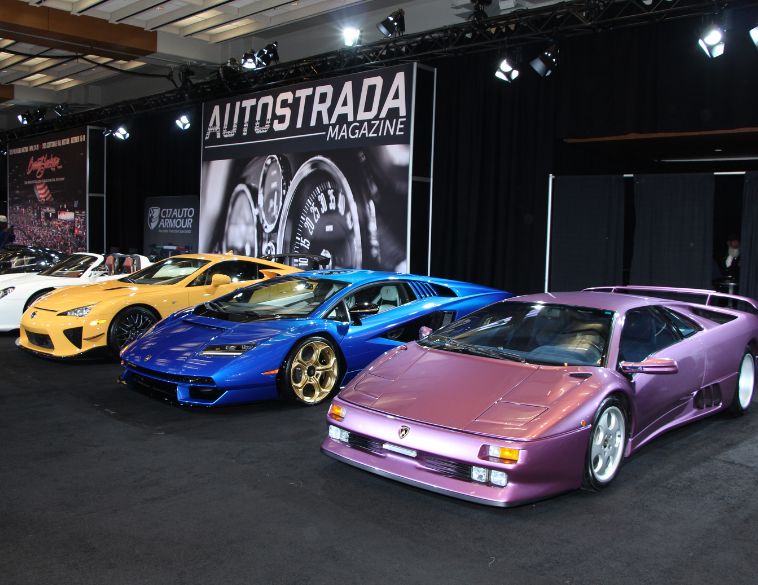
At CIAS in Toronto, Jason Campbell concurs, noting that the number of brands and exhibits continues to expand. “This year, we have more than 40 brands represented, covering everything from budget-friendly vehicles to limited-production exotics built in very small numbers.”
He also notes that both the EV and regular test drive offerings continue to grow too. We had more than 50 vehicles from 19 brands confirmed for our test drives in 2026, and we are actively working to add even more brands and vehicles. The experience includes 25 indoor and 25 outdoor test drive vehicles,” says Campbell.
The Participation Factor
From a dealer and OEM perspective, there are some interesting statistics related to auto shows across North America. Darren Slind, Co-founder and President at Clarify Group, says that in analyzing data from the Big Three North American shows, CIAS, Los Angeles and New York, visitor behaviour is remarkably consistent. “The Top 3 reasons for consumers attending are the same across shows: to see new brands and models, to learn about new technologies and innovations, and to inform their next purchase.” Additionally, Slind notes the consideration uplift (the likelihood that a consumer will add a new brand to their purchase consideration) is 2.5 times greater for OEMs exhibiting at the show compared to the average of all brands across these three major automotive expos and the other major Canadian auto shows such as Montreal and Vancouver.
Additionally, auto shows represent a target rich environment, since those who attend auto shows are intentional buyers. Slind says Clarify Group’s data points to the fact that nearly 2 in 5 visitors (37%) come to one of the Big 3 shows to decide on their next vehicle. Furthermore, he says that the vast majority of visitors at the show are at some stage of the new vehicle purchase funnel: over 2 in 3 visitors intend to purchase or lease within the next 24 months (68%) and 2 in 5 visitors (40%) are “actually ‘in market’ shoppers with a purchase or lease timeline of 12 months or sooner. The bottom line? Auto shows sell cars!”






JOBS
 |  DORVAL DORVAL Full time Full time |
| ST-HUBERT Full time |
 | MONTRÉAL Permanent |
 | SASKATOON Full time |
| MONTRÉAL-NORD Permanent |