
Montreal CCIF Addresses Pressing Issues
Autosphere » Collision »
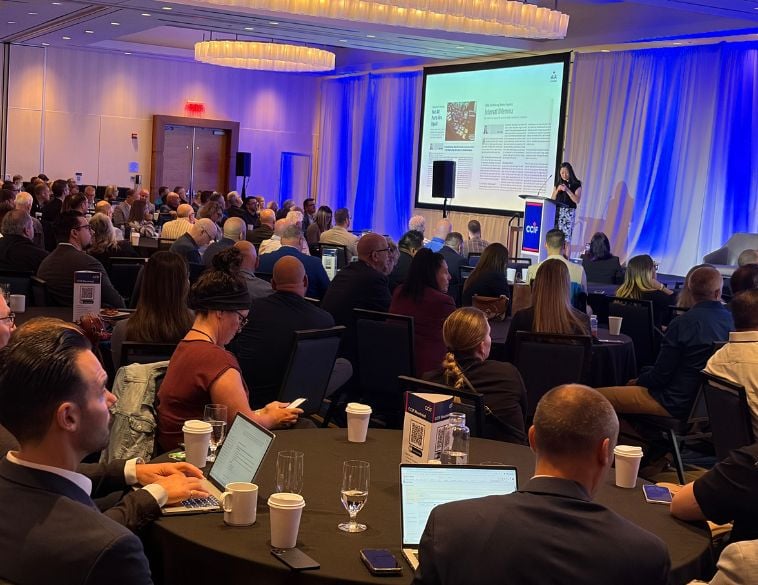
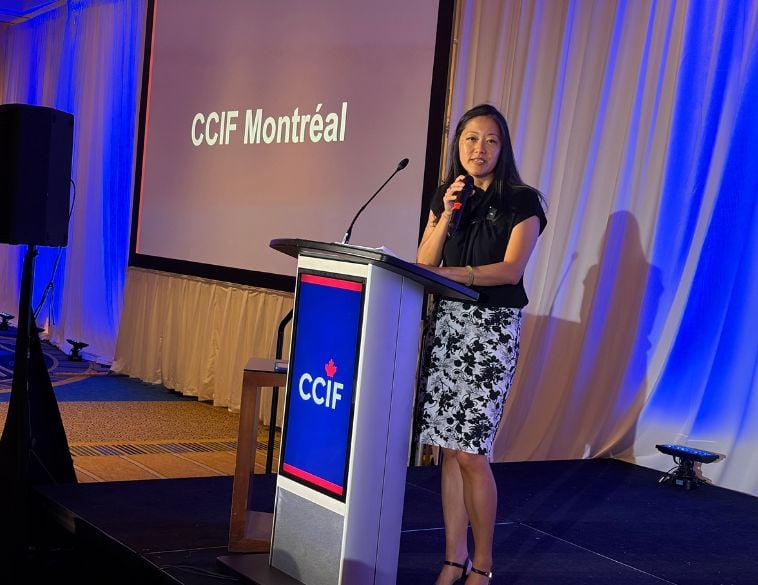
Emily Chung, President of AIA Canada, speaking at the opening of the Montreal CCIF. Credit: Michel Beaunoyer
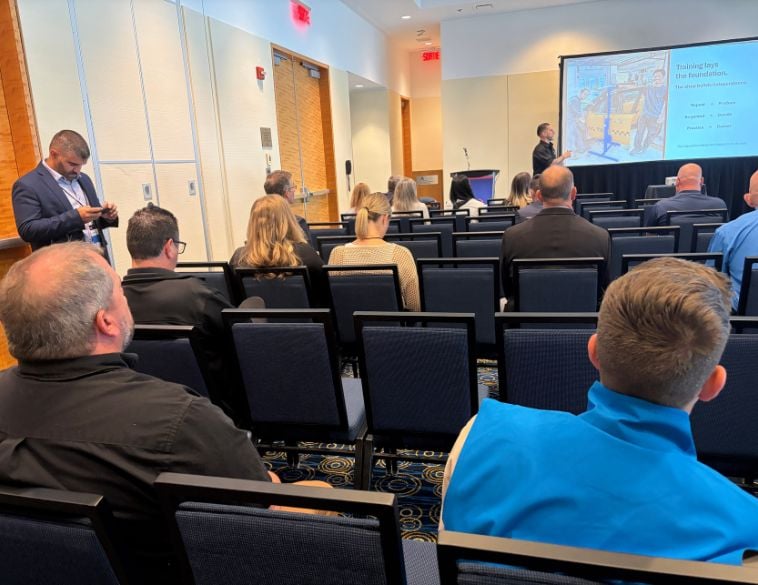
On September 18, as part of the CCIF, 320 representatives from the collision repair sector gathered at the Marriott Hotel at Montreal Airport for a full day of specialized conferences and workshops. They covered critical topics such as workforce recruitment and development, as well as the impact of artificial intelligence on the daily operations of collision repair shops.
Orchestrated by the outgoing chairman of the steering committee for the Canadian Collision Industry Forum (CCIF), Sylvain Séguin, the day was packed with valuable information sharing. The approach was particularly engaging, as managers frequently took the stage to share their real-world experiences, backed by experts directly tied to the collision repair industry.
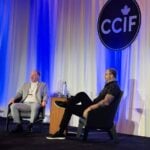
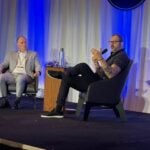
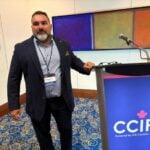
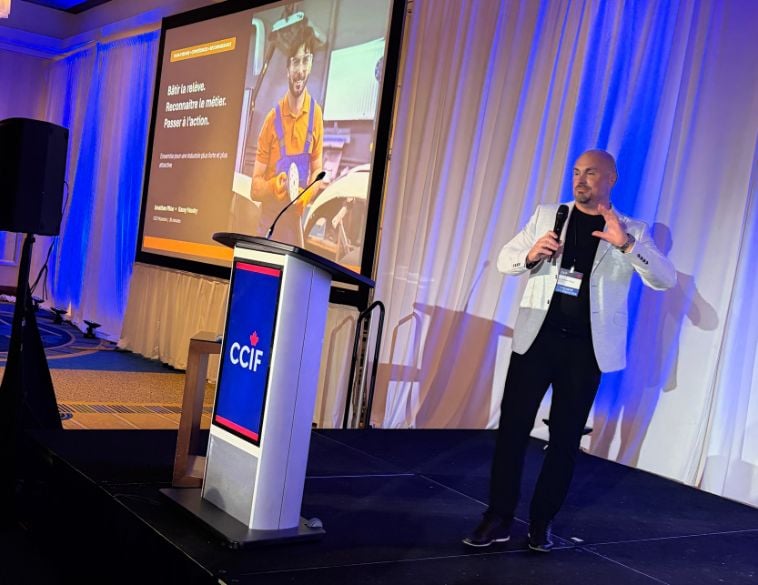
After welcoming remarks from Emily Chung, President and CEO of AIA Canada, the floor was turned over to Jonathan Pilon, President of the Corporation des carrossiers professionnels du Québec (CCPQ). This notable presence of the association on the CCIF stage marked a clear rapprochement between the two organizations and illustrated Mr. Pilon’s commitment to strengthening industry recognition by unifying the voices of its representatives.
In his presentation, the CCPQ president pointed out the destabilizing impact of policy changes regarding temporary foreign workers, whose departures are causing major disruptions in shops. “We are forced to deal with this situation even as nearly a quarter of our technicians plan to retire within the next five years,” Mr. Pilon lamented.
He also noted the low graduation rates among collision repair technicians and questioned the appeal of an overly lengthy training program requiring 1,650 hours to obtain a Diploma of Vocational Studies (DVS). “This program could be shortened and split in two: one track for painters and another for autobody repairers.”
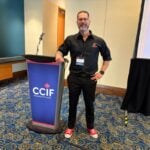
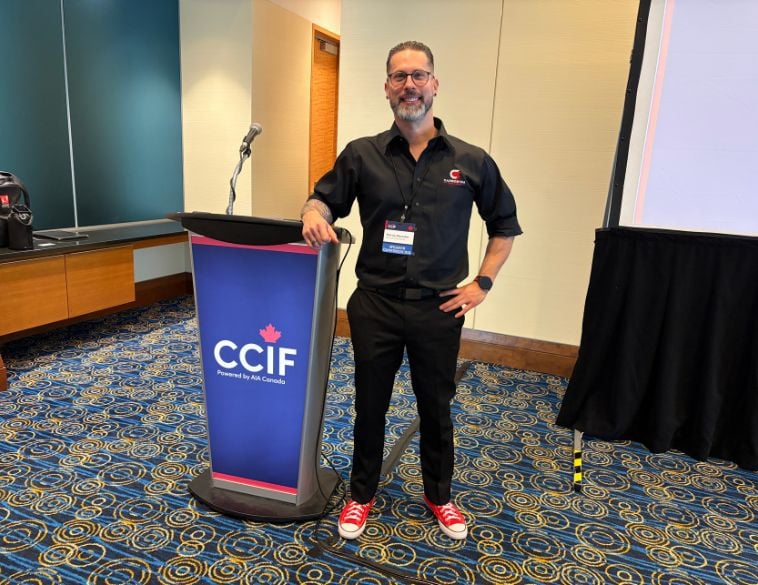
Mr. Pilon’s invitation to work more closely with vocational training centers resonated during the presentation by Patrick Marcotte, an instructor at the Centre de formation professionnelle de Verdun. He emphasized the importance of preparing for the arrival of new collision repair workers, whether they come straight from school or are referred by current employees. “I recommend that managers set up a 30-day onboarding program,” the instructor explained, taking a very practical approach. “Those first 30 days are crucial. If a new hire spends the first month sweeping floors or prepping bumper covers for paint, they won’t stay. You need to guide them, clarify expectations, and gradually give them more responsibilities to build their autonomy,” the trainer summarized.
Robotics and AI
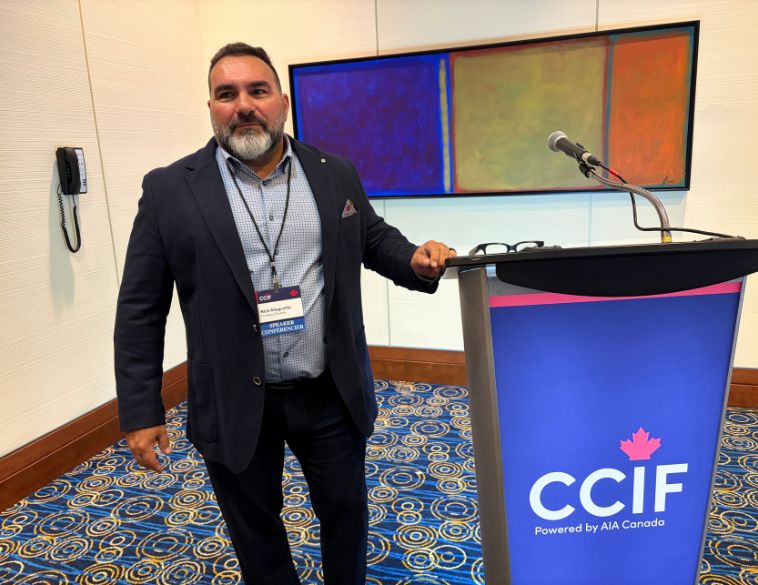
Nick Allegretta, owner of Fix Auto Décarie, captured the audience’s attention during his workshop, where he explained how he recently integrated a robot into his spray booth. Note that Autosphere.ca recently published an article on this technology. His presentation illustrated just how much his business embodies modernity. In addition to the robot, the facility has adopted artificial intelligence (AI) for appraisal preparation, while a robotic paint mixer precisely prepares the next application.
“Before buying a robot, I spoke with my painter,” Mr. Allegretta explained with a smile. “I asked him to analyze the available technologies and see if it could be beneficial and profitable for our shop. He was the one who concluded that we needed it. So, for him, the robot is an ally, not a threat to his job.” Estimating the return on investment for the robot at about seven years, the manager notes gains in efficiency as well as a reduction in overspray waste.
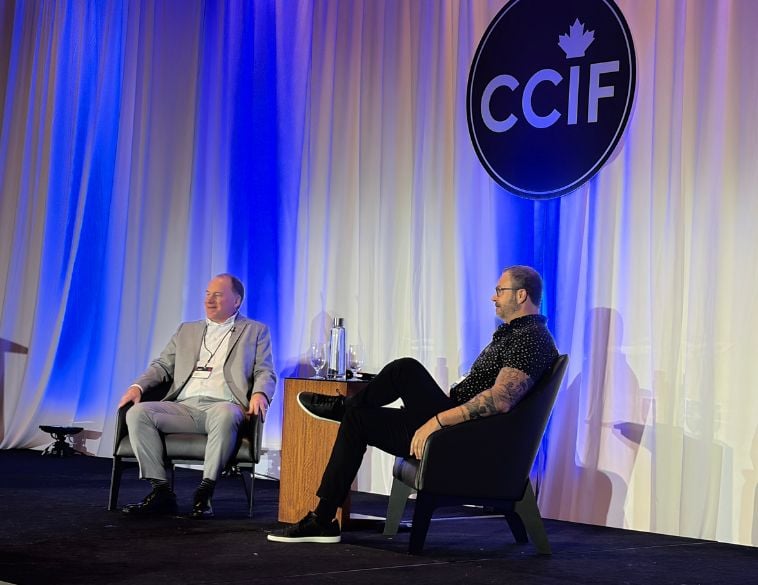
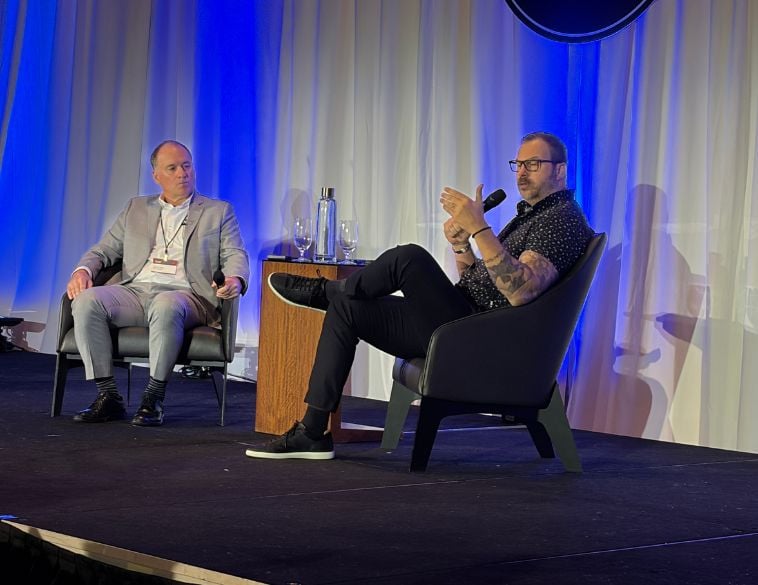
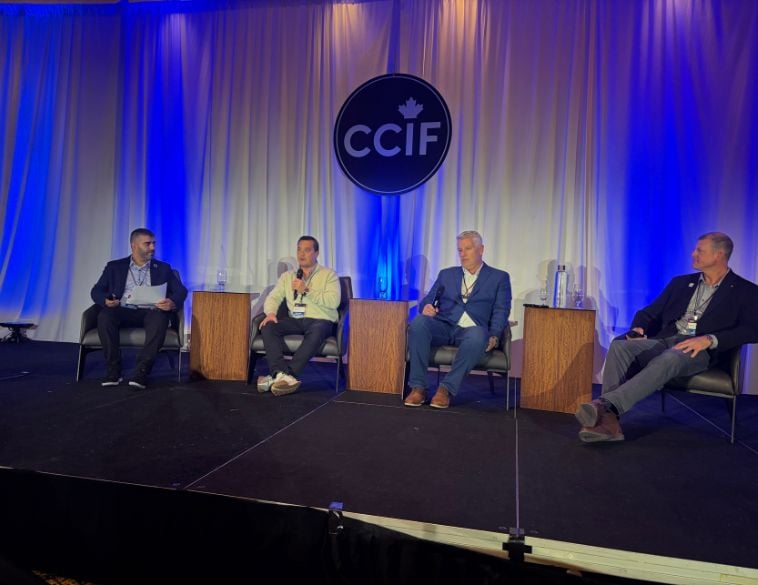
Two experts took the stage to discuss how AI is weaving its way into their operations. Shop manager Brad Green was joined by John Cox of AkzoNobel to explain how he tested various solutions within his business. “We launched a virtual agent to answer calls outside of business hours,” Mr. Green explained. “At first, people got frustrated and demanded to speak to a human. But after 18 months of operation, we refined the system, making it more efficient and user-friendly.”
A major benefit of this project was harvesting a wealth of data, particularly regarding the most frequent customer inquiries.
Another AI application was the elimination of repetitive tasks. “We tested it for analyzing supplements and appraisals,” the entrepreneur explained. “If the data is solid—which AI will soon provide us—it gives us far greater predictability in our operations.”
Mr. Cox welcomed the breakthrough of these solutions in repair shops, noting that AI can absorb a large portion of the administrative burden that has migrated from insurers to collision repair facilities over the years. “However, you have to evaluate where AI excels and where human expertise is indispensable. AI can make recommendations that a human must validate. Furthermore, AI won’t be the one interacting with your team members or your customers. For example, during damage appraisal, you can set parameters to favor repair over replacement, but an employee still needs to verify if that solution is actually feasible.”
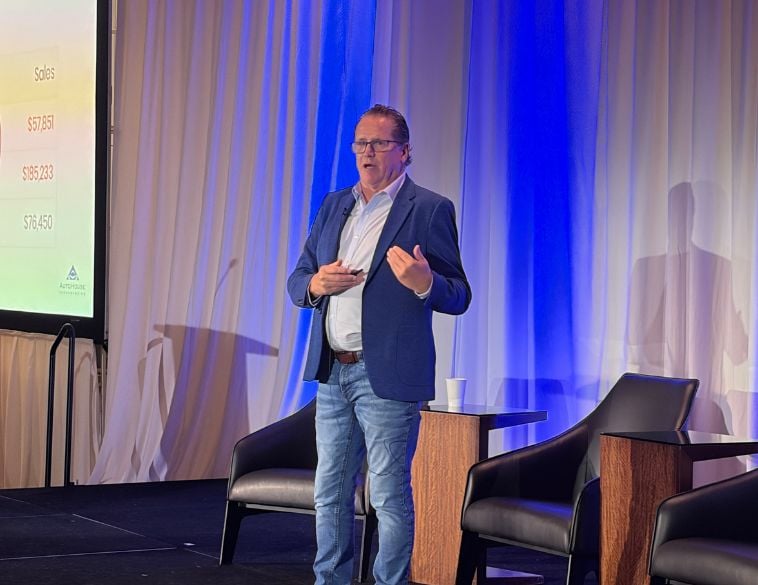
The topic of AI was also the subject of the final presentation of this CCIF edition. Omar Nabil from Solera / Audatex explained how analyzing massive databases allows AI to intervene as soon as a claim occurs, guiding the consumer to the appropriate services. “From there, photo-based estimating, repair planning in accordance with OEM procedures, and regular customer updates can largely be automated by AI,” the expert summarized.
At the conclusion of the event, Sylvain Séguin introduced his successor, Dave Foster, Vice President of Operations and Development at CARSTAR Canada, who will serve as the incoming Chairman of the CCIF Steering Committee.




JOBS
 |  BROSSARD BROSSARD Temporary Temporary |
| JOLIETTE Full time |
 | MONTRÉAL Full time |
 | MONTRÉAL Permanent |