
CARSTAR Impact Conference 2026
Autosphere » Collision »
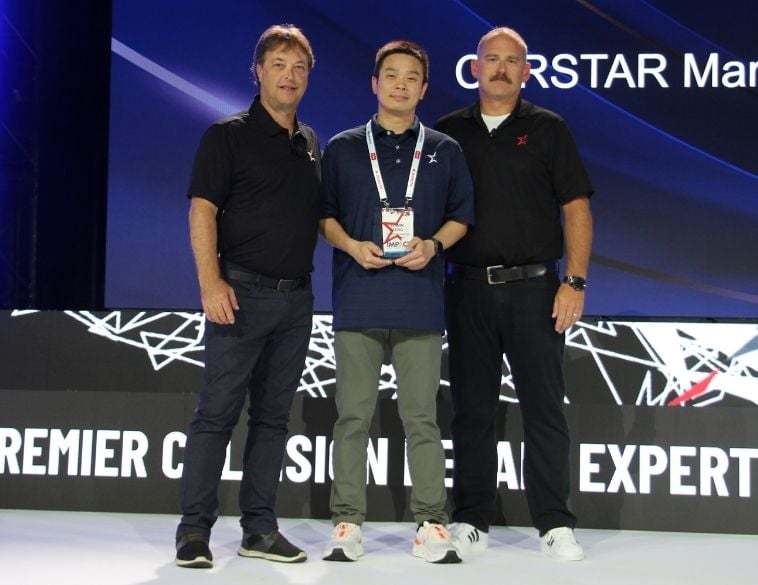
CARSTAR Canada Zone Directors Collin Welsh (left) and Andrew Northrup (right) with Tom Siu of CARSTAR Markham and Markham Heritage. Credit: Huw Evans
Part 2: Operations, Claims and Parts Considerations
Day two of CARSTAR’s 2026 Impact Conference in Halifax, began with an announcement of the CARSTAR Canada Rookie of the Year Franchise Award, which went to Tom Siu of CARSTAR Markham, and CARSTAR Markham Heritage.
Event emcees and CARSTAR Zone Directors Collin Welsh and Andrew Northrup then talked about the EDGE Operations platform. Welsh noted that while the platform was designed to be as effective as possible and enable CARSTAR locations to measure every activity related to their business, the platform is only as strong as the data feeding it. He noted that the true results of the network happen at the store level; that everyone needs to know the score and “the difference between average and great performance is knowing the goal.”
Northrup added that while CARSTAR EDGE is the path, “the dashboard is the proof, and coaching is the difference.” The emcees also took time to acknowledge Darryl Hemstreet of CARSTAR Red Deer and Red Deer south in receiving the award for Operational Excellence within the network.
Operational performance
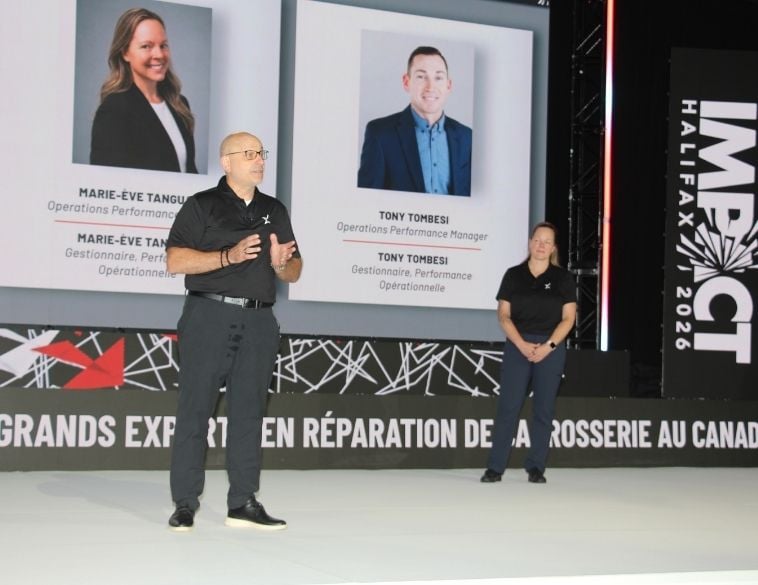
Next up, were Vince Matozzo and Marie-Eve Tanguay, who delivered an Operational Performance Message, Matozzo delivering the message in English and Tanguay in French. Matozzo talked about the link between Sales and Operations within the CARSTAR network, and how the goal is to bridge these departments and execute follow-up. “Our core focus is your success,” said Matozzo, addressing attendees in the expansive Ballroom B2 at the Halifax Convention Centre. He noted that goals and metrics are two sides of the same conversation and that in today’s collision repair environment, staying compliant within repair and operational guidelines is simply not negotiable. “Be proactive, support what is at risk, stay compliant and grow sustainably,” iterated Matozzo. He noted that within the collision repair industry, most key partners have a tiered scorecard they rely on and a key objective for stores should be to improve their scorecard, strengthen relationships with key stakeholders and by doing so, drive forward trust, growth and profitability. Both he and Tanguay noted that within the CARSTAR Canada network, 50 percent of stores have hit top tier ratings with their insurance partners, so the results and the capability are there.
“Mandell noted that while inflation today isn’t as high as it was a few years ago, there are issues developing, particularly around parts cost, availability and supply chain operations.”
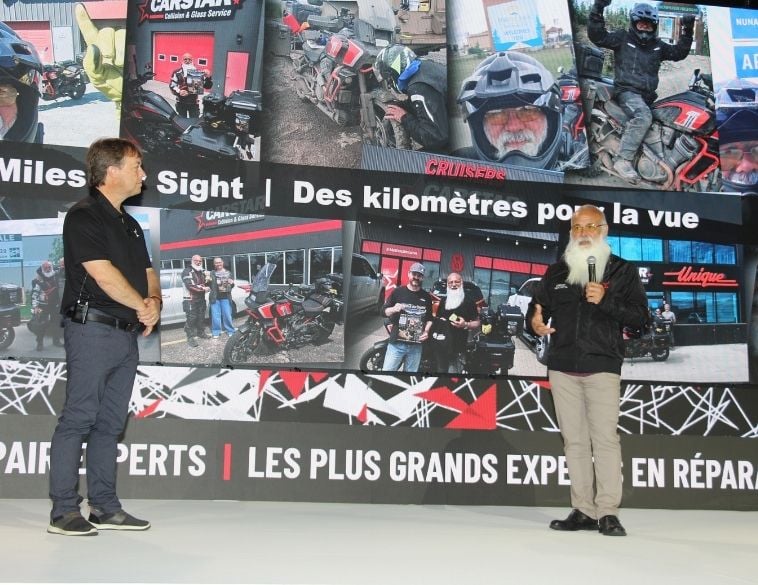
Miles for Sight
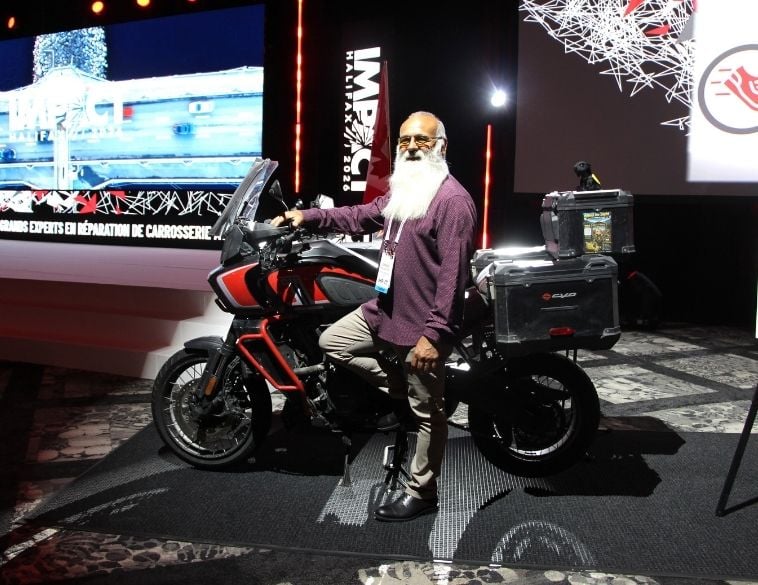
A fascinating story happening in 2026, is that of Lorenzo Pellicciotta, who owns and operates CARSTAR Oakville in Oakville, Ontario. Pelliciotta’s daughter, Olivia, was diagnosed with cataracts at a young age and this has driven him to spread awareness of visually impaired disabilities and raise money to support research to study and tackle it. This year, Pellicciotta decided to purchase a Harley Davidson Pan America 1250 Special Motorcycle and ride it to the four furthest points of Canada as part of a special Miles for Sight Campaign. He set himself a goal of raising $100,000 for the Canadian National Institute for the Blind (CNIB) and talked about his incredible experiences riding across the country including his journey on the Dempster Highway toward the Article and some the spectacular scenes and incidents that took place along the way, including riding alongside a bison on the highway. The audience was thrilled and inspired by Pellicciotta’s journey and it demonstrated how individual franchisees are making a huge difference to the lives of people not only in the communities in which they operate, but across the country.
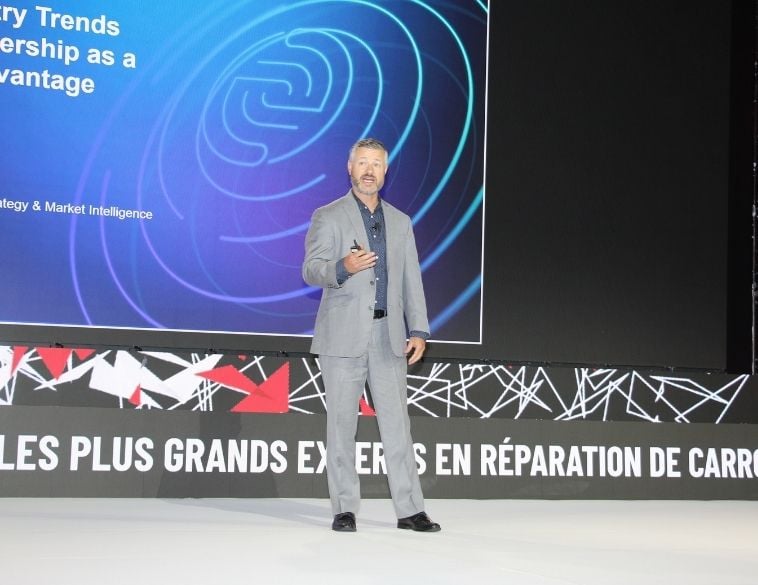
Ryan Mandell, Director of Collision Performance at Mitchell, delivered a fascinating keynote session that talked about current trends happening within the collision repair industry. He noted that today, the industry is in a very interesting position. On the one hand, costs are still going up, but not at the rate they were 3-4 years ago and at the same time, insurance premiums are rising significantly. “This is the highest rate of increase we’ve seen in the last 30 years,” said Mandell.
Different choices
Mandell noted that the rise in premiums is causing consumers to make different choices when it comes to their insurance policies, including higher deductibles and choosing to pay more frequently out of pocket for smaller, more cosmetic oriented repairs. Additionally, with vehicle complexity continuing to increase, including the need to perform ADAS calibrations, he asked the audience how all this plays into shop operations. He also discussed an interesting trend regarding salvage vehicles, not only that demand for salvage is up, but around 35% of all salvage titled vehicles in North America are being bought up and shipped overseas, where they are often repaired using low cost labour and little in the way of repair standards or regulations and then sold at a huge profit. This demand for salvage vehicles and exporting them is impacting borderline total losses here in North America, and with the rise in these kinds of claims, it’s important for shops to look for ways to keep these vehicles in the work stream so they aren’t written-off, especially in an environment when overall claims volumes are down, and shops need to maximize repair opportunities within a higher cost operating environment.
Mandell noted that while inflation today isn’t as high as it was a few years ago, there are issues developing, particularly around parts cost, availability and supply chain operations. He noted that in the U.S., the current geopolitical environment and the issue regarding tariffs on imports to the United States is causing more businesses to on-shore manufacturing, and this is impacting Canada.
Growing trend
He noted that in today’s collision repair environment, parts typically represent 50% of an estimate, and with more parts being produced in the U.S. this is going to increase parts prices, which will impact repair costs, something insurers will try to mitigate in view of already rising insurance premiums. He noted that within this environment, improved availability of aftermarket parts can make a difference, enabling repairers to realize higher margins by utilizing these and also quality recycled parts. He also talked about a growing trend in remanufacturing electronic components such as sensors and this is likely to impact repairers within the next few years. He noted that in the current higher cost economy, vehicle OEMs will try everything they can to mitigate price increases on the vehicles they produce, but the same doesn’t apply to parts, so expect significant parts price inflation over the next few years, particularly those manufactured from plastics, in which the raw materials are often sources from overseas. He noted that today, many parts are made from non-steel substrates which will continue to drive parts price increases, particularly on components such as bumper covers, exterior mirrors and head and taillight assemblies.
Mandell also talked about the importance of leadership and how collision repairers can leverage effective leadership as a real competitive advantage. He also stressed that effective leadership inspires others, improving loyalty, productivity and reducing staff turnover—an important consideration in collision repair, in which currently, labour turnover is around 30%—twice the rate of other skilled trades. “You have a challenging job,” said Mandell, referring to today’s shop owners and managers. “You have to manage both skilled labour in the shop and professional labour in the front office.”
Mandell noted that when it comes to staff, it was also important to express gratitude as often as you can and that often, small gestures go a very long way in helping build team morale and productivity within the shop.




JOBS
 |  RIVE-SUD DE MONTRÉAL RIVE-SUD DE MONTRÉAL Full time Full time |
 | MONTRÉAL Full time |
| MONTRÉAL Permanent |
 | BROSSARD Full time |
 | SAINT-BRUNO Full time |