
Informed Decisions
Autosphere » Collision »
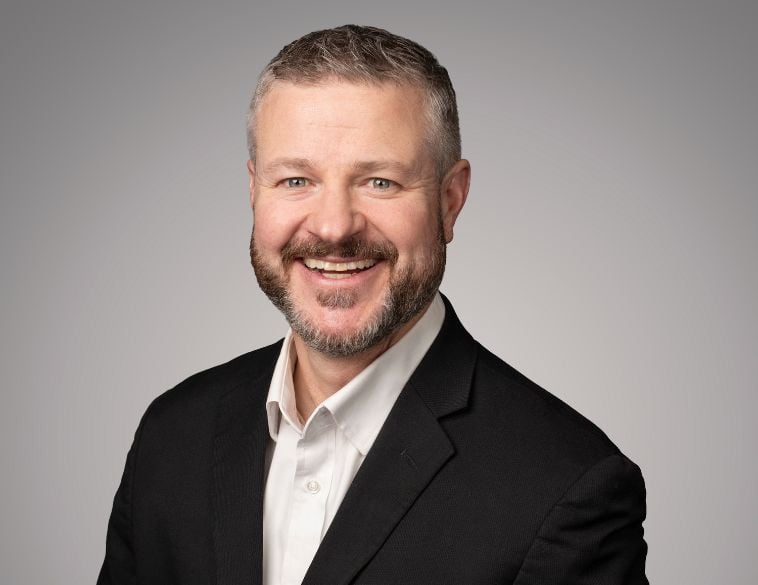
Ryan Mandell. Credit: Mitchell
A more diverse vehicle mix is changing how collision centres approach repairs
While there has been a lot of focus on electric vehicle adoption and advancing technology within the collision repair industry, the reality is that today’s collision centres are having to navigate a complex path. Adding to the complexity are the growing numbers of distracted driving-related collisions, the need to perform ever more technologically advanced repairs safety and efficiently, while also juggling a mix of highly-advanced and older, more traditional vehicles.
One area where this is really reaching an inflection point is the insurance claims process. In both Canada and the U.S., there is an ever-increasing desire for standardization. This is becoming more important due to the proliferation of different vehicle types and powertrains, which is creating nuances when it comes to the repair process. On the other hand, estimates and repair procedures vary widely from region to region, making it harder for collision centres to provide a consistent repair experience while pushing the limits of domain knowledge.
More specialization
As a result, many shops are focusing on specialization, due to the different repair requirements, training and skills required to fix individual vehicles. This is one reason why interest in Artificial Intelligence has increased, since it can help provide greater uniformity and consistency when it comes to both claims processing and repair planning. On the shop floor, there is also a greater desire to rely on technical abilities to produce accurate estimates, whereas in the past it was frequently done based on instinct.
When you’re in a situation where you have 300-400 different vehicle models and repair information changes not only from year to year but within a year, having that overall domain expertise becomes increasingly untenable. That makes more specialized and ongoing training critical. Shops may need to specialize in not just specific automobile brands, but specific vehicles.
“In today’s environment where overall claims volumes are down by 8-10%, vehicles that are heavy hits and borderline total losses are much more valuable.”
– Ryan Mandell
Total loss considerations
Compounding the issue are total losses. In the past, when many collision centres had robust repair volumes and a backlog of work, a total loss wasn’t often a significant issue. In today’s environment where overall claims volumes are down by 8-10%, vehicles that are heavy hits and borderline total losses are much more valuable. When you see more total losses cutting into your claims volume, the question then becomes, how do you contend with those vehicles that are at risk of being written off as a total economic loss?
While it is paramount that the decision to repair the vehicle must be made on the basis of those repairs being performed properly, safely and at the customer’s request, making the process economically feasible requires considerations about the type of parts used and whether they should be repaired or replaced as well as if the work can be done in-house. This is something that shops need to increasingly consider, especially on those vehicles that are borderline total losses.
Older and newer mix
Another factor adding to collision repair complexity is contending with the mix of older and newer automobiles. While the overall vehicle parc continues to age (it’s over 11 years in Canada and 13.5 in the U.S.), most collision centres in Canada are repairing 2–3-year-old vehicles. That said, when a 2006 model year vehicle comes in, a collision centre needs to ensure that the repairs are treated differently than a 2026 model year vehicle. For example, it should first be determined whether the older vehicle requires a pre- and post-scan, not just automatically including it as part of the repair plan. Over-engineering the estimate can trigger a total loss, especially on older vehicles that tend to have lower market values.
For newer vehicles and performing procedures such as ADAS calibrations, shops must decide whether they can do the work in house. If they can, it is a great benefit in terms of efficiency and profitability. However, not all shops have the required space or equipment so if the work goes to a sublet, that service provider has to be a trusted third party, and the shop should have already determined the extent of the work and the calibrations recommended to properly return the automobile to OEM specifications.
When minor damage isn’t minor
In today’s environment, even seemingly minor damage to a rear bumper or tailgate may require an ADAS calibration. Depending on the vehicle and the OEM’s repair procedures, it may also necessitate removal of interior components or replacement of factory-installed airbags. These requirements underscore the importance of understanding the full scope of the OEM-recommended repair process before work begins. Identifying repair operations early in the process will help collision centres properly plan, communicate expectations to customers and insurance partners, and manage the complexity and liability associated with safely returning today’s collision-damaged vehicles to the road.
Tags : Mitchell International

JOBS
 |  DORVAL DORVAL Full time Full time |
| ST-HUBERT Full time |
 | MONTRÉAL Permanent |
 | SASKATOON Full time |
| MONTRÉAL-NORD Permanent |