


Subscribe to our Autosphere magazine and our weekly newsletter to get the latest industry news.
Automotive News, Expert Advice, and How-tos
Ontario’s Tire Collection Challenges
Autosphere » Collision »

Carol Hochu, President, TRAC. Credit: TRAC
A look at proposed improvements, regulatory changes and common interests
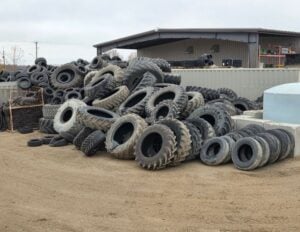
Ontario’s tire recycling system is facing a period of significant adjustment as collection challenges and proposed regulatory changes converge. Tire recycling programs depend on a complex network of collectors, haulers, processors, end markets, and regulatory oversight, and disruptions in any part of this system can create bottlenecks throughout the chain. While stakeholders continue working toward solutions, the issues have highlighted the complexity of managing one of the province’s largest circular economy systems.
Seeking solutions
Discussions between industry participants, the government, and the regulator have been ongoing as stakeholders work to address current collection challenges and reduce the likelihood of similar issues in the future.
The shared objective is to maintain effective collection services while ensuring used tires continue to move through the system in an environmentally responsible manner.
Stakeholders have emphasized their commitment to resolving operational issues and maintaining confidence in Ontario’s tire management framework. While timelines toward full resolution continue to evolve, ongoing dialogue is focused on both immediate operational improvements and longer-term system resilience.
Proposed regulatory changes
At the same time, the province is considering regulatory changes intended to strengthen performance requirements and increase accountability throughout the system. These proposed measures could significantly affect how tire collection systems operate.
The first proposed change is a requirement that collected tires be recycled or repurposed within three months of collection. Supporters view the measure as a way to prevent large scale accumulations of material while at the same time encouraging efficient movement through the system. However, implementation would require careful planning and execution. Tire management systems often depend on processing schedules, transportation availability, seasonal demand patterns, and market conditions, all of which can influence how quickly material moves through the supply chain.
The second proposed change would require PROs (Producer Responsibility Organizations) to collect tires from sites that have accumulated 50 or more tires within one to two months. For end-of-life (ELT) tire generators, this could provide greater certainty regarding collection timelines. However, for PROs and service providers, meeting prescribed collection windows may require additional coordination, transportation resources, and contingency planning.
The third proposed change would eliminate the current $1 million cap on non-compliance fines. Stakeholders are closely examining how stronger enforcement measures could influence compliance, operational risk, and program costs.
As with any regulatory reform, the ultimate impact will depend not only on the requirements themselves but also on how they are implemented and enforced.
“Stakeholders have emphasized their commitment to resolving operational issues and maintaining confidence in Ontario’s tire management framework.”
– Carol Hochu, President, TRAC
Lessons for the future
The current situation serves as a reminder that recycling systems are supply chains in their own right. Collection is only the first step. Successful outcomes depend on transportation networks, processing infrastructure, end-market demand, investment, and regulatory certainty working together.
Ontario’s ELT management system has successfully diverted millions of tires from landfill over the years, but recent challenges demonstrate the importance of maintaining flexibility and building resilience in the face of changing market conditions.
As discussions continue, industry participants, regulators, government, and service providers share a common interest in ensuring the system remains effective, efficient, and capable of meeting the needs of Ontarians. Whether through operational improvements, regulatory adjustments, or a combination of both, the focus remains on building an ELT management system that can reliably collect, recycle, and repurpose tires while adapting to changing supply chain realities.
Bio: Carol Hochu is President of the Tire and Rubber Association of Canada (TRAC) You can reach her here

JOBS
 |  LACHINE LACHINE Full time Full time |
 | BROSSARD Permanent |
 | VAL-DAVID Full time |
 | BURLINGTON Permanent |