
Is it Impossible to Repair Body Parts?
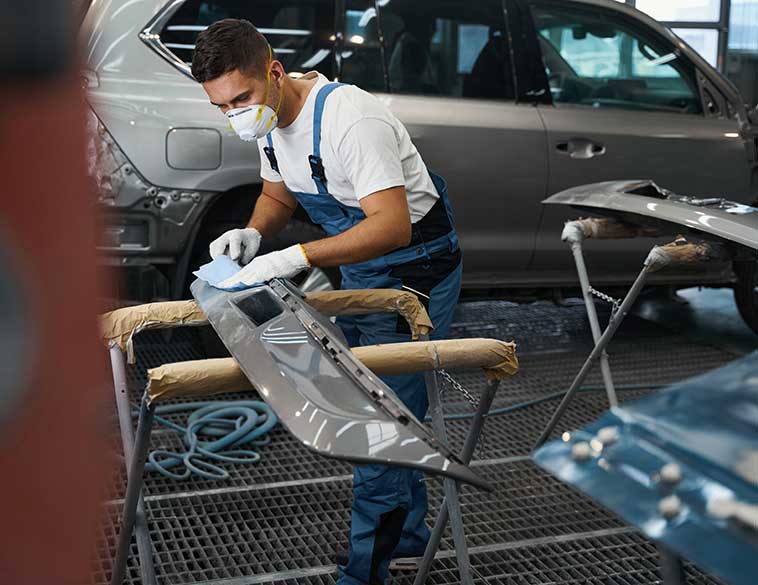
Collision repair requires a high level of technical expertise.
Information on how to repair body parts exists, but is the process profitable?
New polymers, plastics, aluminum, various types of steel, and even carbon fiber make collision repair complex, and at times, impossible.
To better understand this trend among manufacturers to constantly use new materials, we spoke with Jean-François Gargya, General Manager of the CarrXpert collision repair network. This network, owned by the Corporation des concessionnaires automobiles du Québec, is naturally the closest to manufacturers, working hand-in-hand with new vehicle retailers.
Does this privileged position allow repairers to prepare for new developments and to equip and train themselves accordingly?

“Yes and no,” says Gargya. “A manufacturer using a new plastic for a bumper might not confirm its use until mass production. Sometimes, materials can change at the last minute. Dealers and shops in our network aren’t necessarily informed before other repair businesses.”
Evolving Parts
In fact, the General Manager of CarrXpert cannot blame manufacturers for this lack of information. “Not only is technology constantly evolving, but the same goes for our governments’ regulatory constraints.”
In short, the combination of vehicle weight reduction and lower production costs—heightened by trends and the need to constantly launch new models—is leading to a proliferation of parts made from new materials. Furthermore, Normand Cormier, Training Director for the Americas at Axalta and surface specialist, points out that the trend is primarily toward combining a variety of materials.
“For example, the exterior door panels on some Acura models are aluminum, while the shell is steel. These two metals can generate galvanic corrosion when in contact, so it is imperative to follow manufacturer recommendations when replacing the outer panel.”

Rémi Michaud, a teacher and specialist in motorized equipment repair, as well as Regional Director for Quebec at CARSTAR, explains that modern bodywork is undergoing a profound transformation. “Engineering plastics, aluminum, multiphase steels, and composites now require an approach entirely dictated by the manufacturers. Audi, for example, prohibits any plastic repair or the use of putty within a 25-centimetre radius of blind spot sensors, and limits paint thickness to 150 micrometres, to avoid blinding the radars and ACC located behind the bumpers¹.”
In high-performance vehicles, the rules are even stricter, he points out. For instance, on the Corvette C8, General Motors requires the complete replacement of structural carbon fiber parts rather than a repair, due to the sensitivity of these components². In some cases, using non-OEM parts can compromise vehicle safety and warranty³.
Handle with Care
Even bumpers require special attention: several manufacturers specify that they do not tolerate structural repairs or excess paint when radars are integrated⁴.
“Faced with this reality, shops must turn to continuous training and refer to OEM documentation,” insists Michaud. “After 35 years in the trade, I see bodywork evolving into a hybrid profession, where the technician becomes a specialist in materials, electronics, calibration, and OEM standards. The future belongs to those who embrace this complexity and invest in training and rigour.”
Information Accessible to All
According to Gargya, all aftermarket shops have access to the same data and processes as dealerships. “Sometimes, you have to wait months before the latest repair processes are updated by the manufacturer. Models and materials are constantly changing. I agree on the importance of training and following repair procedures, as the quality of work and driver safety depend on it.”
We asked the head of 155 CarrXpert shops in Quebec if the complexity of parts and the tightening of manufacturer standards weren’t aimed at increasing the sale of original parts.
“First, aftermarket part manufacturers are having a lot of trouble keeping up with the pace of automakers who are multiplying parts and options. It was simpler when a manufacturer kept the same model with a few cosmetic changes for ten years. Moreover, the repair market is changing. Repairing these parts requires technical expertise that is becoming increasingly scarce. Ultimately, I’m no longer convinced it’s more profitable for a shop to bill for repair hours than to profit from the sale of increasingly expensive parts.”
- Audi — Repair restrictions around ADAS sensors (25 cm distance, 150 µm paint limit) [rts.i-car.com], [motorclaimguru.co.uk]
- GM — Corvette C8: Mandatory replacement of structural carbon components [gmrepairinsights.com]
- Mercedes-Benz — WIS procedures, OEM part requirements, calibrations, and ADAS safety [mbcollisioncenters.com], [mbusadisclosure.com]
- Audi, GM, Mercedes — Bumper repair restrictions for those containing radars/sonars (substrate, paint thickness, calibrations) [rts.i-car.com], [crowncollisionsolutions.com]


JOBS
 |  DORVAL DORVAL Full time Full time |
| ST-HUBERT Full time |
 | MONTRÉAL Permanent |
 | SASKATOON Full time |
| MONTRÉAL-NORD Permanent |