
Fewer Sales, More Claims
Autosphere » Collision »
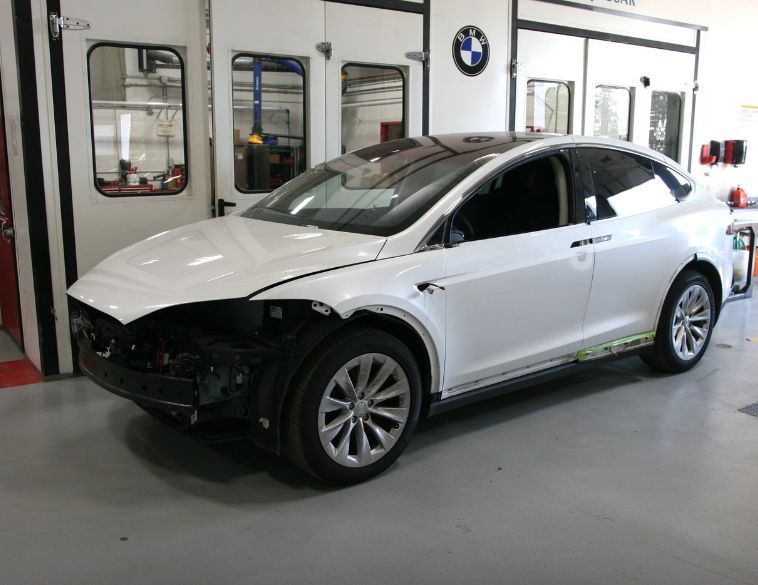
Severity and repair costs are expected to increase during 2026. (Credit : Huw Evans)
EV demand is shifting, which will impact repair trends going forward.
In 2025, we saw significant changes happening in both battery electric vehicle (BEV) adoption and repairable claims. Much of it was driven by policy changes including the ending of EV incentives, and changes in trade policy. The result has seen many automakers scale back their EV offerings and sales targets, instead focusing on a more powertrain agnostic approach for new vehicles that includes hybrids, traditional ICE engines and battery electric technology.
Trending upward
Nevertheless, when we look at insurance claims frequency for collision-damaged battery electric vehicles, it has continued to increase in both Canada and the U.S. According to Mitchell’s most recent Plugged-In: EV Collision Insights report, which covered Q3 of 2025, BEVs represented 4.91% of all repairable collision claims in Canada, up 24.3% from the previous year.
In the United States, the increase during the same period was 3.21%, representing a 4.2% year-over-year increase and an all-time high for BEV claims.
Nevertheless, there are some factors to consider. Firstly, the ending of federal EV incentives and a shift in sentiment will likely impact demand and claims frequency, at least in the short term. We’ve already seen OEMs scale back BEV investment and end the production of some battery electric vehicles, such as the Ford F-150 Lightning.
Longer-term outlook
It is important, however, to focus on the longer-term outlook. Despite the recent scaling back of EV development and a plateauing of sales, there are still big projects underway, including the investment in newer battery technology, such as solid-state batteries under development by Toyota in partnership with Sumitomo Metal Mining Co. Unlike the synthetic BEV demand we saw over the last few years that was driven by incentives, technological advancements like these will likely determine the true growth in future EV adoption.
There are also other considerations related to the Q3 findings, namely that the increase in claims frequency also factors in consumers who took advantage of tax credits and incentives before they expired in order to purchase an EV. Additionally, even if sales decline going forward, the overall percentage of EVs on the road will have increased.
Going forward, repairable claims on EVs are likely to be driven by region and demographics. In Canada, growth remains uneven across the country with some areas such as B.C.’s lower mainland and Quebec experiencing greater EV adoption than other regions such as the Prairies.
Location factor
Where a collision centre is located [and its customer base] will determine how much it is willing to invest in the tools, training and technology required to repair these vehicles. There’s also the question of severity.
Currently, EVs still have the highest claims costs for repairable vehicles, aided by their technological complexity, limited aftermarket parts availability and the processes required to properly repair them, including ADAS calibrations. Currently in Canada, calibrations represent approximately 10% of the entire repair and that is likely to increase with ongoing technological advancement and that, in turn, will continue to drive the cost of repairs higher. Furthermore, there is a likelihood of parts inflation returning in 2026. A lot of this will revolve around the U.S. Supreme Court’s decision on tariff policy, though we could see a scenario where OEMs and parts manufacturers institute price increases gradually through the course of the year, possibly in the 5-7% range during 2026—something that modern collision centres need to consider when it comes to their overall repair strategy, as well as EVs.


JOBS
 |  LASALLE LASALLE Full time Full time |
 | STE-AGATHE-DES-MONTS Full time |
 | SAINT-LÉONARD Full time |
 | MONTRÉAL Permanent |
 | JOLIETTE Full time |