
Fighting Static Electricity In Body Shops

Credit: Normand Cormier
If you’ve ever prepped a plastic part for repainting, you’ve probably experienced the sensation of your forearm hairs standing on end when passing very close to the part. This phenomenon is caused by a buildup of static electricity on the surface.
In manufacturing, static electricity is widely used during finishing to attract the maximum amount of paint particles to the part, increasing the efficiency of material transfer between the spray equipment and the surface and saving money in the process.
However, this technique can also increase the risk of surface contamination from dust or other airborne particles. That is why OEM paint departments are highly sterile environments with tightly restricted access. In repair shops, such conditions are impossible to maintain, and in those cases, eliminating static is the preferred approach.
Causes and solutions
What causes static electricity, what are the consequences, and most importantly, how can it be avoided?
Static electricity is the charge generated by friction between two objects made of different substances or materials. Some studies suggest that the human body can generate an electrical arc of up to 50,000 volts during discharge, such as when touching a charged car. This explains why the shock can feel quite strong and even make a cracking sound.
In addition to increasing the risk of contamination, static electricity can be dangerous during surface prep. Materials like plastic or fibreglass, which tend to accumulate static, should never be cleaned with solvent-based products. These products typically have a low flash point, and the slightest spark could ignite the cleaning cloths.
There are several ways to help dissipate static electricity. Using water- or alcohol-based cleaners helps eliminate it from the surface. There are also anti-static guns that neutralize the charge by releasing ions in the air stream blown over the part. These ions balance the surface charges and eliminate static. This process should always be done at the very end of the surface preparation. If the part is rubbed again afterward, a new static charge will be generated.
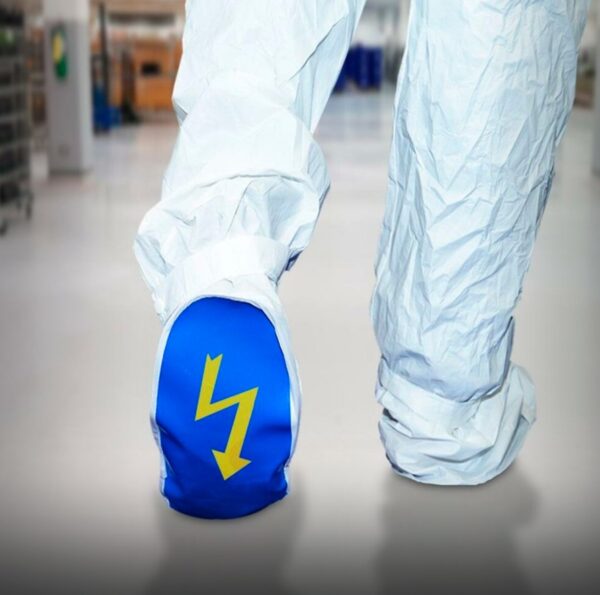
Finally, despite all the precautions taken during surface prep, it is important to control the environment in the spray booth during the finishing phase. Wearing a paint suit helps prevent the introduction of airborne contaminants. Safety shoes marked with “SD” for static discharge also help dissipate static by grounding the body.
As always, prevention remains the best way to eliminate static electricity.
Tags : Static electricity



JOBS
 |  BROSSARD BROSSARD Temporary Temporary |
| JOLIETTE Full time |
 | MONTRÉAL Full time |
 | MONTRÉAL Permanent |