
More Complexity, Better Solutions
Autosphere » Mechanical »
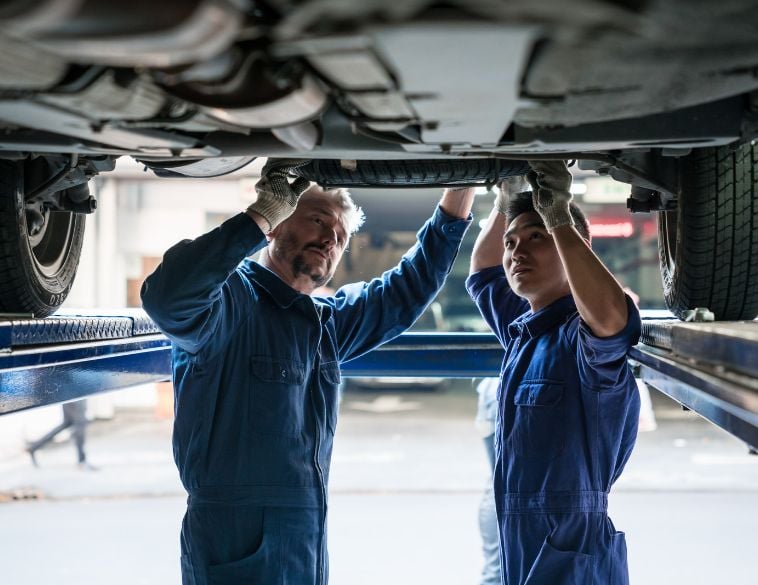
The sensitivity of modern suspension systems requires a different approach to maintenance and replacement. Credit: Mevotech
Maintaining modern suspension systems requires quality parts, good training and clear communication.
There was a time, especially in North America, where most light vehiclesuspension systems were relatively simple. Most passenger cars and light trucks relied on either independent front suspensions with coil springs or torsion bars and solid rear axles with leaf or coil springs. For pickups and SUVs similar setups were the order of the day, with solid front and rear axles common for part-time four-wheel drive systems.
Today things are vastly different. Most vehicles have fully-independent suspensions with multi-link designs the rule rather than exception. These advanced suspension designs, combined with lighter weight materials that are often employed to save weight and increase fuel efficiency, mean that service centres need to be diligent when it comes to inspections and replacing worn components.
More sensitive
At SKF, Global Product Line Manager Johannes Deeg says that the very nature of these suspension systems means they tend to be more sensitive to wear and damage. “Small amounts of play in components such as ball joints and control arms can have a notable impact on steering precision, ride quality, and tire wear.”
He says SKF encourages service centres to adopt a proactive maintenance approach by inspecting suspension components during routine service intervals such as oil changes and seasonal tire changeovers.
In addition, Deeg stresses the importance of using high quality components when replacing worn or damaged suspension parts. “Components must deliver the correct stiffness, sealing performance and durability to help maintain the vehicle’s original handling characteristics and safety performance throughout its life cycle,” he says.
Furthermore, Deeg notes that when it comes to vehicle suspensions, including the replacement of components, it’s important to educate customers and be transparent with them, since suspension parts tend to wear gradually and the difference in performance deterioration can be harder to detect compared with other vehicle systems such as brakes. “Service centres should help customers understand how worn suspension components can affect safety, handling, tire life and overall driving comfort,” he says.
Common wear aspects
At Mevotech, Victor Moreira, Director for Technical Training and Support, says that some of the most common wear aspects on late-model vehicles when it comes to suspension components, tend to be ball joints, control arm bushings, stabilizer links, tie rod ends, suspension mounts; struts and shock absorbers. “Bushings are a big one because they can soften, crack or separate without always looking like something obviously failed,” explains Moreira. He also notes that uneven tire wear tends to develop as wheel alignment changes and suspension components begin to develop play as a result of wear.
“The important thing is to look at the system as a whole,”he says. “One worn component can affect surrounding parts, alignment and overall vehicle handling, so a complete inspection is always the best approach.”
For motorists that are looking to keep their vehicle for a longer period of time (a trend that’s increasing as the average age of vehicles of road in Canada and the U.S. continues to climb), investing in quality repairs and using premium parts can make a big difference over the longer term, which includes having shops perform complete system repairs rather than just partial fixes.
“While the initial repair cost may be higher,” says Johannes Deeg at SKF, “it can help prevent repeat visits, uneven tire wear and additional component failures down the road.”
Beyond basic replacement
At Mevotech, Victor Moreira says, that when keeping a vehicle longer, there is a strong case to be made for moving beyond basic replacement parts and utilizing a more premium solution. He references Mevotech’s Supreme and TTX product lines of chassis and suspension components as a prime example. “With Mevotech Supreme, the focus is on providing a higher-quality replacement with added durability and design improvements over a standard replacement part,” says Moreira. For vehicles that see tougher conditions, heavier loads, rough roads or more demanding use, Mevotech’s TTX range takes that a step further by providing products with heavy-duty components built for increased strength and durability.
The key is “matching the part to the vehicle and how it is used,” he says. “Stepping up to Supreme or TTX can provide better value by improving durability, reducing the chance of repeat repairs and giving the customer greater confidence in the repair itself.”
The key to selling suspension work and being able to do it effectively often comes down to showing the customer what is actually happening to their vehicle as components wear. “When they can see movement in a ball joint, a torn bushing or shown uneven tire wear, the conversation becomes much easier,” says Moreira.
He notes that vehicle owners tend to respond best to clear, simple explanations rather than overly technical ones. “Explain what the component does, what happens when it wears, and how that can affect steering, handling, tire wear and overall vehicle safety,” states Moreira.
He stresses that for shops, the objective is to make the repair easy to understand and give the customer confidence that the recommendation is based on the actual condition of their vehicle, and the customer’s safety on the road, not just about selling another part or repair order.
For shops and technicians, being able to offer their customers high quality replacement suspension parts is one thing, but ensuring ultimate satisfaction from the work performed and building long term trust and retention with those clients relies on both quality and consistency. “This really starts with giving technicians access to the right information before the vehicle ever goes on the hoist,” explains Victor Moreira. He says that clear installation procedures, torque specifications and inspection processes all help reduce comebacks and avoid unnecessary installation issues. He says that Mevotech’s technical support team “works directly from vehicle service information to make sure the guidance we provide installers is current and as accurate as possible.”
When it comes to training there are also practical considerations. Moreira notes that shops tend to get the most value from real-world instruction that enables technicians to understand what to look for, why components fail and where installation challenges commonly occur. Additionally, service advisors, need to be trained so they understand the specific repair well enough to explain it clearly to the customer. “When technicians, advisors and technical support are all working from the same information, the result is a smoother repair, greater consistency and a better overall customer experience,” says Moreira.
A strong warranty is also important, but as Moreira explains, how that warranty is supported matters just as much. “This is especially true when it comes to steering and suspension components,” he says. “Clear policies, fast communication and a knowledgeable technical team can make the difference between a small issue and a frustrated customer.” In today’s market, service centres are under pressure to protect their reputation and avoid comebacks. That’s why, says Moreira, “supporting them with the right information, fair warranty processes and timely solutions helps build confidence in both the repair and the product behind it.”
Tags : SKF



JOBS
 |  MONTRÉAL  Permanent |
 | SAINT-LAURENT Permanent |
 | DOLLARD-DES-ORMEAUX Permanent |
 | LAVAL Full time |
 | BROSSARD Permanent |