
When and How Will Chinese EVs Be Sold Here?
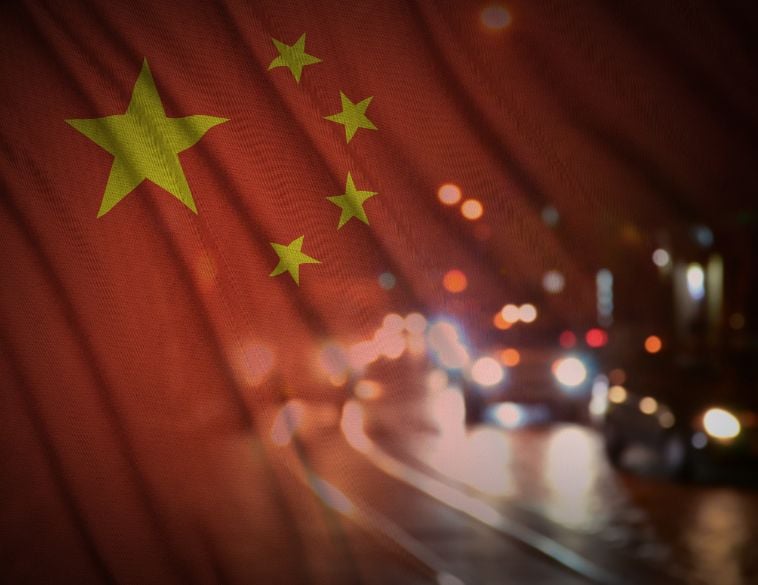
Chinese electric vehicles enter the Canadian market. Credit: Envato
By whom and how will Chinese electric vehicles be sold, given that the Canadian government has just significantly reduced customs duties on them?
Apprehension, enthusiasm, and uncertainty—Quebec dealers are riding a wave of emotions on the eve of the highly anticipated arrival of affordable Chinese EVs in Canada. In truth, Chinese-built EVs are already here, with Tesla and Polestar manufacturing several models there. The reduction in customs duties applied in 2024–2025 to Chinese EVs, which currently stand at around 6% instead of the previous 100%, will be highly beneficial to them.
The quota system established by Ottawa allows for the annual delivery of 49,000 Chinese electric or plug-in hybrid vehicles starting this year, with the agreement envisioning that a significant portion will be affordably priced. In fact, Chinese automakers will have little choice if they want to compete with established suppliers; because China lacks a comprehensive free trade agreement with Canada, their vehicles do not qualify for federal incentives. Furthermore, long-term market access is tied to a commitment to establish assembly plants or production partnerships within three years.
The newcomers
Electric vehicles manufactured in China are already available here. What is generating a lot of buzz right now is figuring out exactly how automakers like BYD, Zeekr, or Chery, to name just a few, intend to approach our market.
According to analysts, it may be 2027 before a structured marketing rollout is established. “We are hearing rumours from all sides,” says Ian Sam Yue Chi, President of the Corporation des concessionnaires automobiles du Québec (CCAQ). “While there is little doubt that Chinese electric and plug-in hybrid vehicles will be marketed in Canada, what remains to be seen is what these companies’ business plans will look like in our market.”
What the President of the CCAQ is calling for is for Chinese automakers to operate through a structured dealership framework. Chinese companies do not have a reputation for being easy to do business with, and local dealers must do their homework if they plan to seize this commercial opportunity. Indeed, many established dealers are already in contact with Chinese manufacturers or agents, as visits to the Middle Kingdom multiply. Brands like NIO, Chery, and Xpeng have registered their trademarks in Canada and placed their cars in winter testing to ensure their capability to operate in our extreme conditions.
For its part, BYD (Build Your Dreams), the world’s largest EV manufacturer, aims to open around twenty sales outlets in Canada before the end of the current year.
Defining the retail model
“We will have to look closely at the agreements,” Sam Yue Chi continues. “We are urging the government to ensure that the dealership model is prioritized, especially since these vehicles are unfamiliar to consumers, who will want the assurance of dealing with serious, established companies in the country.” This recalls the situation in Turkey, which welcomes foreign automakers of all origins on the condition that they have at least twenty service outlets for their brand distributed across the country.
One thing is certain: even though the demand for 100% electric vehicles seems well served at present, the announcement of the arrival of new competitors is causing quite a stir in the sector. The promise of volumes that appear limited in a market of 1.9 million new light vehicles sold in Canada is shaking up perceptions. Indeed, these 49,000 units would represent between 15% and 20% of the electric supply in Canada, depending on how demand evolves. Even greater turbulence is expected if the asking prices are accessible to the budgets of first-time EV buyers.
“We are opposed to direct sales,” states Jacques Olivier Junior, President of the Corporation des concessionnaires d’automobiles de Montréal and President of the eponymous group, which owns 22 dealerships. “The Chinese have shown an interest in offering franchises to well-established dealerships. They need partners and the ability to offer local service. Ideally, at the government level, this venture must also be a driver for job creation.”
Olivier is interested in adding a sales outlet for Chinese vehicles to his current offerings. “If the business plan makes sense, yes, I’m on board. But we shouldn’t expect bargain-basement cars. In my opinion, we can look at a price difference of a few thousand dollars at most.”
True, the price cannot be offset by the incentives we mentioned. However, according to the feedback we are receiving, the Chinese vehicles will be less expensive than their competitors currently on the market, with equivalent build quality and, above all, highly innovative technologies.
Innovative vehicles
“We spent a week in China for the Shanghai Auto Show, under the auspices of the Canadian Automobile Dealers Association (CADA),” notes Alexandre Saillant, Vice-President of Groupe Saillant. “While the Chinese once had a reputation for being copycats, that is no longer the case. Today, they are innovators, and they will be able to bring superior products to our market. The arrival of more affordable Chinese electric vehicles will certainly shake up the competition to the detriment of North American automakers.”
The Vice-President of Groupe Saillant says he is pleased with this new dynamic. Consumers are becoming increasingly interested in Chinese electric vehicles.
“I believe we need to be part of it. Let us remember the entry of Japanese automakers here in the 1970s, which rolled out over twenty years, and the Koreans who built their foundations and reputation in Canada in ten years. In my view, the Chinese will establish the same footprint in five years.”
According to Saillant, a lower price point might attract buyers, but the vehicles’ advanced technology is what will close the sale.
“The new generation of Chinese vehicles is an extension of the smartphone and cutting-edge home automation,” the dealer explains. “I believe it is the technology that will attract customers, far beyond any anticipated savings of $4,000 to $5,000.”
While there is no doubt that Chinese electric and hybrid vehicles will soon make an appearance in our market, they must first clear the hurdle of homologation. Vehicles that are not already commercialized here will have to prove that they meet Canadian Motor Vehicle Safety Standards (CMVSS). The process can take time, which explains why our experts anticipate a more significant presence of these EVs in early 2027.
Tags : EV

JOBS
 |  RIVE-SUD DE MONTRÉAL RIVE-SUD DE MONTRÉAL Full time Full time |
 | MONTRÉAL Full time |
| MONTRÉAL Permanent |
 | BROSSARD Full time |
 | SAINT-BRUNO Full time |