
Tips for Keeping Vehicles on the Road Longer
Autosphere » Mechanical »

Credit: Steve Oborne
A car is not an investment—it is a major expense, often necessary just to get to work and handle day-to-day activities. Still, for many of us, owning a vehicle is also a pleasure or a passion. One thing is obvious: the better a vehicle is maintained, the fewer major breakdowns it will suffer over its lifespan.
So, why not share a few key tips that, in our shop’s experience, are crucial to keeping a vehicle on the road as long as possible?
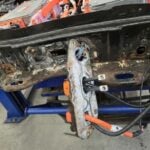
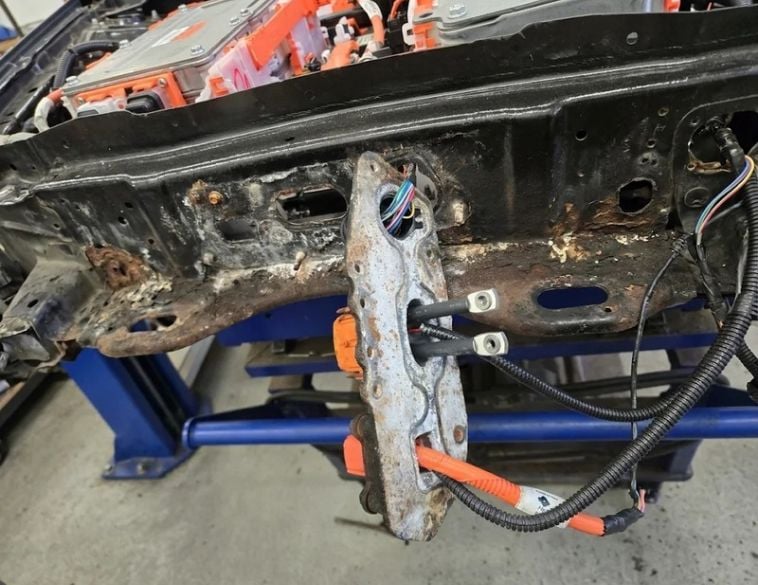
- Photo 1: Rustproofing. When buying a new vehicle, a quality rustproofing treatment is essential to prevent bodywork issues and more serious mechanical failures. To back this up, one of the photos shows the front of a Nissan Leaf high-voltage battery we had to open after it broke down. Corrosion had caused an open interlock circuit in one of the connectors. The high-voltage battery housing itself was also heavily damaged by rust. All of this can be avoided with rustproofing applied as early as possible in the vehicle’s life.
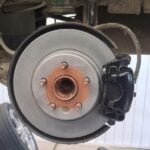
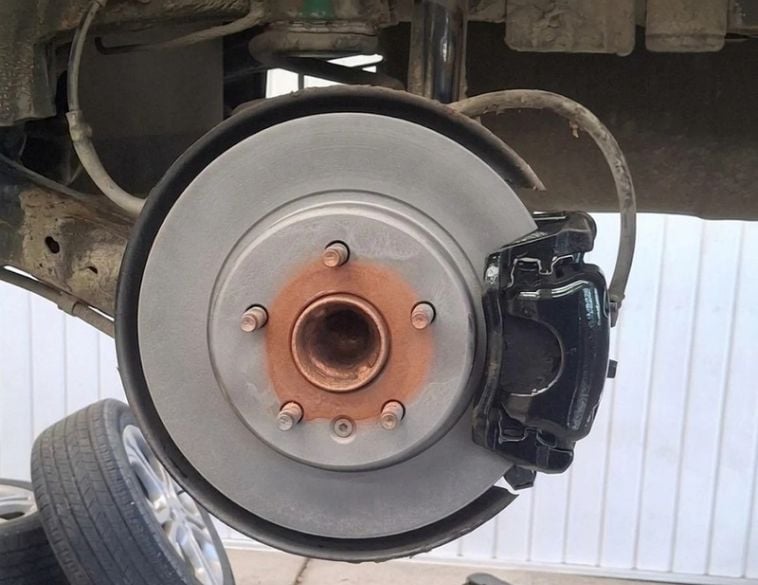
- Photo 2: Brakes. Servicing the brakes early in a vehicle’s life—using proper methods and quality products—ensures they not only perform as designed, but also last longer. Properly functioning brakes also slow the spread of rust on their components while keeping the vehicle safe.
- Manufacturer-Recommended Maintenance. Automakers often provide a solid roadmap for extending the service life of certain components by recommending specific filter and fluid replacements at set intervals. Others, however, offer very few recommendations. At a minimum, drivers should follow the manufacturer’s guidelines, while keeping in mind that nothing stops them from doing more. We are seeing automakers push certain maintenance intervals out as far as possible—sometimes to the point of not suggesting them at all. Over the long haul, that hurts component durability. A few years ago, we had the drive-unit oil analysed on a Tesla Model 3 with roughly 140,000 km on it. The oil was black. The lab report came back with a clear recommendation to share with our customers: if the goal is to pass the 200,000 km mark without worrying about the motor’s future, replacing the oil between 100,000 and 150,000 km should be seriously considered.
- Annual Inspections. Perform at least one comprehensive vehicle inspection every year to get an accurate picture of its condition and catch issues before they become serious.
Going back to my opening statement: a car is far from an investment. However, if we succeed in keeping breakdowns to a minimum, the total cost of ownership will be lower—guaranteed!

JOBS
 |  L'ASSOMPTION  Full time |
 | JOLIETTE Permanent |
 | LAVAL Full time |
 | CHÂTEAUGUAY Full time |
 | BLAINVILLE Full time |