
When AI Lulls Drivers’ Reflexes
Autosphere » Mechanical »
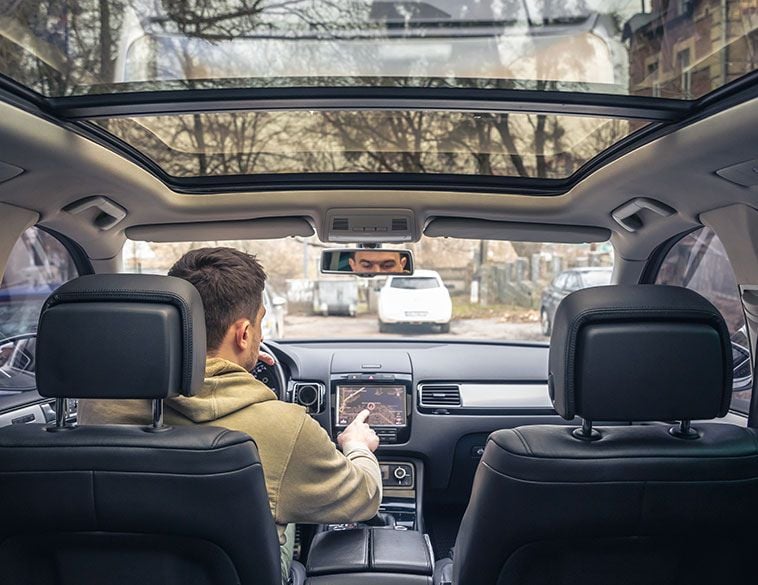
Regardless of the level of advanced driver assistance systems, driver alertness is required. Credit: Envato
We must listen attentively, and sometimes skeptically, to clients who point the finger at an “AI failure” to justify a fender bender.
While the debate over legal liability remains open, it highlights a brutal mechanical truth: the decline of human alertness caused by advanced driver assistance systems.
Throughout my diagnostics, the conclusion is clear: the more efficient the technology becomes, the more drivers tend to lull their reflexes, thereby increasing the risk of accidents. This is the paradox of our time.
Granted, proactive alerts, blind-spot monitoring, radar, and emergency braking are essential safety nets. We must still beware of the illusion: a system that “corrects” is not a system that “replaces.” For a driver who has already mentally checked out, even the most advanced electronics will only ever be a helpless bystander to the crash. In mechanics, just like on the road, a tool is only as good as the hand guiding it.
The driver remains in control
Make no mistake: despite the abundance of sensors, the driver remains, both legally and technically, the only true operator of the vehicle. For Level 1 and 2 systems, the ones we see every day in the shop with lane-keep assist and adaptive cruise control, keeping hands on the wheel is not an option; it is a duty of care.
The game changes when we shift to the cutting-edge Level 3. There, if the conditions are met, the law finally allows the driving task to be delegated. This applies only to certain regions. In these specific cases, liability shifts to the manufacturer or developer.
But beware of the wake-up call: as long as we are not riding in a 100% autonomous mobile lounge (Levels 4 and 5), the driver’s judgment outperforms any algorithm. AI is just a tool, much like a brake calliper or a camshaft; it assists, it does not replace.
When dealing with a client who blames their machine after an accident, our role changes. We must be factual and empathetic: listen to the client’s anxiety, certainly, but bring the debate back to raw technical ground. Analyzing a vehicle’s data to determine if the AI was active is a complex science that leaves little room for doubt.
Tags : AI

JOBS
 |  DORVAL DORVAL Full time Full time |
| ST-HUBERT Full time |
 | MONTRÉAL Permanent |
 | SASKATOON Full time |
| MONTRÉAL-NORD Permanent |