
CAA Strikes Back with a Summer Edition of Its EV Road Trip
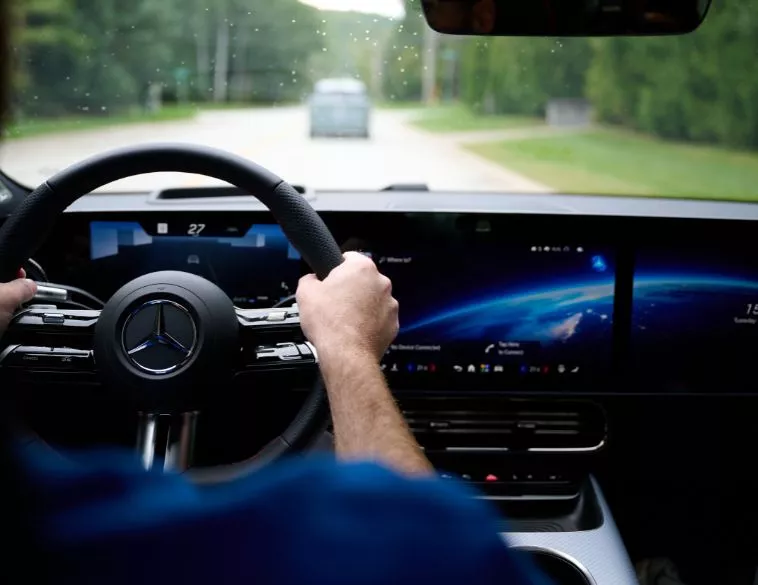
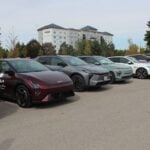
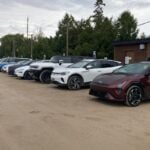
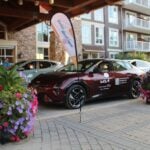
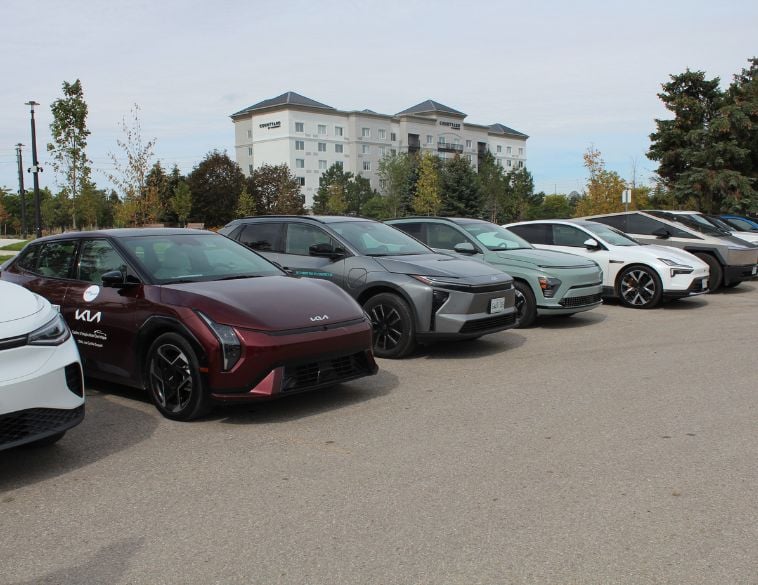
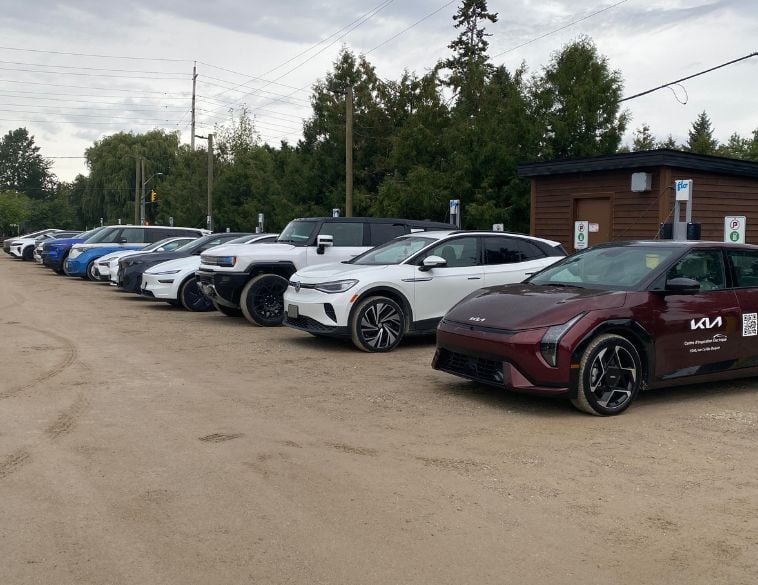
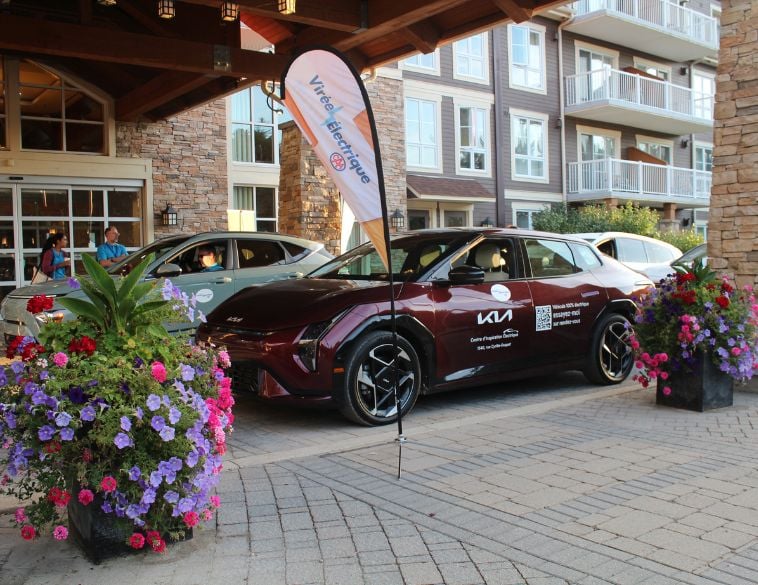
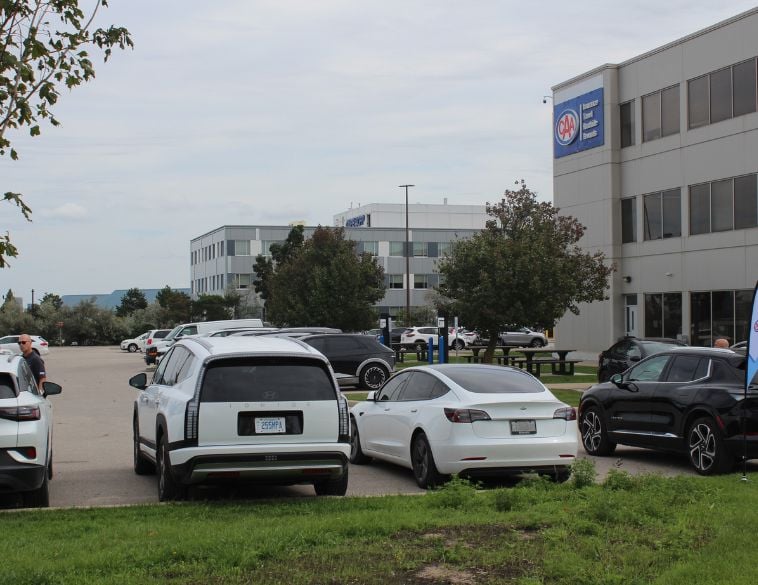
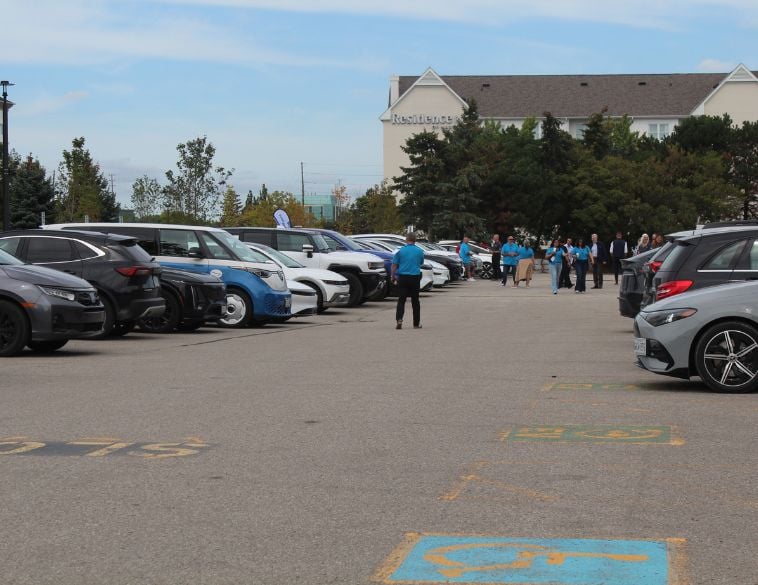
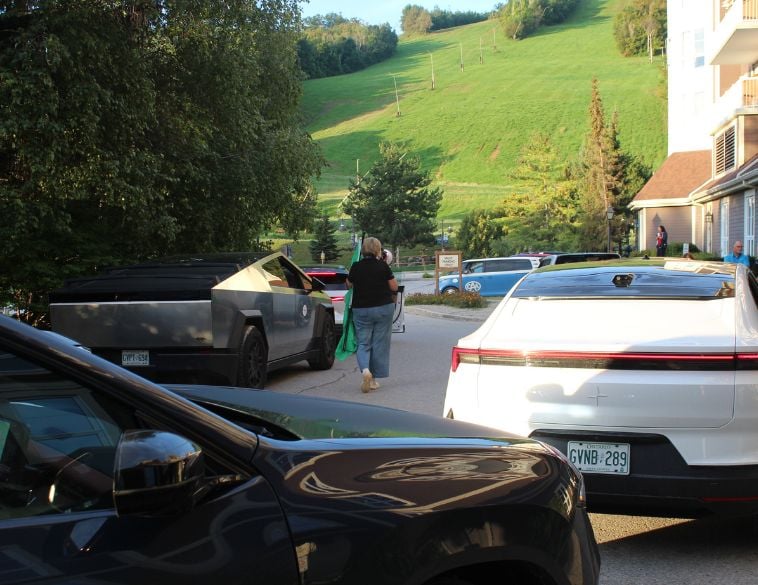
The second edition of the CAA EV Road Trip put 22 vehicles to the test across nearly 230 kilometres of Ontario roads this past September. Credit: CAA
Advances in onboard EV battery technology have made giant strides over recent years, rendering range anxiety obsolete. Now, “the question is no longer whether an electric vehicle will reach its destination, but rather how fast it charges, how much that charge costs, and how efficiently the vehicle consumes its energy,” says Pierre-Serge Labbé, Vice President of Mobility Services at CAA-Quebec.
It was in this spirit, aiming to address consumer concerns, that the national non-profit CAA Club Group (CCG—which represents the Ontario and Manitoba auto clubs) organized an EV Road Trip in mid-September. In its second edition, the 2026 event brought together 22 vehicles. Spanning multiple segments (passenger cars, utility vehicles, luxury models, and pickup trucks), this lineup represents more than three-quarters of all EV sales across the country.
The previous event took place in the dead of winter on Quebec roads. Back then, the goal was to drive each test subject until battery depletion to evaluate performance limits and recharging capabilities. This time, the exercise shifted its focus to energy efficiency, operating costs, and fast-charging performance.
Drivers were required to follow specific protocols to standardize the experience and ensure consistent data. These rules governed cabin temperature and speed—kept within five km/h of posted limits—while strictly prohibiting cruise control, seat or steering wheel heaters, and driving with open windows.
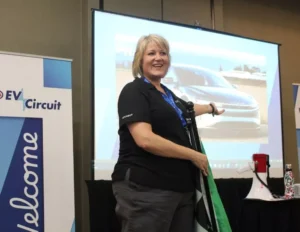
22 EVs, 230 km
At dawn, participants departed Ontario’s Blue Mountain region for Vaughan in three staggered waves. The identical 230-kilometre route combined urban streets, highways, and secondary roads. Fully mapped out in a traditional CAA paper TripTik, the route was also available digitally to guide navigators and co-drivers along the path. By the end of the trip, the 22 vehicles had consumed an average of 40% of their battery capacity.
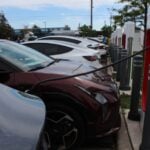
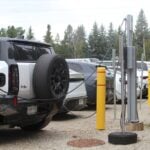
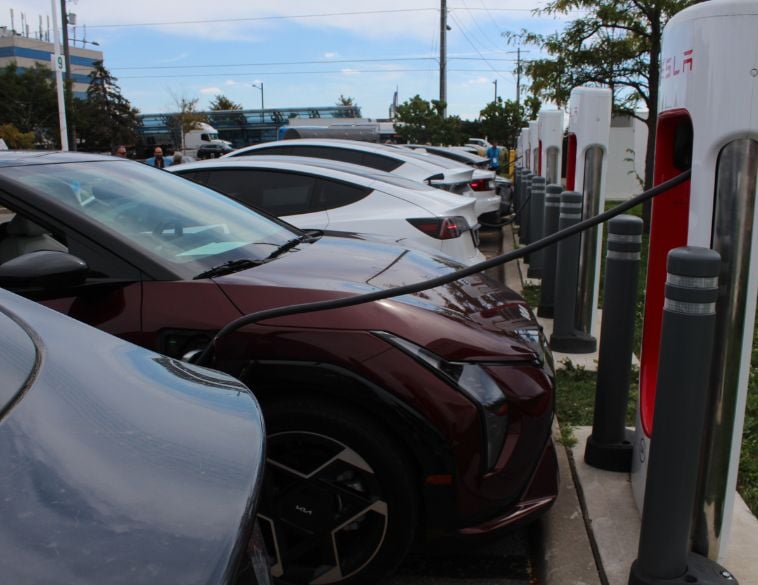
The first stop, at a quick-service restaurant, served as a morning break; the second took place at CCG headquarters; and the afternoon stop was dedicated to fast charging at a Tesla Supercharger. This 15-minute test measured the percentage of energy recovered alongside the associated cost.
On average, available range jumped by 110 km in just 15 minutes, with two out of three vehicles regaining at least 100 km. These results highlight the impact of ambient temperature on charging efficiency: EVs gained 15% more range during this summer run compared to the median gain recorded during the winter edition.
The charging speed and the volume of energy delivered depend on several vehicle-specific factors (model, initial state of charge), charger attributes (brand, output rating, station operating conditions, current electricity rates), and thermal conditions (battery temperature and ambient weather). Because these variables shape charging acceptance and final output, not all vehicles perform equally once plugged in.
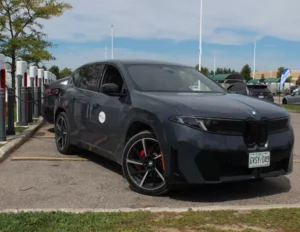
DC Fast Charging Sprint
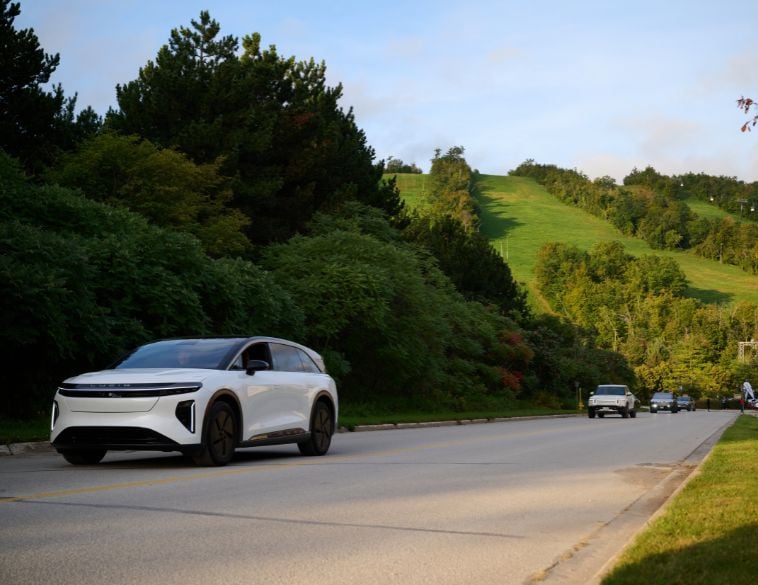
Some models, like the Lucid Gravity SUV, delivered standout results with a benchmark gain of 178 km. Its closest competitors, the Hyundai Ioniq 5 (135 km) and the Mercedes-Benz CLA 350 4MATIC Electric (135 km), trailed by at least 43 km. They were followed closely by the Nissan LEAF (126 km) and the Volkswagen ID.4 (125 km). While Lucid led the pack with its SUV, the automaker’s sedan landed at the bottom of the rankings, adding just 58 km.
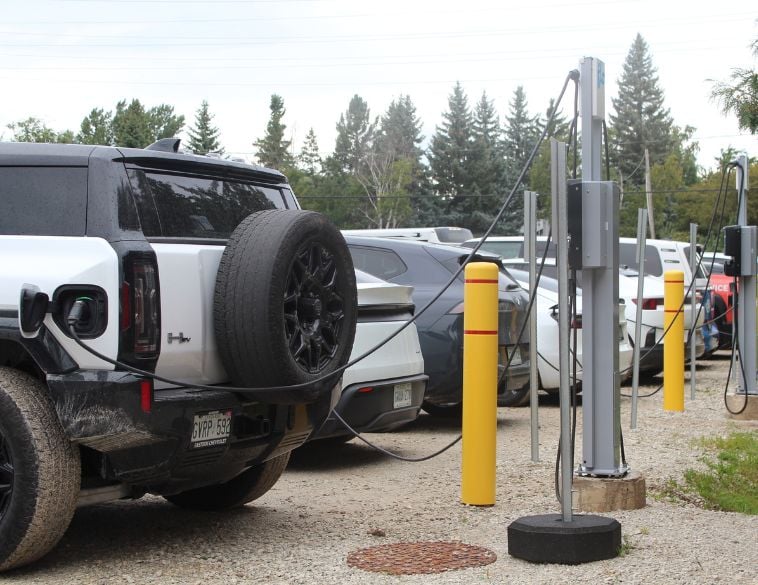
Fast-charging costs also varied widely by model. The larger the vehicle, the higher the bill. The GMC Hummer SUV EV, Chevrolet Silverado EV, Rivian R1T, Tesla Cybertruck, and Volkswagen ID. Buzz claimed the top five spots for highest charging expense. Even in all-electric guise, the Hummer—a 2000s icon of excess—topped the expense sheet at $24.39.
At the opposite end of the spectrum, charging the Gravity cost nothing thanks to a promotion from Lucid. That exception aside, the lowest charging bill went to the Tesla Model 3[1], closely followed by the Model Y. Both landed well below the overall average cost ($13.45), settling their sessions for under ten dollars ($7.28 and $8.23, respectively).
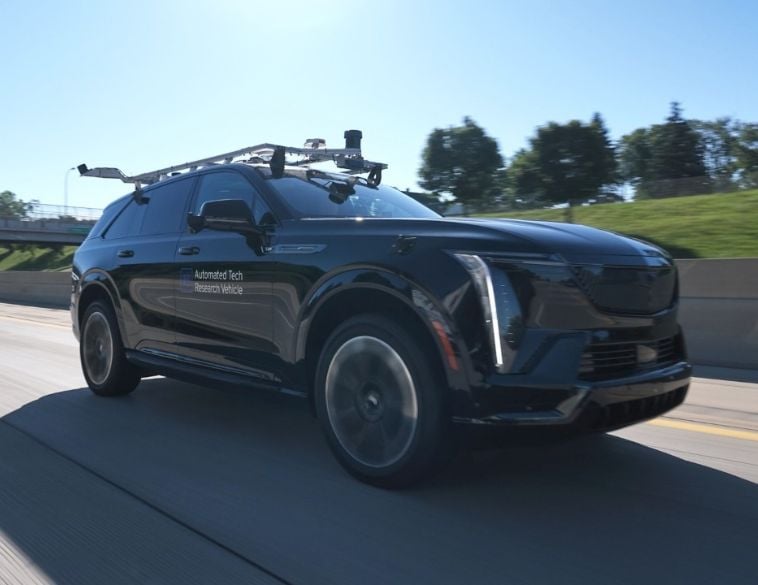
On the efficiency front, the Toyota bZ captured top honors with a consumption rate of 11.43 kWh/100 km. The Tesla Model Y and Model 3, the Kia EV4, and the Nissan LEAF rounded out the top five most efficient vehicles. At the other extreme, the Lucid Gravity proved the most power-hungry, registering 28.91 kWh/100 km. It was joined on the high-consumption podium by the GMC Hummer SUV EV (23.55 kWh/100 km) and the Tesla Cybertruck (23.41 kWh/100 km).
The Rivian R1T and Cadillac Lyriq were slightly less demanding, posting 19.96 kWh/100 km and 19.10 kWh/100 km, respectively. CAA notes that consumption remains dependent on several variables, including vehicle engineering, overall size, and curb weight. The organization highlighted a 40% difference between median consumption recorded during this summer event and figures from the winter run.

EV vs. ICE
Testing was conducted under real-world conditions to mirror everyday driving across Canada. According to CAA’s release, “the tested vehicles consumed the energy equivalent of roughly 2.0 litres per 100 kilometres, compared to an average of 8 to 10 litres per 100 kilometres for a conventional gasoline-powered vehicle.”
Modern electric vehicles now offer substantial range, making distance a secondary issue. Range anxiety has largely taken a back seat to real-world energy efficiency and charging station performance—both in terms of time and direct cost.
As an insightful evaluation, this combined driving and charging test delivers compelling findings and outlines the evolving criteria that now define the EV selection process.
[1] Tesla vehicles receive preferential pricing when using the automaker’s Supercharger network.

Tags : CAA


JOBS
 |  LAVAL  Full time |
 | BROSSARD Full time |
 | RIVE-NORD DE MONTRÉAL Full time |
 | REPENTIGNY Full time |
 | BOISBRIAND Full time |