
A Tale of Two Swedish Brands
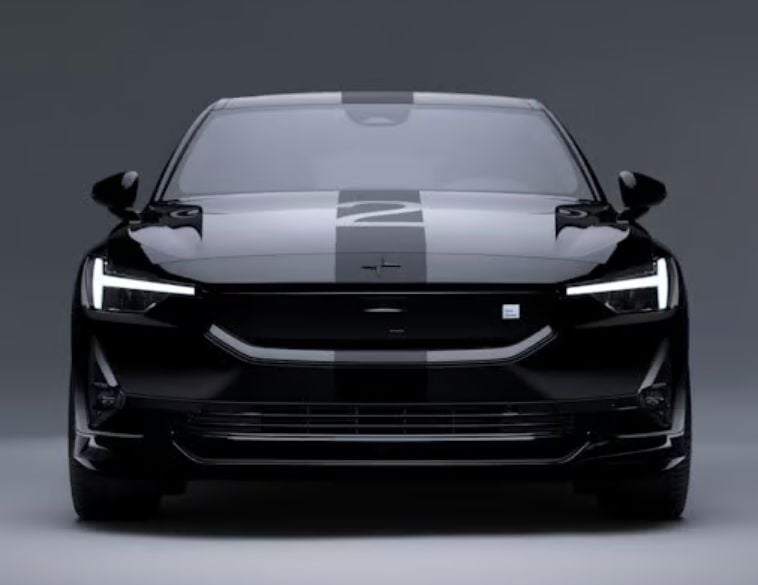
The North American automotive landscape is about to undergo another significant shift. Beginning with the 2027 model year, Polestar will no longer be permitted to sell new vehicles in the United States.
Despite sharing the same Chinese parent company, Polestar has been barred from selling new vehicles in the United States while Volvo has received regulatory approval.
The North American automotive landscape is about to undergo another significant shift. Beginning with the 2027 model year, Polestar will no longer be permitted to sell new vehicles in the United States after the U.S. Department of Commerce denied the company authorization under its Connected Vehicle Rule.
The decision is particularly noteworthy because Polestar’s corporate sibling, Volvo Cars, received approval to continue selling vehicles in the American market despite both brands being owned by the same Chinese parent company.
The contrasting decisions underscore how geopolitical tensions and national security concerns are increasingly shaping the automotive industry. For Canadian manufacturers, retailers and consumers, the ripple effects could be significant.
“Polestar will continue to invest in markets where we have opportunities to continue to grow, like Southeast Asia, Eastern Europe, Latin America and Canada.”
– Michael Lohscheller, CEO, Polestar
The Connected Vehicle Rule
The U.S. government’s Connected Vehicle Rule is designed to prevent vehicles with software or hardware linked to countries deemed national security risks from entering the U.S. market.
According to the U.S. Department of Commerce’s Bureau of Industry and Security (BIS), the Connected Vehicle Rule, “restricts the import and sale of certain connected vehicles and related hardware/software linked to China or Russia. BIS determined these transactions pose national security risks, as companies from these countries may be compelled to share data or allow remote access to connected vehicles in the United States.”
The concern centres on modern connected vehicles, which collect and transmit vast amounts of data. Officials argue that foreign governments could potentially gain access to sensitive information or interfere with critical vehicle systems.
Why Polestar was rejected
Although Polestar is headquartered in Sweden, the company is majority owned by Geely, one of China’s largest automotive groups. Despite efforts to diversify manufacturing, including building the Polestar 3 in South Carolina, BIS determined that the company’s ownership structure and connected vehicle technologies did not satisfy the authorization requirements.
The decision effectively ends sales of future Polestar models in the United States beginning with the 2027 model year. Existing inventory may continue to be sold, and in a statement Polestar said: “The Company will continue to sell existing stock of Polestar 3 and Polestar 4 in the U.S. and will continue to support customers, including providing access to its service network.”
For Polestar, the impact is manageable from a global perspective, since only about six percent of its worldwide sales currently come from the U.S. In the same statement, the company noted: “94% of Polestar’s retail sales volumes in the first quarter of 2026 originated from markets outside the U.S.”
Why Volvo was approved
At first glance, Volvo’s approval appears contradictory. Like Polestar, Volvo is controlled by Geely. However, Volvo worked extensively with U.S. regulators to demonstrate that its connected vehicle architecture, software controls and data management systems complied with the new requirements.
In a separate statement, Volvo Cars noted that they had, “constructive discussions with the U.S. Department of Commerce and other U.S. officials regarding Volvo Cars’ governance, technology and data security,” which resulted in the “the issuance of a specific authorization” to “continue its growth plans in the U.S.”
What this means for Canada
According to Theo Kjellberg, head of PR and Communication for Polestar, the U.S. ban will have, “no impact on our Canadian operations, which continue as normal. Canadian customers will continue to be offered the same cars as today: the Polestar 2, Polestar 3 and Polestar 4.”
Polestar CEO Michael Lohscheller noted that Polestar, “will continue to invest in markets where we have opportunities to continue to grow, like Southeast Asia, Eastern Europe, Latin America and Canada.”
Why is Canada noteworthy? Kjellberg explained: “Canada is a significant market and one where we have seen and expect to see continued growing demand for EVs in general, and strong support for the Polestar brand.”
A sign of things to come
Beyond Polestar itself, this decision signals a broader transformation occurring within the global automotive industry.
For decades, automakers optimized production around cost, efficiency and global sourcing. Increasingly, geopolitical considerations, including cybersecurity, trade policy and national security, are becoming equally important.
Manufacturers must now think beyond where vehicles are assembled. They must also demonstrate where software is developed, how vehicle data is managed and who ultimately controls connected systems.
For Canada’s automotive sector, this evolving landscape presents both risks and opportunities. Companies that invest in transparent software development, secure digital infrastructure and regulatory compliance may find themselves well positioned as governments introduce increasingly stringent requirements for connected vehicles.
Polestar’s U.S. exit may be the first major casualty of this new regulatory environment, but it is unlikely to be the last. As vehicles become rolling computers connected to global networks, cybersecurity may prove just as important as horsepower, battery range or manufacturing location in determining which automakers can compete in North America.
Tags : Polestar



JOBS
 |  DORVAL DORVAL Full time Full time |
| ST-HUBERT Full time |
 | MONTRÉAL Permanent |
 | SASKATOON Full time |
| MONTRÉAL-NORD Permanent |