
Maintenance and repair: is it really more expensive at the dealership?
Autosphere » Dealerships » Editorial »
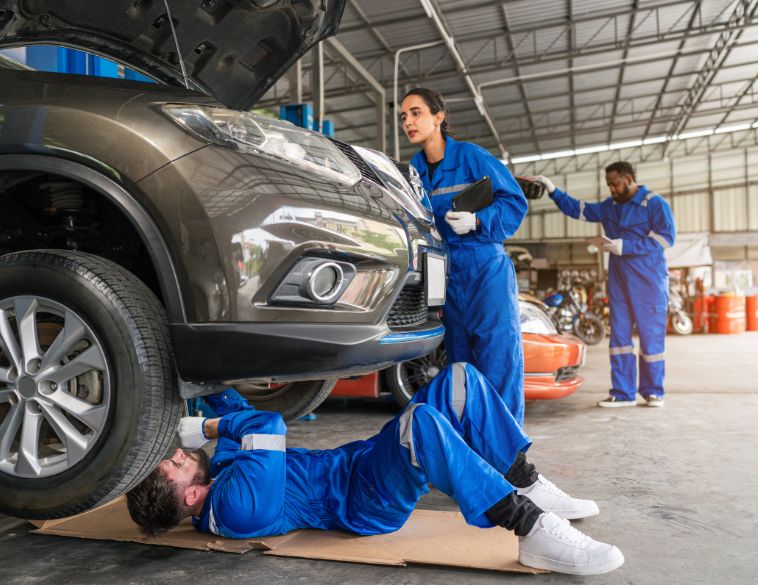
Dealerships must innovate to retain their customers after the manufacturer's warranty period. (Credit: Envato)
For many drivers, the idea of servicing or repairing their vehicle at the dealership once the warranty has run out immediately conjures up images of inflated bills.
That perception, deeply rooted in the minds of consumers, often pushes them toward independent repair shops, which seem like the more affordable choice. But is that really the case?

The belief is partly based on hourly rates, explains Jacques Olivier Jr, president of Groupe Olivier Automobiles and the Montréal Automobile Dealers Corporation (CCAM). But, as he points out, the reality is more nuanced.
Behind the rates that appear on the invoice are many other factors that can end up lowering the overall cost. Specialized labour, access to the right products, tools and equipment, as well as manufacturer-issued service bulletins all contribute to greater efficiency. On top of that, a broader selection of parts now makes it easier to meet a range of budgets. Together, these elements call into question the assumption that dealership service is “always more expensive.”
“Our hourly rate is higher,” Olivier acknowledges, noting that in his group it averages between $130 and $170. Independent shops generally charge less, which creates the immediate impression of savings. “For routine maintenance, they may be just as qualified and deliver results comparable to a dealership, but at a lower price.” But when a breakdown occurs, other factors come into play, and the hourly rate alone no longer determines what the final bill will look like.
Lowering costs through specialization
Dealership technicians work almost exclusively on a single brand and know every model inside and out. Their specialization, combined with dedicated tools, ongoing training, and real-time service bulletins, allows them to pinpoint issues faster. That means fewer trial-and-error attempts, fewer billed hours, and faster repairs. Paradoxically, a higher hourly rate can sometimes translate into a final invoice that is equal to, or even lower than, what an independent shop might charge.
Sticking to the manufacturer’s recommended maintenance schedule also helps keep costs down, Olivier adds. “My forty years of experience have taught me one thing for certain. Customers who keep up with regular maintenance will, over the lifetime of their vehicle, spend far less on repairs.”
That service record can also make a big difference when major issues arise, even after the warranty has expired. “I’ve seen cases where the manufacturer covered 50%, 80% or even 100% of the bill, because maintenance was done properly and documented. Having service done at the dealership helps build that history.” By contrast, maintenance performed with non-compliant products or parts could jeopardize that kind of support.
For “routine jobs that don’t require diagnostics or expertise,” such as oil changes and tire service, “we try to stay in line with market pricing.” To remain competitive, some dealerships even package these services. This approach not only makes them more appealing, but also helps retain customers “throughout the ownership cycle.”
Olivier admits that, historically, “we weren’t very good at keeping customers after the warranty period, but that’s improving.” Electronics and vehicle complexity now work in their favour. When a problem crops up, many owners prefer to go straight to the dealership to make sure it gets diagnosed correctly.
His teams are also working harder on follow-up. Many dealerships have realized that out-of-warranty service can be a solid source of revenue. Back in the mid-1990s, 70% of service work was warranty-related and 30% was maintenance and customer-pay. Thirty years later, those numbers have flipped. “We’re more aware than ever of the revenue potential in that area and we want to capture it. We want customers to stay with us, because it also makes it easier to sell them their next vehicle.”
Options for every budget
Still, Olivier knows that “price will always remain a key factor for consumers.” That’s why it’s important to offer a broader selection of tires and parts. In addition to OEM parts, the catalogue now includes other options from outside suppliers such as UAP NAPA.
Manufacturers themselves have also tapped into this opportunity. Brands like Ford and Chrysler have launched mid-range product lines under their own name. These parts are more affordable and comparable in quality to the originals, though with a different warranty. “The goal of these programs,” Olivier says, “is to keep customers loyal by giving them a second option on the invoice so they can go ahead with maintenance or repair without putting too much pressure on their wallet.”
So beyond the hourly rate, dealership service is really about expertise, efficiency, and transparency. With options for every budget, dealers are proving they can compete with the aftermarket and deliver added value that goes far beyond the myth of being “always more expensive.”
Sidebar: How consumers choose their repair shop
A 2024 study titled Dealership or Independent? How Vehicle Owners Choose Their Repair Shop, published by the Automotive Industries Association of Canada, offered valuable insights into consumer habits on the subject.
Across Canada, both independent shops and dealership service departments will be interested to know that only 9% of drivers handle maintenance and repairs themselves or rely on friends or relatives. And when they do, it’s usually limited to tire changes, oil changes, or brake pad replacement.
The survey also found that 27% of consumers stay loyal to their dealership for maintenance throughout the life of their vehicle. More than half of respondents reported using both types of service.
Meanwhile, 34% of consumers who prefer independent shops said they do so because they feel they get better value for money. Unsurprisingly, loyalty to dealership service departments is stronger while the vehicle is still under its original warranty. Interestingly, nearly half of respondents believed dealership technicians were better trained than those in independent shops.
If independents attract customers on value for money, dealerships stand out for proactive communication, the support of the service advisor, the quality of their parts, their technical expertise, and the cleanliness of their facilities.



JOBS
 |  DORVAL DORVAL Full time Full time |
| ST-HUBERT Full time |
 | MONTRÉAL Permanent |
 | SASKATOON Full time |
| MONTRÉAL-NORD Permanent |