OEM Procedures Matter
Autosphere » Collision »
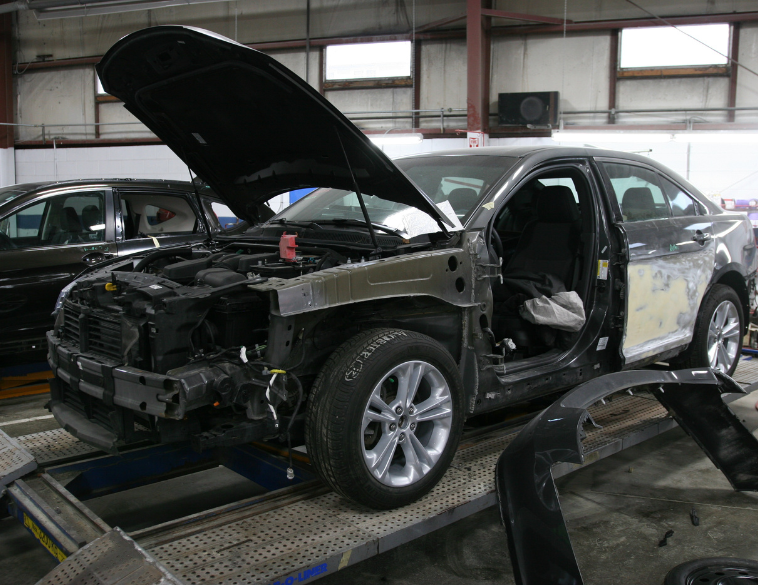
Proper repairs to OEM standards are essential in today’s collision shop environment. (Credit : Huw Evans)
Correctly repairing vehicles is essential for safety and to prevent comebacks that can be very costly for the shop.
On September 18, the Automotive Industries Association of Canada (AIA Canada), released a new Canadian Minimum Standards Statement for Auto Body Repair. Among other things, this statement includes a requirement to document that OEM procedures have been accessed and followed when repairing a vehicle.
Proper repairs essential
In today’s collision repair environment, the importance of performing safe and proper repairs to OEM requirements cannot be stressed enough. Today’s vehicles are highly advanced and the margin of error for poorly executed repairs is far narrower than it used to be. An improperly calibrated sensor or camera, or using an incorrect welding process can have disastrous implications out on the road, which is why having a benchmark for collision repair standards today is essential.
While some poorly executed repairs can still be cosmetic and often highly visible, others may not be so readily visible pose a far greater safety risk. In fact, these repair oversights may only come to light following an insurer’s audit of the repair, at which time a rework may not be possible. I have personally seen several vehicles taken “out of service” at the shop’s expense due to improper repairs that could not be rectified.
Not documented, didn’t happen
In today’s environment, if a repair or process is not documented, the assumption is that it didn’t happen. Not only that, but if a vehicle is improperly repaired, not only is it potentially dangerous, even after the original owner sells that car or truck, and unsafe repairs can be traced back to the shop that performed the work, that business can still be liable.
Consumers now have more abilities when it comes to tracing vehicle histories (including collision damage and repairs) without requiring permission from the previous owner, the insurer or collision centre. I have personally seen a situation where a second owner came back through an insurer to have improper repairs corrected—and at great expense to the original repair shop.
While consumers expect their repaired vehicle to maintain its value and anticipated life cycle, our responsibility goes much deeper. We must ensure these vehicles will react as intended in a subsequent collision.
Follow through
That’s why it’s essential that collision centres today have the right training and follow through when it comes to executing repairs properly. This means training both estimators and repair technicians on the importance of OEM procedures, and where and how to access the procedures. Additionally, having complete Quality Control processes will build accountability with all staff that are required to perform, safe, complete and quality collision repairs. Furthermore, being part of an OEM certification program can help ensure the collision centre has direct access to specific tooling and training requirements as well as the correct and current repair information and any restricted parts for that vehicle and repair. When these processes are followed, we can deliver vehicles with peace of mind. Resulting in a win for the collision centre, the insurer, and ultimately the customer who puts their family in the repaired vehicle
Tags : AIA Canada

JOBS
 |  RIVE-SUD DE MONTRÉAL RIVE-SUD DE MONTRÉAL Full time Full time |
 | MONTRÉAL Temporary |
 | VAUDREUIL-DORION Full time |
 | MASCOUCHE Full time |
 | LASALLE Full time |