
Customer Pay Considerations
Autosphere » Collision »
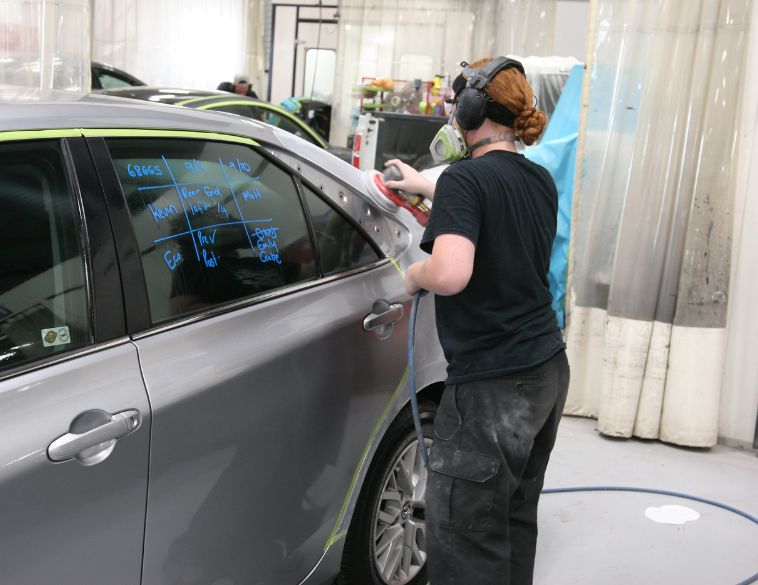
Customer-pay repairs can be a good revenue source for your collision centre. (Credit : Huw Evans)
Customer-pay work is something we’ve seen a big increase in over the last year. Some of the reasons for this can be attributed to cost of living concerns and other factors such as the federal election, changes in government policy and the tariffs impacting Canada and the U.S. When people are living through economic uncertainty, they are less likely to file an insurance claim, and that means they will either defer repairs, or look to getting their vehicle fixed by paying out of pocket.
Cash-settling
We’re also seeing an increase in consumers cash settling with insurers, facilitated by the rise in photo-based estimating and mobile appraisers visiting the customer’s residence or place of business. They perform a preliminary estimate and from that the customer agrees to a cash settlement from the insurer. At this point, it is now up to the customer to decide whether to fix the vehicle and they will be the ones doing the legwork. While customer pay work can be a great revenue source for your collision centre, there are some things to consider.
Firstly, that when a customer contacts the collision centre looking for customer pay repairs, the shop needs to ensure they perform due diligence. They need to be aggressively competitive on price, while still ensuring profitability on the repair. Secondly, every aspect of the damage must be accounted for, meaning that detailed and thorough repair planning is essential. Customer-pay repairs are often price sensitive, and you want to avoid supplements and re-works at all costs.
Partial dismantling
One way you can put customers at ease, is by performing a partial dismantle while they are present at your facility. It tends to give them peace of mind knowing that you’re capturing 99% of the damage on the estimate right there, instead of just having the customer bring the vehicle in; the appraiser perform a quick five-minute estimate and then sending the customer on their way.
Today, customers are looking for more than just price, they want quality repairs and are looking for value. One collision centre might offer a cheaper price on the initial estimate, but they might not do a thorough job of inspecting the damage which will lead to delays, add-ons, and final bill that doesn’t reflect the initial estimate.
Consumers today are savvy enough to know that paying a bit more up front and watching the shop perform a 30–45-minute dismantling procedure on the vehicle—making sure all the damage is captured—as well as including every aspect of the job including scanning and ADAS calibrations, will ensure there are no surprises at the end when the customer gets the final bill.
Walking through the process
When performing that dismantling procedure with the customer at your facility, it’s also critical that the estimator walks them through the process, showing them what needs to be repaired and/or replaced and why. For example, having a technician take additional time in removing the bumper assembly to reveal the damage behind goes a long way, and will enable that customer to leave the collision repair facility knowing that their vehicle is in good hands.
Customer-pay work also provides a bit more flexibility for shops, since there are typically higher gross margins based on the door rate for these types of repairs. Often, the shop can either choose to maximize gross profit on customer-pay repairs, or instead maintain a specific amount of gross profit for each customer job that comes in. Either way, these kinds of repairs can be a great opportunity for collision centres in today’s marketplace, provided they’re performed correctly.
Client awareness
Additionally, we will sometimes see third-party pay work where, the person that hit the customer is willing to pay out of pocket to have the repairs performed. From a business perspective it’s important for all your customers to know that you handle customer, and third party pay work as well as those traditional insurance claim repairs, since you never know when somebody might be wanting to have a customer or third-party pay repair done.
Another factor to consider when performing customer-pay or third party pay repairs are the types of warranties you offer for the work performed. Good repair and refinish warranties that last for the duration the customer owns their vehicle can add further peace of mind, reinforcing the quality of your work and showing that you stand 100% behind the repairs that you perform. Like good customer-pay work itself, these can also serve as great referral tools, since if a customer is very satisfied with the repairs that they paid out of pocket for, they are far more likely to refer other people they know to your collision centre for similar work.



JOBS
 |  DORVAL DORVAL Full time Full time |
| ST-HUBERT Full time |
 | MONTRÉAL Permanent |
 | SASKATOON Full time |
| MONTRÉAL-NORD Permanent |