
Permission To Say “No!”
Autosphere » Tires »
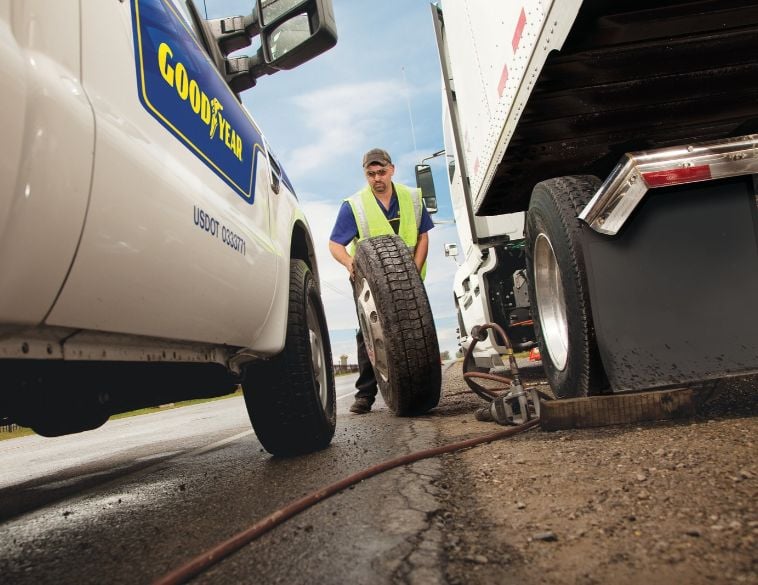
Safety is paramount when performing roadside tire changes. Credit: Goodyear
When is it too dangerous to change a tire?
Roadside tire service remains one of the most dangerous jobs in the tire industry. Technicians have suffered fatal injuries after being struck by passing vehicles while servicing trucks on the shoulder of a highway. Despite legislative efforts to improve roadside safety, serious incidents continue to occur across North America.
So, when is it too dangerous to change a tire at the roadside? The answer depends on the conditions surrounding the disabled vehicle, the visibility of the service area and the ability to protect the technician from passing traffic.
Ultimately, the decision must come down to one fundamental question: Can the job be performed safely where the vehicle is stopped?
Three steps to improve roadside safety
There are three important measures technicians can take to reduce their risk of being struck by passing traffic.
First, position the service vehicle behind the truck being repaired. Parking behind the disabled vehicle, rather than in front of it, can improve visibility and provide approaching motorists with an earlier indication that roadside work is taking place. The service vehicle should help alert drivers to the hazard ahead.
Second, maximize visibility. Technicians need to make their presence unmistakable to approaching traffic. High-visibility clothing, reflective cones, warning signs and strobe lights can help alert motorists to the work zone. These precautions are especially important in poor weather, low-light conditions or locations where drivers may have limited time to react.
Third, assess the safety of the work environment before beginning. This is arguably the most important step. No amount of reflective equipment or warning lighting can make every roadside location safe enough for a technician to work.
Recognizing when the risks are too high
Congested highways, exit ramps, bridges and locations with obstructed sightlines can present particularly dangerous conditions. Drivers may not see a technician or service vehicle until they are dangerously close, leaving little room to react or move away.
In these circumstances, technicians must be prepared to make the call that the work cannot safely proceed at the vehicle’s current location.
There is no requirement to perform a tire change exactly where a truck happens to break down. If the shoulder is too narrow, visibility is inadequate or passing traffic creates an unacceptable risk, the vehicle may need to be moved to a safer location before service begins.
Depending on the circumstances, that could mean requesting assistance from law enforcement or the appropriate provincial authorities to help protect the work area. If the location cannot be secured adequately, towing the vehicle to a safer place may be the best option.
A decision technicians must be supported in making
The responsibility for roadside safety does not rest with technicians alone. Owners, managers and others responsible for workplace safety must support technicians who determine that conditions are too dangerous to proceed. Production pressures, customer expectations and the desire to minimize vehicle downtime must never outweigh a worker’s safety.
Professional roadside service means more than having the right tools and technical expertise. It also means recognizing hazards, establishing a safe work zone and being willing to stop when conditions are unacceptable.
The bottom line: A tire can be changed later. A technician’s life cannot be replaced. Every roadside service call must begin with a safety assessment, and every technician must have the authority and support to refuse to work in an unsafe environment.


JOBS
 |  TROIS-RIVIÈRES  Full time |
 | VAUDREUIL-DORION Full time |
 | ST-BRUNO Permanent |
 | ESTRIE ET ENVIRONS Full time |
 | TERREBONNE Full time |