
Greater Resilience in the Canadian Vehicle Market
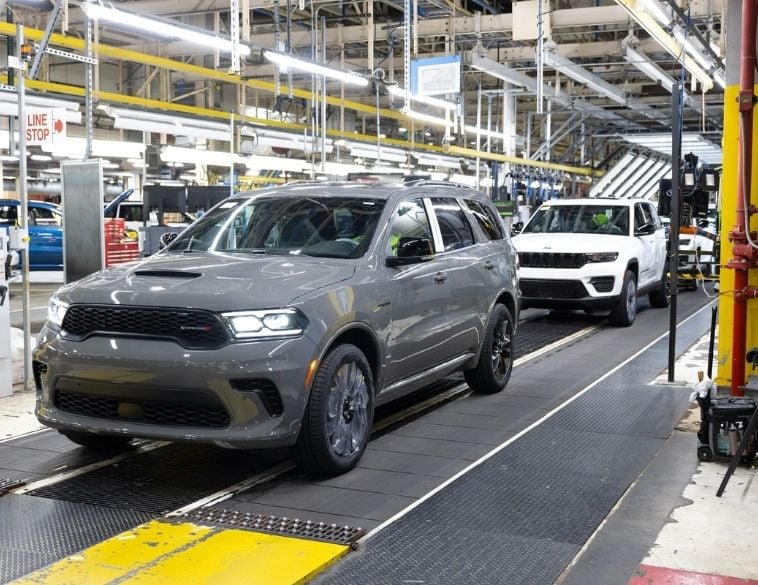
Improved supply and softer prices have witnessed better than expected resilience in Canada’s auto sales, but where we go from here remains to be seen. Credit: Stellantis
Prices have moderated, but significant uncertainty looms says, AutoTrader’s Baris Akyurek
AutoTrader recently revealed findings from its latest Price Index Report. At the halfway point of 2026, the report concluded several things. Firstly, that Canada’s auto market has shown greater resilience than previously predicted, with less of a slowdown in sales than originally forecast. Additionally, relatively stable demand had also caused prices to normalize and moderate, though a great deal of uncertainty remains. To delve further into these insights and take a look at what could influence prices in the second half of the year, Autopshere sat down with Baris Akyurek, Vice President, Insights and Intelligence at AutoTrader.ca. Here’s what he had to say:
Autopshere: Based on the latest report’s findings what do you think has contributed to the Canadian vehicle market performing stronger than expected?
Baris Akyurek: I think maybe the first thing we can do is talk about some numbers. On a year-to-year basis, new vehicle demand is down. Based on data from Dealertrack, looking at our own transactions, it’s down by a full percentage point, so it’s softer compared with last year. We expected it to be down, but forecasted the decline to be greater than what we’ve actually seen. In the first half of 2026, demand was strong due to the acceleration in purchases, in anticipation of tariffs taking effect. It was expected that prices would go up, and this drove the market, which led to better overall performance than expected. Nevertheless, it’s still softer on a year-over-year basis. When you analyze the data, you also see that among consumers, certain income segments are doing better than others, such as prime versus sub-prime. When it comes to vehicle sales, prime buyers are doing well and transactions on a year-over-year basis, are up from 2025 levels.

AS: If we look at prices, on both the new and used side, what trends are you seeing and how do you think that plays into current consumer sentiment?
BA: Prices are something both the industry and dealers follow with laser-focus, both on the new and used vehicle side. Regarding new car prices, the average stood at $63,016, a decline by 2.2% year-over-year. On the used side it was at $36,690, which represents a 2.6% decline. There are several factors that have been driving this. One is softer overall demand which we’ve previously talked about, but another factor concerns supply. Supply seems to be doing really well, both for new and used new car production. When we look at third-party new car production volumes, although there are some changes in terms of where the manufacturing is happening, overall, North American vehicle production is expected to be up by 0.8% on a year-over-year basis. So there doesn’t seem to be a big impact on the number of cars that are being produced, and when you look at the used vehicle side, although volume is still down compared to pre-COVID levels, on a year-over-year basis, it’s also up, which is being reflected in the current prices we’re seeing, that are being driven by slightly softer demand and slightly greater supply.
“We don’t forecast a significant decline in prices because inventory is scarce.”
– Baris Akyurek, Vice President, Insights and Intelligence, AutoTrader
AS: Uncertainty around trade with the United States and Mexico continues to shape consumer behaviour and decisions, but when it comes to vehicles, what do you feel is of paramount importance for dealers at this time in the Canadian market?
BA: It’s a good question, but right now it is difficult to know where things are going, based on the volatility surrounding the decisions and actions taken by the United States. Over the last couple of years, things were generally easier to predict, and you could look at the economy, look at demand and supply and then come up with an idea. But now, with talks of applying X percentage of tariffs here and then applying Y percentage there it becomes very difficult to predict things going forward. What I will say is that going back consumers, it’s critical for our industry to try and understand consumer sentiment and how that influences car buying decisions. This was something we analyzed during COVID and then again last year. We did a survey on the AutoTrader.ca website asking consumers how they view certain things, including the outcome of trade disputes and negotiations and the Canada-U.S.-Mexico Agreement (CUSMA) on free trade. Eighty-seven percent of customers surveyed said affordability was top of mind for them and that’s understandable. Consumers want to ensure they get the best value for their money and find a vehicle that fits within their budget and has a strong resale price, framed around the context of higher interest rates and rising financing costs. When it comes to CUSMA and trade negotiations, 70% of those we surveyed said they were away of the situation and 44% stated they were pessimistic about the outcome of trade talks between Canada and the United States. When they then asked them how CUSMA and trade/tariffs would impact their plans, 41% said it would influence their decision in purchasing their next vehicle. And by looking at the market, we don’t see consumers in a rush to purchase, compared with sentiment last year where buyers moved faster to find their next car.
Getting back to CUSMA and tariffs for a minute, when there’s a fundamental change in the market, prices tend to react accordingly. We saw what happened during COVID, and also what happened to last year due to tariffs. It was estimated that the average price of a used vehicle increased by $830 due to tariffs. Our survey showed that 69% of people sampled said they expect new car prices to increase while 57% said they expected used car prices to be impacted if things remain sour when it comes to trade negotiations. While we haven’t seen much of an impact just yet, there is definitely anxiety in the marketplace among consumers.
AS: Based on the data currently available how do you see vehicle demand, both new and used in Canada shaping up in the second half of the year?
BA: This is a difficult one to predict and in many ways it’s nuanced. We’ve already seen escalations in trade tensions between Canada and the U.S., and now it is looking that things could very unpredictable, at least for the foreseeable future. Consumers have already shown how their purchasing habits change around decisions involving trade and tariffs. We might see consumers choosing to delay their purchase decisions for big ticket items like vehicles, and others who might have considered a new car, might buy used instead due to uncertainty. There are some consumers that might accelerate their purchases, trying to take advantage of current market conditions before a new round of tariffs take effect. If and when more tariffs are applied they will impact prices, causing them to increase, and pushing more consumers to consider buying now before things become more expensive. While it is currently very difficult to predict exactly what will happen in the second half of the year, there are some trends we have been seeing, particularly on the new vehicle side and these aren’t entirely related to tariffs and trade. Since the Government of Canada announced a new round of electric vehicle incentives, we’ve seen interest in EVs increase again, and higher fuel prices are also contributing. This is also impacting used BEVs and we’ve seen days supply drop to very low levels. If I were a dealer, this is something I’d be looking at closely, along with more interest in mainstream versus luxury brands. And, going back to affordability, it’s not just the price of the vehicle, but also maintenance and [especially] fuel prices that are driving demand, and with the increase and volatility of gas prices, consumers are looking for more affordable, fuel-efficient vehicles.
Tags : AutoTrader


JOBS
 |  QUÉBEC QUÉBEC Full time Full time |
 | MONTRÉAL Full time |
 | BROSSARD Permanent |
 | LAVAL Full time |