
The New Middle Ground
Autosphere » Tires »
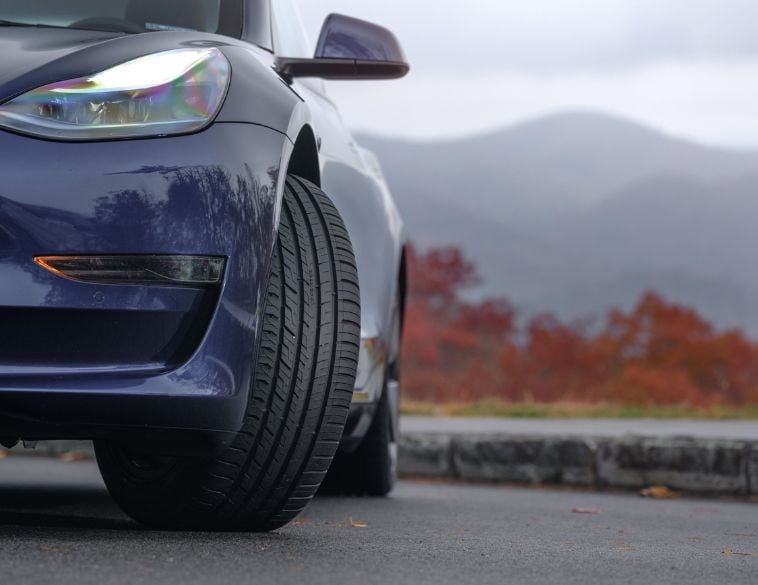
All-Weather Tires have seen a surge in interest in recent years. Credit: Nokian Tires
All-weather tires are reshaping Canada’s replacement tire market, taking share from traditional all-season products while carving out a distinct role alongside dedicated winter tires.
The Canadian tire market has long been defined by a straightforward choice: all-season tires for warmer months and dedicated winter tires once temperatures drop. Increasingly, however, a third option is reshaping that equation.
All-weather tires have emerged as one of the fastest-growing segments of the replacement tire market, driven by changing consumer priorities, advances in tire technology, and a desire to reduce the cost and inconvenience of seasonal tire changes.
While few industry observers believe all-weather tires will replace dedicated winter products, manufacturers agree they are steadily taking market share from traditional all-season tires and carving out a permanent place in Canada’s tire landscape.
“Drivers are looking for one tire that can confidently handle a wide range of weather conditions.”
– James McIntyre, SVP Sales Canada / Product Development North America, Sailun Tire Americas
Convenience meets capability
The strongest force behind the category’s growth is simple economics combined with convenience. Consumers are looking for ways to reduce ongoing ownership costs while simplifying vehicle maintenance. By eliminating the need for two sets of tires, seasonal changeovers, and off-season storage, all-weather tires appeal to drivers seeking a practical year-round solution.
James McIntyre, Senior Vice-President of Sales Canada and Product Development North America at Sailun Tire Americas says that today’s economic climate has accelerated that trend.
“Drivers are looking for one tire that can confidently handle a wide range of weather conditions without the inconvenience and cost of seasonal tire changeovers,” he explains. “The ability to run one tire year-round is very appealing.”
Aadil Dutli, Product Segment Manager – PLT & STR, at Dynamic Tire agrees. While all-weather tires can cost more than conventional all-season products, he notes that consumers only have to purchase, maintain and store one set.
That value proposition resonates particularly well in urban centres, where condominium living often means limited storage space and additional fees for storing seasonal tires.
Technology has changed the equation
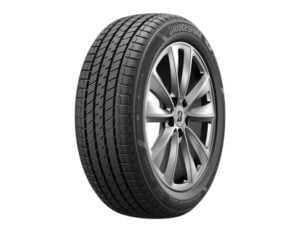
The category’s rapid expansion would not have been possible without significant advances in tire engineering. According to Ian McKenney, Senior Product Manager at Bridgestone Americas, “five years ago, engineers were forced to make compromises in areas like dry braking, wear life and comfort in order to achieve the level of snow performance required for all-weather tires.”
Those compromises have largely disappeared, McKenney adds. Modern tread compounds and designs now deliver substantially better all-around performance while maintaining the snow capability required to earn the industry’s recognized 3PMSF certification. As a result, today’s all-weather tires outperform traditional all-season products in snow, slush and wet conditions, while remaining comfortable and quiet during everyday driving.
Sailun’s McIntyre points to similar advances, noting that sophisticated tread compounds now allow manufacturers to maintain flexibility during cold weather while delivering stability, wet grip and durability throughout Canada’s increasingly hot summers. The result is a product that bridges the gap between traditional all-season and dedicated winter tires more effectively than ever before.
Market share continues to climb
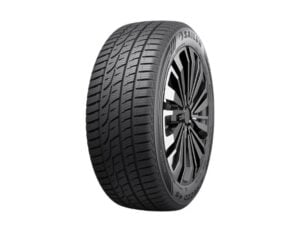
Although dedicated winter tires remain dominant in Canada, all-weather tires continue to post steady gains. Bridgestone’s McKenney estimates that in 2025, all-weather products accounted for approximately 22% of Canadian tire sales, compared with 35% for traditional all-season tires and 42% for dedicated winter tires.
While the percentage may appear modest, the trajectory tells a different story. McKenney says the segment has steadily expanded since 2017 and continues to displace conventional all-season products.
Dynamic Tire has experienced even more dramatic growth within its own business, and Dutli reports that demand has more than tripled in just three years.
Sailun likewise describes all-weather tires as one of the fastest-growing categories in the North American replacement market, fuelled by stronger consumer awareness, improved product performance and expanding dealer recommendations.
Manufacturers are also broadening the category itself. Sailun’s McIntyre notes that many all-terrain and rugged-terrain tires now incorporate 3PMSF certification, bringing year-round capabilities to truck and SUV owners who previously had fewer options.
Urban Canada leads the transition
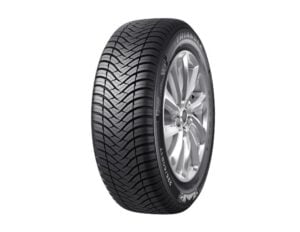
Not surprisingly, adoption is strongest where weather conditions are variable, rather than consistently severe. Ontario, British Columbia and Atlantic Canada are seeing particularly strong growth, according to McIntyre, especially in urban centres where roads are cleared quickly and winters feature frequent freeze-thaw cycles, rain and slush.
Dynamic Tire’s Dutli identifies the Greater Toronto Area, Montreal and British Columbia’s Lower Mainland as key growth markets, where drivers benefit most from year-round flexibility.
Bridgestone’s McKenney notes that Ontario leads Canada in total sales of 3PMSF-certified products, while western provinces, including British Columbia, Alberta and Manitoba continue to show strong adoption due partly to higher usage of SUVs, pickup trucks and all-terrain tires.
Quebec remains something of an exception. Provincial winter tire legislation and long-established consumer habits continue to make dedicated winter tires the preferred choice throughout much of the province.
New customer segments emerge
While urban commuters remain the primary buyers, the customer base is expanding. SUV and crossover owners continue to drive significant demand, particularly as all-wheel-drive vehicles become increasingly common. Many consumers view the combination of AWD and quality all-weather tires as sufficient for their daily driving needs in moderate winter conditions, says Dynamic Tire’s Dutli.
Bridgestone’s McKenney also sees notable growth in the touring segment serving passenger cars and crossovers, prompting manufacturers to develop products specifically targeted at popular Canadian vehicles.
Commercial applications are also emerging. Sailun’s McIntyre believes commercial fleets represent a growing opportunity, provided products can balance durability, rolling resistance, wet braking performance, load capacity and winter traction.
Meanwhile, Bridgestone’s McKenney notes that 3PMSF-certified commercial van tires, virtually nonexistent five years ago, now account for approximately 8% of the category.
Not a replacement for winter tires
Despite the enthusiasm surrounding all-weather products, all three manufacturers stress the same point: Dedicated winter tires remain the safest choice in severe winter conditions.
All-weather tires are designed as balanced, year-round products rather than specialists. They are not intended to outperform summer performance tires in hot weather or winter tires on snow-covered roads and ice.
That distinction will likely define the Canadian market through the remainder of the decade. By 2030, manufacturers expect all-weather tires to become one of Canada’s most important tire categories, continuing to erode the share held by traditional all-season products. However, none anticipate they will replace dedicated winter tires.
Instead, the industry appears headed toward a more segmented marketplace with dedicated winter tires for regions with consistently harsh winters, all-weather tires for drivers seeking year-round convenience without sacrificing winter capability, and traditional all-season tires serving areas with milder climates.
Tags : Dynamic tire



JOBS
 |  RIVE-SUD DE MONTRÉAL RIVE-SUD DE MONTRÉAL Full time Full time |
 | MONTRÉAL Full time |
| MONTRÉAL Permanent |
 | BROSSARD Full time |
 | SAINT-BRUNO Full time |