

Subscribe to our Autosphere magazine and our weekly newsletter to get the latest industry news.
Automotive News, Expert Advice, and How-tos
Beating the Heat
Autosphere » Tires »
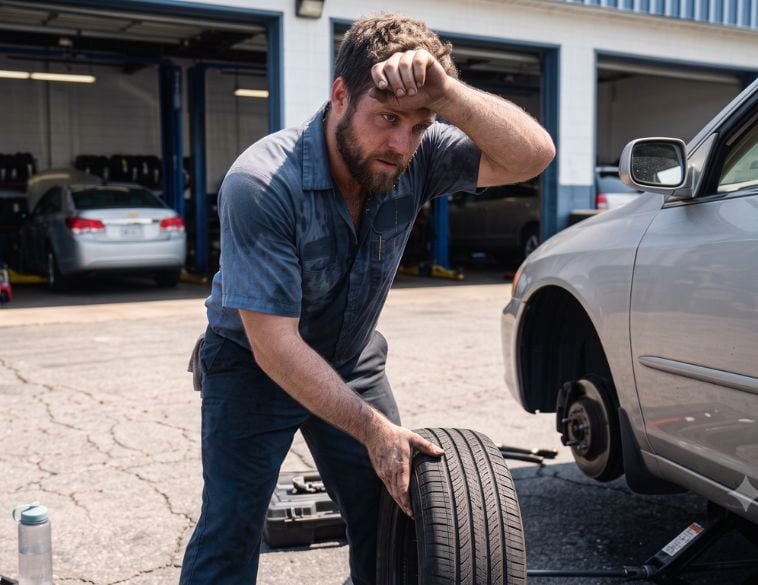
Tire technicians must take proactive steps to protect themselves from the dangerous effects of extreme heat.
How to protecting the tire technician from extreme heat.
This month, I want to dedicate this article to you, the tire technician. You are the backbone of our industry, keeping drivers safe by ensuring every tire is installed, inspected, and serviced correctly. It’s physically demanding work that often takes place in hot shops, service bays, or outside under the blazing summer sun.
While we spend a lot of time talking about tire safety, it’s just as important to talk about your safety. Taking care of your physical and mental well-being should always be your top priority. During the summer months, one of the biggest hazards technicians face is extreme heat.
Heat: a serious workplace hazard
As we move through the hottest part of the year, temperatures can easily climb above 38°C (100°F). When you’re lifting heavy tires, working around hot equipment, and moving continuously throughout the day, your body temperature rises quickly. Without proper hydration and regular cooling breaks, the risk of dehydration and heat-related illnesses increases dramatically.
One of the best ways to protect yourself is also one of the simplest: drink water—lots of it. In every training session I teach, I repeat the same message: hydrate, hydrate, hydrate! It’s easy to reach for another coffee or an energy drink, especially during a long shift, but both contain caffeine, which can contribute to dehydration when consumed in excess. While there’s nothing wrong with enjoying your morning coffee, don’t let it replace the water your body needs to stay cool and perform at its best.
Heat exhaustion can quickly progress to heat stroke, a life-threatening medical emergency that requires immediate attention.
Know the warning signs
Heat exhaustion can quickly progress to heat stroke, a life-threatening medical emergency that requires immediate attention. Heat stroke occurs when the body’s cooling system can no longer regulate temperature, often because of severe dehydration. If left untreated, it can lead to permanent organ damage… or worse.
Every technician should know the warning signs of heat stroke:
• Hot, red, or flushed skin with little or no sweating
• A high body temperature
• Rapid heartbeat
• Dizziness or confusion
• Headache
• Nausea or vomiting
• Muscle cramps
• Difficulty breathing
If you or a co-worker begins showing these symptoms, act immediately. Move the person to a cooler location, remove excess clothing, and begin cooling the body with cold, wet towels or ice packs, if available. Sitting inside an air-conditioned service vehicle or building can also help reduce body temperature. If symptoms are severe, or do not improve quickly, call 911. Heat stroke is a medical emergency, and every minute counts.
Prevention starts with you
Prevention is always the best approach. Wear light-coloured, breathable clothing whenever possible. A hat can help reduce direct sun exposure when working outdoors, and sunscreen protects against harmful UV rays. Most importantly, take regular hydration breaks throughout the day, even if you don’t feel thirsty.
Looking after yourself isn’t a sign of weakness. It’s part of being a professional. The quality of your work depends on your ability to stay focused, alert, and healthy. Taking a few extra minutes to drink water or cool down is far better than risking your health.
At the end of every shift, the most important job isn’t the last tire you install. It’s making sure you get home safely.

JOBS
 |  SAINT-LÉONARD SAINT-LÉONARD Full time Full time |
 | MONTRÉAL Permanent |
 | JOLIETTE Full time |
 | SAINT-BASILE Full time |
 | SAINT-JEAN-SUR-RICHELIEU Full time |