
Technology and Connectivity in Automotive Service: Reshaping Retention
Autosphere » Mechanical »
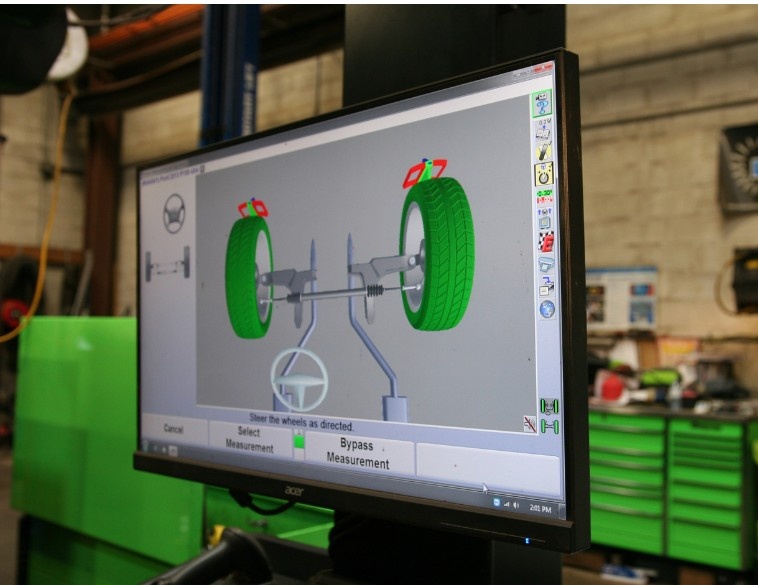
Digital Inspections are a key part in cultivating long term customer retention today. Credit: AIA Canada
New options are emerging in service repair via software and hardware
One of the hottest topics within the automotive service repair sector centres around connectivity. Whether it’s between the vehicle and the customer, the vehicle and the service facility and even between the vehicle and the equipment and in turn, the service advisor, technician and customer, today, effective connectivity matters.
Within the aftermarket auto care realm, more connected vehicles and newer technologies such as ADAS mean that service centres are changing the way they operate. “As vehicles become more connected, service centres can benefit from connected tools,” explains Mike Brecht, Manager, Quick Check Drive Inspection Systems, at Hunter Engineering Company.
Given that many businesses are still grappling with how to perform ADAS calibrations related to mechanical repairs, having information like Hunter’s ADAS Coverage Guide can go a long way to understanding specific vehicles and calibration requirements.
Helpful aide
Brecht explains that tools like the Hunter ADAS Coverage Guide can prove particularly helpful when a customer’s vehicle comes into the shop requiring something more than just a tire change or wheel alignment.
At Upper James NAPA AUTO PRO in Hamilton, Ontario, owner/operator Andrew Ackers says that for his team, the era of connected vehicles represents new opportunities, though it does require that staff are properly trained to provide the same level of service as they would under a classic maintenance/repair scenario.
An important factor, revolves around knowing that customer and that they’re properly scheduled for each service and repair visit. “Before each customer leaves our facility, we want to make sure they have their next appointment booked,” explains Ackers.
We’ve found that having regular messaging with the client, updating them on the service or repair via video has worked really well for us. Videos have been a major driver in generating positive reviews and feedback. – Andrew Ackers, owner/operator Upper James NAPA AUTO PRO
He notes that today, independent service providers have new opportunities via data and software where they can estimate service intervals as well as driving distance and vehicle mileage a specific client is likely to generate. They can then base a preventative maintenance/repair schedule based around that data.
That being said, Ackers notes that for aftermarket independent automotive service providers, it does require a bit of extra leg work to really make this come into its own, since many shops don’t have automated services where the vehicle can automatically notify the repair shop with the required information. “It takes an extra level of diligence and care for service advisors, as well as through your CRM and standard operating procedures (SOPs) to properly track down and provide the correct information.”
AI and aftermarket service
While Artificial Intelligence (AI) is currently a big focus in the business and technology world, for independent service providers, how it’s implemented will determine how beneficial it becomes.
At Hunter Engineering, Mike Brecht explains that for automotive service centres, AI can help their staff in taking over repetitive or tedious tasks, freeing them up for other more critical functions. A good example is utilizing AI to perform customer follow ups or handle enquiries via text, email or phone.
Andrew Ackers says that for independent service providers, that emphasize the personal touch when working with their customers, AI can be a bit of a difficult dance. “They often come to us because they want to speak to us personally, they want to talk with the owner, the manager, the service advisor and the technician.”
If you have AI set up to handle automated calling and it allows them to book a service appointment, it can be very effective, says Ackers, the trick however, is making sure that AI performs consistently well and is seamless. “People are still touchy regarding AI and the moment it falls off track [such as due to poor quality data access] all trust is then lost with the system.”
There’s no question that modern connectivity technology can be a great asset in helping service centres build trust and long-term retention with their customers, but again, how successful it proves depends on which solutions the shop utilizes and how it employs them to deliver on transparency and building trust.
Celebrating good news
At Hunter Engineering, Mike Brecht stresses the importance of shops and service advisors celebrating good news with customers and then work at building trust for work that is scheduled or will need to be addressed in the future.
Brecht says an effective way of doing this is for service advisors to always present customers with Alignment and Tread inspection results even if everything on the vehicle passed inspection. He notes that connected tools, like Hunter’s Flightboard, and inspection results print outs can really help advisors by ensuring that the information is at their fingertips and ready for each customer interaction.
Back at Upper James NAPA AUTO PRO, Andrew Ackers says that while having a robust CRM tool is an essential part of running a modern, successful auto service/repair business, and, following up consistently, such as every 60 and/or 90 days counts, another key ingredient is ensuring the actual process [when they bring their vehicle in], is smooth and consistent, every time.
“Having the same intake process, the same digital inspection, all of this matters,” explains Ackers. He notes that the period between the inspection, when the work has been authorized and is being done, prior to the customer collecting the vehicle is where friction can occur, if there isn’t consistent communication.
“This can be a grey area,” says Ackers. “We’ve found that having regular messaging with the client, updating them on the service or repair via video has worked really well for us. Videos have been a major driver in generating positive reviews and feedback about our business, as well as being a great customer retention tool.”
Harnessing the data
Today, service repair centres, like many businesses, have access to more data than ever before. The question is, how do they turn that into meaningful information that can be related to individual customers?
Andrew Ackers notes that at his facility, digital vehicle inspections have been a game changer. “Our digital inspections are being updated in timeline fashion now, and because we have the historic data on each customer, we can forecast service and maintenance for their specific vehicle going forward, such as how long it will before their brake pads or rotors need to replaced, or when their fluids need to be changed—all because our inspection process is so thorough.”
Mike Brecht adds that because we’ve become such a connected society, and endless data passes through our fingertips, service centres can leverage powerful solutions like HunterNet to provide fast, accurate details on customer’s vehicles, so they can receive high quality automotive service on a consistent basis.


JOBS
 |  DORVAL DORVAL Full time Full time |
| ST-HUBERT Full time |
 | MONTRÉAL Permanent |
 | SASKATOON Full time |
| MONTRÉAL-NORD Permanent |