
The Rise of XL-Rated Tires
Autosphere » Tires »

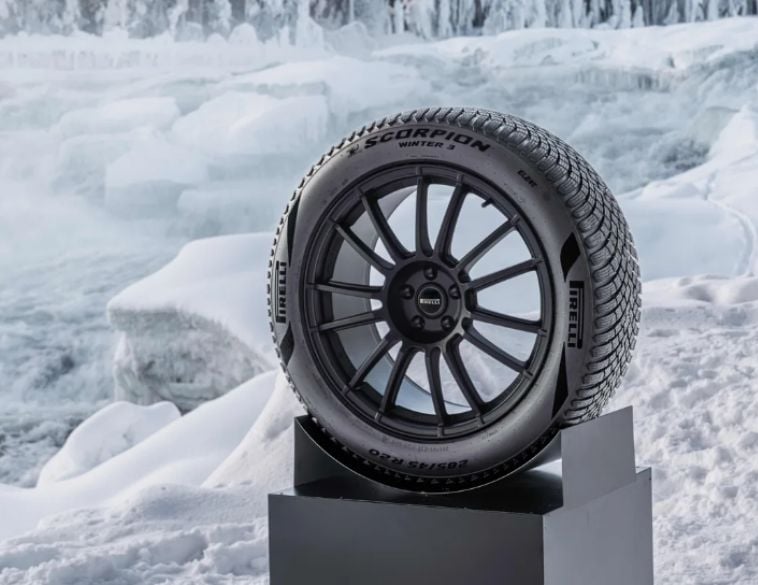
As vehicles continue to grow in size and weight, XL-rated tires are becoming an increasingly familiar sight in tire shops. Credit: Lotus
As vehicles grow heavier and wheel diameters increase, Extra Load tires are becoming an increasingly common as OEM and replacement fitment.
Extra Load (XL)tires are no longer a niche fitment. As passenger vehicles continue to grow in size and weight, and as SUVs, crossovers and electrified vehicles take a larger share of the market, XL-rated tires are becoming an increasingly familiar sight in tire shops.
The trend is being driven by several factors, including heavier vehicles, larger wheel diameters, lower-profile tires and the additional weight associated with EV battery packs.
Russell Shepherd, Director of Technical Communications for Michelin North America, says the trend has been developing for some time now. “Over the last decade, vehicles have consistently become heavier and larger. XL tires allow manufacturers the option of an identical wheel size with a heavier load,” he says.
Aadil Dutli, Product Segment Manager – PLT & STR at Dynamic Tire sees the same forces at work. “XL-rated tires are becoming increasingly common on modern vehicles, particularly on SUVs, crossovers, EVs, and performance-oriented sedans. The main catalyst behind this growth is the increased weight of modern vehicles, which places greater load and performance demands on a vehicle’s tires.”
“XL tires allow manufacturers the option of an identical wheel size with a heavier load.”
– Russell Shepherd, Director, Technical Communications, Michelin North America
More than load capacity
The primary purpose of an XL designation is increased load-carrying capacity, but the differences between XL and Standard Load (SL) tires go beyond a single number on a specification sheet.
Dutli says XL tires use, “a reinforced internal structure and stronger sidewalls, allowing them to operate at higher inflation pressures and better resist deformation under load.” That construction can affect how the tire responds to the demands placed upon it.
“This added rigidity can improve stability, steering response, and handling, particularly during cornering or when carrying heavier loads,” he says. “The stronger construction provides additional durability for demanding applications such as SUVs, EVs, and performance vehicles.”
Jack McClure, PLT Segment Manager, North America at Sailun Tire Americas points to construction and inflation capability as distinguishing characteristics.
“It is true that XL-rated tires increase load carrying capacity,” he explains. “That is due to different tire and casing construction, higher tire inflation allowance, and depending on the tire’s performance benchmark and category, can also improve steering response and handling.”
Shepherd notes that while construction may differ, load capacity remains the fundamental distinction. “There can be some construction changes to accommodate the extra load, but weight capacity is the biggest difference,” he says.
For retailers, understanding that distinction is important. An XL designation doesn’t automatically mean that the tire is a higher-performing or more durable product in every respect.
“Consumers often assume that an XL tire automatically offers better performance or durability than a Standard Load tire,” says Dutli. “The XL designation primarily indicates that the tire is designed to carry a higher load. Overall performance still depends on the tire’s design, compound, and intended application.”
Larger wheels, lower profiles
The growing popularity of larger wheels is another important factor behind the increasing prevalence of XL tires.
McClure says XL tires are becoming, “more commonplace than ever before,” particularly as SUVs, performance vehicles and EVs/PHEVs grow in size, weight and performance.
“These vehicles are fitted with OEM wheels and lower profile tires that add to the aesthetic and performance. They also require higher load indexes and speed ratings,” he says. “XL-rated is quickly becoming more a mainstream requirement, and relevant in 18 inch and larger rim diameters.”
Dutli adds that larger wheels combined with lower-profile tires can create applications in which higher load capacity becomes necessary to support the vehicle while maintaining the desired handling characteristics.
Clearing up the pressure misconception
One of the most important messages for tire retailers and consumers is that an XL designation does not mean the tire should automatically be inflated to its maximum pressure.
McClure says a common misconception is that XL tires, “should be run at maximum air pressure.”
“XL tires are designed to increase load carrying capacity,” he adds. “For daily use, check the tire specification air pressure on the door jamb tire placard, not the maximum air pressure stated on the sidewall.”
Dutli agrees, adding that, “the XL designation means the tire is capable of operating at higher pressures to support additional load, but the correct inflation pressure is determined by the vehicle manufacturer, based on the vehicle’s weight, handling, and load requirements.”
Demand expected to grow
The consensus among the three tire industry experts is that the move towards XL fitments is not temporary. It’s a trend.
Shepherd says, “XL tires are becoming more common for the tire industry, primarily due to heavier vehicles and plus fitments globally.”
McClure expects the trend to continue alongside changes in the vehicle market. He also points to another emerging application: last-mile delivery vehicles.
“There are also, more last-mile delivery vehicles on the roads than ever before,” he says. These vehicles are creating demand not only for higher-load all-season tires, but for all-weather and winter products, as well.
Dutli similarly expects SUVs and crossovers to remain major drivers of XL demand, while EV adoption adds another layer to the trend. “As vehicles continue to become heavier, more powerful, and increasingly electrified, XL fitments are likely to become even more prevalent,” he says.
For tire retailers, the growing prevalence of XL tires reinforces the importance of treating fitment as more than a matter of matching tire size to wheel size. Load index, speed rating, vehicle specifications and the intended application all need to be considered.
As today’s vehicles continue to get bigger, heavier and more technologically complex, XL tires appear set to become less of a specialty designation, and more of a mainstream requirement.


JOBS
 |  DORVAL DORVAL Full time Full time |
| ST-HUBERT Full time |
 | MONTRÉAL Permanent |
 | SASKATOON Full time |
| MONTRÉAL-NORD Permanent |