
Making the Diagnostic Hand-off Usable
Autosphere » Mechanical »
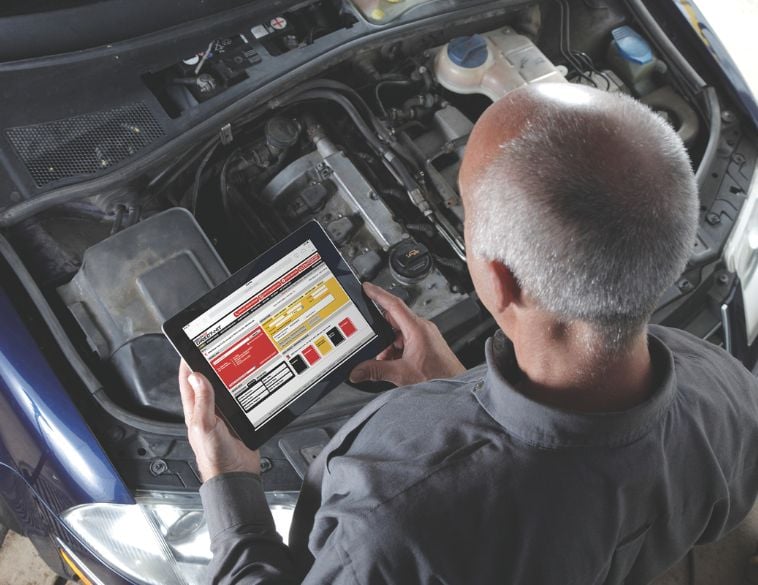
Retaining diagnostic information helps technicians pinpoint problems and leads to more efficient repairs. Credit: Shutterstock
When a vehicle moves from one technician or shop to another, too much diagnostic information often disappears in the hand-off. The next person receives a short note such as “module issue,” “needs programming,” or “electrical problem,” but not the evidence that led to that conclusion.
That can turn a continuation of the repair into a restart.
A useful hand-off should answer a simple question: what does the next technician need to know so they do not have to rediscover everything that was already learned?
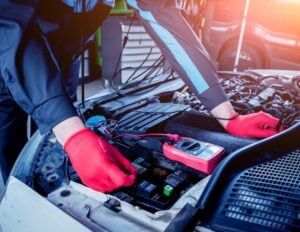
Previous condition
Start with the condition of the vehicle when the testing first began. Was battery voltage stable? Was the vehicle recently jump-started? Were there any network communication faults? Which modules were online and which were not? If the complaint was intermittent, what conditions made it appear?
Those details matter, because electronic problems can change as the vehicle is handled. A low-voltage event can create several faults at once. Cycling the ignition can make a symptom disappear. Clearing codes can remove information that helped show the order of events.
The hand-off should also preserve the original fault state whenever possible. That means recording DTCs before clearing them, saving freeze-frame data when it is available, and noting whether a fault was current, stored, or has history. If live data was important to the diagnosis, document the values that were actually observed rather than only the conclusion.
The same rule applies to tests already performed. “Checked wiring” is not enough. Which circuit was checked? Was voltage drop measured under load? Was it continuity checked with the component disconnected? Did moving the harness change the symptom? A short, specific note can prevent the next technician from repeating an hour of work.
“A good hand-off means the next technician starts where the last one stopped, not where the customer first arrived, saving time, money, and helping result in a more satisfactory repair.”
– Lucas Assimos
Commanded versus actual data
Commanded-versus-actual data is another useful part of the record. If a module was commanding a component to operate but the expected response did not occur, that distinction should follow the vehicle. It helps separate a control problem from a component or circuit problem.
Just as important is documenting what changed after each step. If a connector was repaired and communication returned, say so. If a module was replaced but the original symptom remained, record that. If a re-learn or configuration procedure changed the behaviour, note the before-and-after result.
A timestamp can help too. If the symptom changed after a battery charge, software procedure, road test, or key cycle, recording when that happened gives the next person a simple timeline instead of a pile of disconnected observations.
For shops that outsource programming, advanced diagnostics, collision electronics, or specialist work, this kind of handoff can save time on both sides. The receiving technician gets a clearer starting point, and the sending shop gets a better explanation of what was done and why.
Simple hand-off
This does not require a complicated report. A useful diagnostic handoff can be one page with six items: the customer complaint, initial vehicle condition, fault data, tests performed, changes made, and the vehicle’s current state.
The goal is not more paperwork. The goal is continuity.
Modern vehicle repair is increasingly collaborative. One shop may handle the mechanical work, another may perform programming or configuration, and a specialist may become involved when the problem crosses systems.
When that happens, the diagnostic record should travel with the vehicle.
A good hand-off means the next technician starts where the last one stopped, not where the customer first arrived, saving time, money, and helping result in a more satisfactory repair for the customer, the technician and the shop.
Bio: Lucas Assimos is an automotive specialist and owner of NitroX Services & Tunes in Orlando, Florida. His work focuses on electronic diagnostics, control-module programming and configuration, and troubleshooting modern vehicle systems. He also has a background in competitive karting, which has shaped his approach to repeatable testing, driver feedback and diagnostic process.
Tags : Diagnostics


JOBS
 |  JOLIETTE JOLIETTE Full time Full time |
 | MONT-ROYAL Permanent |
 | LAVAL Full time |
 | BROSSARD Temporary |
| JOLIETTE Full time |