
Additives Take Centre Stage
Autosphere » Mechanical »
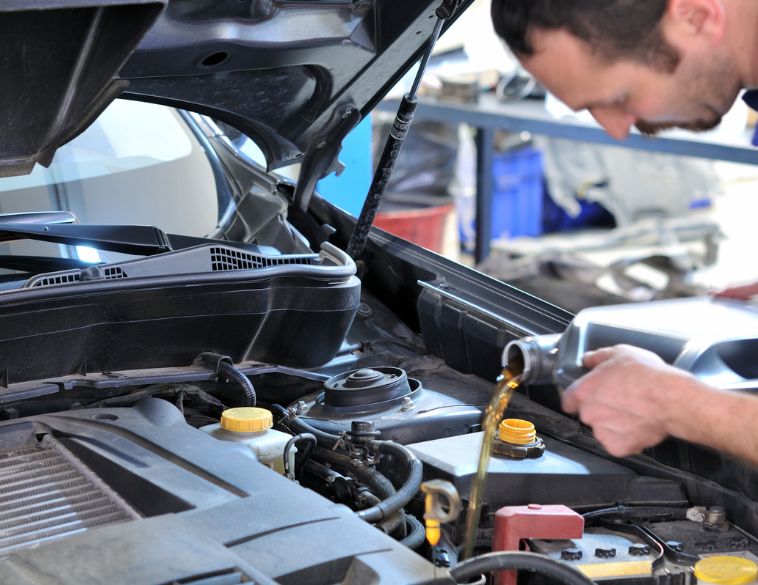
ILSAC GF-7 spec oils are designed to reduce the risk of LSPI. (Credit : Shutterstock)
New technologies are making a big impact in GF-7 Motor Oil Formulations.
With the launch of ILSAC GF-7 motor oils in 2025, additive chemistry plays an important role in meeting the category’s more stringent requirements for wear protection, fuel economy, and emissions system compatibility. Additives, the hidden workhorses of engine oil performance, have been re-engineered to meet evolving OEM demands while supporting engine durability under increasingly harsh operating conditions.
Engineered for Modern Engine Requirements
ILSAC GF-7 builds on the foundation set by GF-6 by tightening limits on wear, oxidation, and deposit control, while also enhancing protection for turbocharged, gasoline direct injection (GDI) engines from Low-Speed Pre-Ignition (LSPI). As a result, formulators have leaned heavily on next-generation additive packages to deliver results in several critical areas:
- Friction modifiers are optimized to improve fuel economy without compromising wear protection. These components form low-friction films that reduce drag between moving engine parts, contributing directly to GF-7’s fuel efficiency targets.
- Oxidation inhibitors have been upgraded to extend oil life and slow down oil degradation at high temperatures, a growing concern in modern downsized engines that run hotter than their predecessors.
- Detergent and dispersant systems offer improved cleanliness and deposit control, particularly around piston rings and turbocharger components. Additive packages featuring higher levels of magnesium and reduced calcium content have shown strong results in mitigating harmful buildup while supporting LSPI resistance.
- Viscosity modifiers play a key role in GF-7 oils, enabling wide-temperature performance and improved shear stability for longer in lower-viscosity motor oils like SAE 0W-16 and 0W-20, which are now required by some OEMs.
- Emission system compatibility is also a focal point. Additive packages now have lower limits on heavy metals that contribute to ash content, minimizing the risk of catalyst poisoning and aligning with tightened GF-7 emission requirements.
LSPI Mitigation
Low-Speed Pre-Ignition (LSPI) remains a concern, particularly for turbocharged GDI applications. Additive formulators continue to include LSPI-mitigation chemistry as part of the overall chemistry design, leveraging molybdenum-based friction modifiers, antiwear agent and detergent/dispersant combinations to reduce the risk of engine damage.
Motor Oil Formulation Approach
The updated additive systems in Pennzoil Platinum Full Synthetic and Pennzoil Ultra Platinum Full Synthetic motor oils are engineered to improve wear protection, enhance catalytic converter life, and resist thermal breakdown. Friction modifiers and detergent/dispersant chemistries have been adjusted to meet and exceed the GF-7 specification while maintaining protection across extended drain intervals.
These new formulations maintain engine cleanliness and horsepower retention while antiwear additives provide immediate wear protection from startup and throughout the entire drain interval. Pennzoil Platinum Full Synthetic and Pennzoil Ultra Platinum Full Synthetic are backed by the Pennzoil Lubrication Limited Warranty.
Looking Forward
As engines continue to advance and motor oil specifications change, additive innovation will remain essential, not only for meeting specification limits but also for differentiating performance in the marketplace. Whether extending the life of emission systems, protecting against wear in turbocharged engines, or preserving fuel economy in ultra-low-viscosity formulations, additive technologies are the cornerstone of modern motor oil development.




JOBS
 |  RIVE-SUD DE MONTRÉAL RIVE-SUD DE MONTRÉAL Full time Full time |
 | MONTRÉAL Full time |
| MONTRÉAL Permanent |
 | BROSSARD Full time |
 | SAINT-BRUNO Full time |