Ask, Listen, Solve
Autosphere » Mechanical »
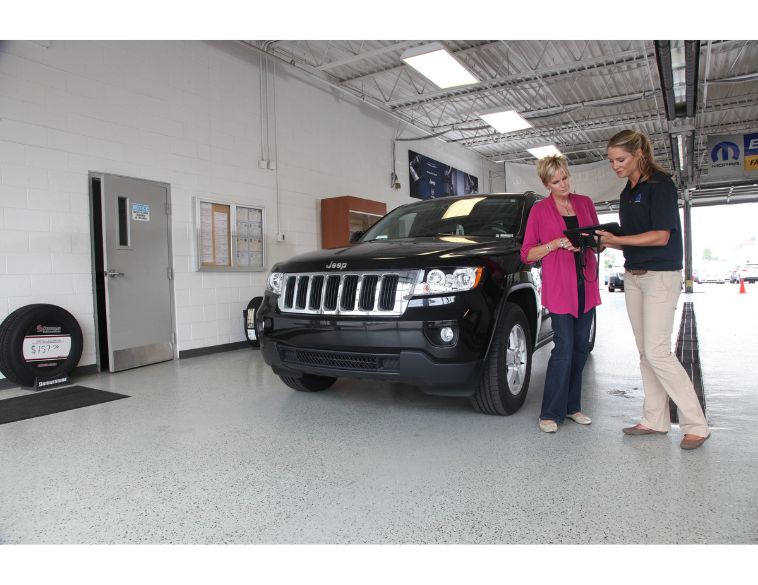
Source : Mopar
A vehicle is brought into your service centre that’s running rough, with the check engine light on. Maybe it might have a hard start condition or an intermittent misfire or sluggish acceleration. In any of these situations, the customer bringing that vehicle in is frustrated and wants it repaired. How the shop responds from this point on can make or break the relationship with that client. Mark Lemay, who owns and operates Auto Aide Technical Services, which specializes in diagnostics and advanced training for service
technicians says that in order to provide a successful diagnosis on the problem, it’s imperative that the service advisor and technician have a good understanding of the problem, and that means they need to be trained to ask the right questions.
Drivability questionnaire
One way they can do that is by providing the customer with a drivability questionnaire. “You can get the customer to fill out this form, and staple it to the work order,” says Lemay. “The more information the customer can provide the technician, the better chance they have of correctly diagnosing and fixing the problem,” Lemay explains.
There’s also the question of how the cost of diagnostic services is handled. According to Rob Ingram, seasoned technician and long-time owner operator of Eldon Ingram NAPA AUTO PRO in Stratford, Ont., recommends providing the customer with an initial diagnostic fee. “It needs to be higher than your standard door rate,” says Ingram “because otherwise, you will lose gross profit if you charge at your standard rate, since there are no parts involved just labour.” He says it’s imperative that shops focus on an amount of money for initial diagnostic work and not time. “If the technician is not able to properly diagnose that vehicle within that initial $140, then you need to contact the customer immediately and get authorization for additional work.” He says this is critically important, because at all times, the shop needs to ensure the customer is in control of their money.
Preferred communication
Additionally, the preferred method of communication between the shop and the customer needs to be established at the very beginning. This way; should the technician not be able to correctly diagnose the problem after the initially agreed amount, they can quickly contact the customer to inform them of the situation, discuss what they’ve found and work with them on the next steps. Ingram also says another alternative, is to establish at the very beginning an agreed amount to authorize for diagnostic repairs. This is particularly important if the customer is looking to get their vehicle back relatively quickly. While it can be stressful for the customer upfront, if they authorize $300 to diagnose the problem, and the technician is able to do it for $140, it provides a great deal of reassurance for the client and makes the shop look highly professional as well as offering good value for money.
Another key factor is ensuring your technicians are equipped with the right tools and training to properly identify and solve drivability problems. On the tool side, it’s imperative that technicians are equipped with scan tools that are compatible with the vehicles they’re working on.
OEM tools
Mark Lemay notes that while generic scan tools can perform a range of functions, they can’t do everything, which is why it’s important to have OEM scan tools, at least for the brands of vehicles they tend to service on a regular basis. Other basic, essential tools include electrical testing equipment, lab scopes, current probes, pressure transducers and fuel pressure gauges.
A big factor is access to repair information and procedures. For aftermarket service centres, providers such as Mitchell 1, ALLDATA and Direct-Hit (Identifix) provide a robust solution, though Lemay does recommend having access to OEM vehicle repair sites as well, so that a service centre and its technicians are fully equipped to tackle a drivability related problem, and properly solve it for the customer.
Communication and verification
It cannot be stressed enough that clear, concise communication between the customer, the service advisor and technician is essential when it comes to drivability issues. And your staff must be trained well enough to ask the right questions. An example might be a customer complaining of a squealing noise when they drive the vehicle. The service advisor can then ask whether the noise happens while the vehicle is idling at a stop light or is driving down the road. If it is the former, they’ve just eliminated a multitude of driveline, suspension steering, braking and wheel related issues. The same applies to a hard start issue, such as whether the vehicle will start on cold days, hot days, or does it happen when you drive the vehicle and not your spouse? Rob Ingram says he’s seen cases like that where the hard start issue turned out to be a damaged key fob that impacted one driver and not the other. This is why it’s so critical to ask those qualifying questions. Ingram also stresses the importance of ensuring that shop counter staff are knowledgeable enough to get the customer through a pre-determined process but not in a position where you’re diagnosing the problem over the counter. “That’s the technician’s role,” he says “because when you set it up that way it allows your techs to verify that the problem is a real issue and that’s billable hours. If you diagnose everything over the counter, there’s no perceived value there for the customer.”



JOBS
 |  SAINTE-JULIE SAINTE-JULIE Full time Full time |
 | ST-JÉRÔME Permanent |
 | VAL-DAVID Full time |
 | LASALLE Full time |
 | MASCOUCHE Permanent |