
Effective EV Readiness
Autosphere » Collision »
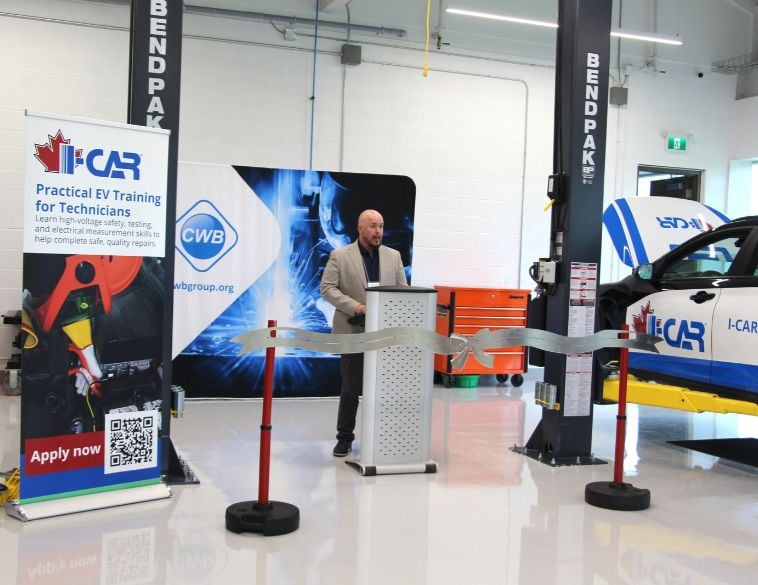
Scott Sinclair, Business Development Manager, I-CAR Canada. Credit: I-CAR Canada
Safety, consistency and ongoing training are key for repairing electric vehicles
In determining your collision centre’s ability to effectively repair electric vehicles, there are four key things that need to be considered and considered collectively: These include technician training, appropriate equipment, access to current OEM repair information and documented procedures for specifically handling EVs.
From a safety standpoint, municipalities across Canada are placing increasing urgency on the potential fire risks stemming from damaged EVs, notably the battery systems and the issue of thermal runaway.
Top priority
Delayed fires resulting from thermal runaway have the potential to cause extensive damage, impacting employees, other vehicles, equipment and the entire facility. That’s why EV readiness needs to be a top priority, even for those collision centres that handle relatively low volumes of EVs.
Proper assessment, safe handling, appropriate storage, and an emergency response plan are therefore essential. I-CAR Canada’s five-day EV Hands-On Skills Development course is specifically designed to help technicians build the practical electrical safety skills needed to support that readiness and apply OEM procedures.
In today’s collision repair environment, ongoing training and skills development is essential, and training needs to be an integral part of a shop’s overall operating plan. In working with organizations like I-CAR Canada, shops and technicians can identify the skills and knowledge needed for each role in the collision centre as well as address any knowledge/skill gaps and schedule development throughout the year. Whether its estimators, repair planners, production managers or technicians, each person in each role influences the repair process and how safely an EV moves through it.
Knowledge and skills
Effective training requires a combination of foundational knowledge and hands-on skills development. I-CAR Canada’s five-day EV course was specifically designed for that purpose and includes practical skills in high-voltage shutdown and power-up, zero-potential verification, electrical safety testing, and the use of EV measurement equipment.
The reality of operating a collision centre means that production pressures will always exist, but postponing training can have serious consequences, particularly if it causes a shop to depend on one person or an outside third-party provider for EV repair work. That’s why collision centres need to plan for coverage, including developing a second appropriately trained technician wherever possible. Lower EV volumes represent a good opportunity to prepare and practise before demand increases.
As time goes by, EV repairs are becoming increasingly dependent on electrical knowledge, diagnostic capability and documented safety verification, alongside traditional collision repair skills. When repair planning, collision centres must take into account the battery systems on these vehicles, along with high-voltage components, OEM restrictions, and the sequence required to complete the work safely.
Practical experience
As vehicle technology evolves, technicians will require ongoing opportunities to develop and apply these skills. I-CAR Canada’s five-day EV Hands-On Skills Development course supports this need by providing practical experience in working with high-voltage shutdown and power-up procedures, as well as the electrical testing required, and the verification of safe working conditions.
Readiness involves the whole facility. Training, equipment, procedures, and current OEM repair information must therefore work together. Investing in hands-on education helps technicians build the skills and confidence to make informed decisions and supports a consistent approach to safe, complete, and quality repairs, whether it’s for EVs or conventional vehicles.
Ultimately, the message is simple: prepare before you need the capability. Even a facility that chooses to refer EV repairs somewhere else, still needs a safe process for receiving, identifying, and handling those vehicles. At I-CAR Canada, we encourage shop owners to consider what five days of focused technician development can contribute to their business: stronger practical skills, better repair planning, and greater confidence in carrying out essential EV safety procedures.



JOBS
 |  MONTRÉAL  Permanent |
 | SAINT-LAURENT Permanent |
 | DOLLARD-DES-ORMEAUX Permanent |
 | LAVAL Full time |
 | BROSSARD Permanent |