
CCIF Calgary: Learning and Collaboration
Autosphere » Collision »
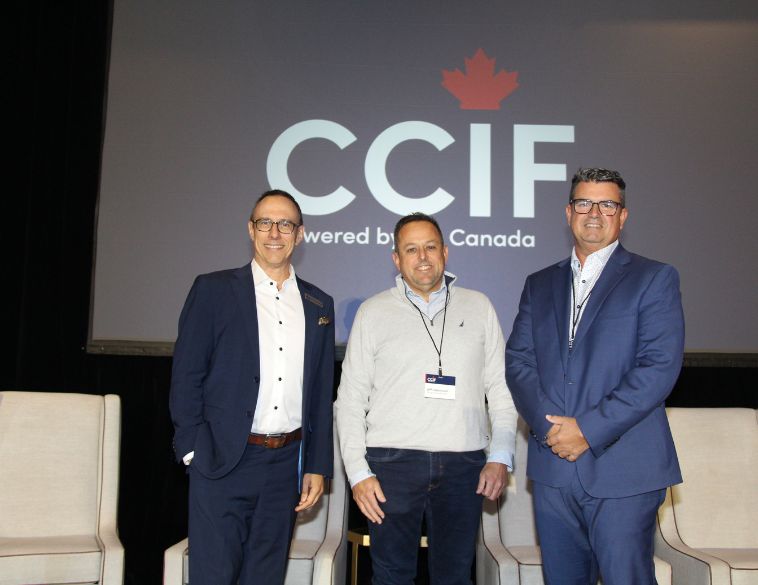
(L-R) Jean-Francois Champagne, President, AIA Canada, Jeff Labanovich, past CCIF Chair; Sylvain Seguin, CCIF Chair at CCIF Calgary, September 18, 2025. (Credit : Huw Evans)
On September 17-18 collision industry professionals gathered in Calgary for the final CCIF event of 2025. Following a well-attended networking reception on the evening of September 17, the following day, the conference got underway in earnest.
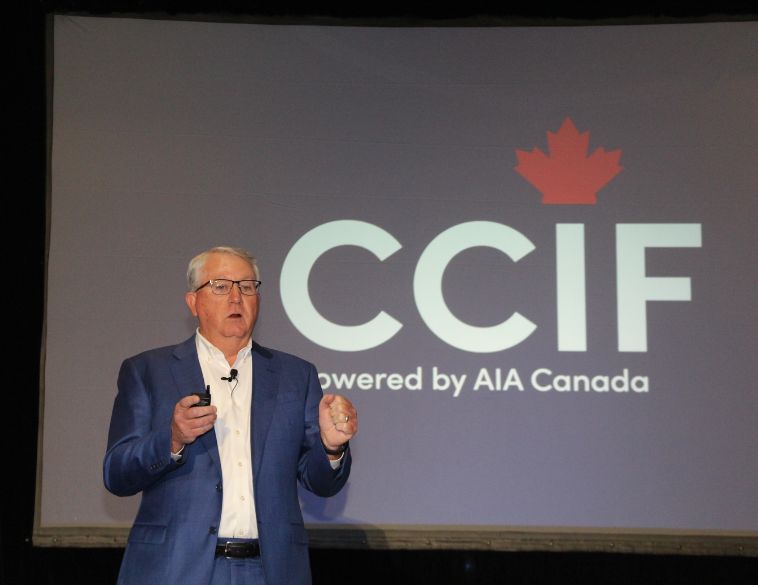
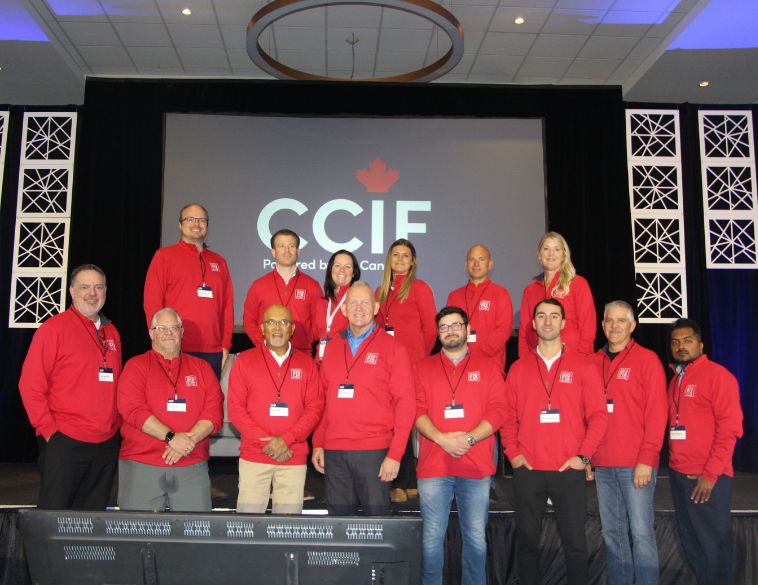
CCIF Chair and Vice President, PBE for Uni-Select, Sylvain Seguin, kicked things off, providing an update regarding CCIF, including an overview of the day’s agenda as well as recognizing the Steering Committee members for their dedication and commitment to both the Canadian Collision Industry Forum and the industry. Seguin also announced details of the next event, CCIF Toronto 2026, which will take place March 11-12.
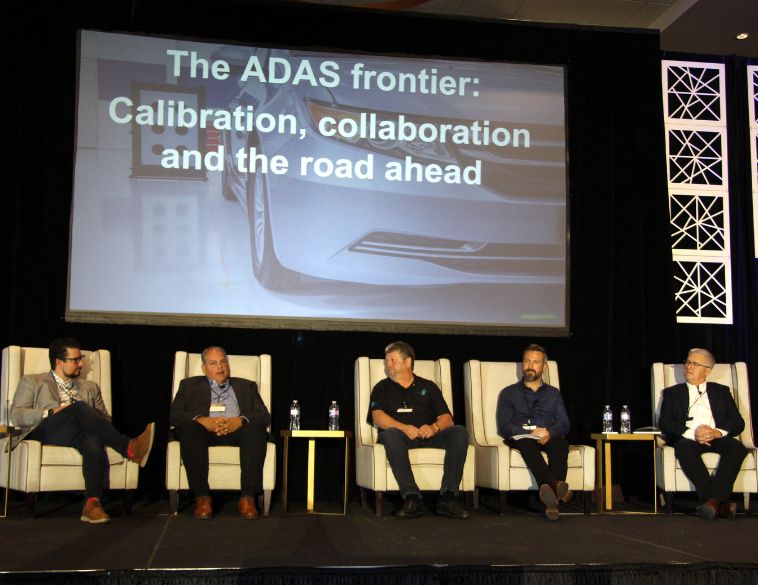
ADAS panel discussion
Following the Chair’s remarks, the first panel discussion took to the stage. Moderated by Jeff Brown, General Manager, CARSTAR Don-Mor Automotive Group, the panel featured Chris Haberny, On Target Calibration; Ross Iacobellis, Technical Sales, Training Manager, Hunter Engineering Company; Trevor Jones, Prairie Operations, CARSTAR; and John Marlow, Industry Engagement and ADAS Specialist for Level5Drive.
The topic of discussion was The ADAS Frontier: Calibration, Collaboration and the Road Ahead. Attendees were able to take away some real nuggets from this session, which peeled back the myths and provided truly insightful analysis about what ADAS is and how collision centres can integrate it effectively into their operations.
Ross Iacobellis noted that today, one of the biggest challenges centres around knowledge, specifically that a lot of technicians don’t know what they need to do, nor have an effective way of seeking out the information they require to perform calibrations effectively.
John Marlow said that not only is lack of knowledge a problem, but often it can be difficult to differentiate pre and post-scanning with ADAS calibrations. Marlow explained that having an industry standard when it comes to ADAS practices and more educational resources would represent major benefits for the industry.
“Production managers need to understand how these ADAS systems work, and they need to have the right people with the right equipment, performing the right repair procedures,” Marlow stated.
Breeding curiosity
Trevor Jones said that creating a culture of training will help breed curiosity and provide a path toward continuous momentum in learning optimal ADAS calibration practices, a crucial step, since today, there are plenty of cases where calibrations aren’t performed correctly and even though a shop may receive a calibration success report, it doesn’t necessarily mean every step was performed as it should. And in those cases, the result can be disastrous, causing vehicles to be returned to their owners with improper functioning of ADAS systems such as adaptive cruise control and braking assist, which can cause the vehicle to act erratically, making it dangerous to drive and more prone to be involved in another collision.
Jones said that it was critical for all stakeholders to be actively involved when it comes to ADAS calibrations, that every step of the process is properly followed and that diligent documentation is provided, so insurers know what’s required and the vehicle is properly repaired, despite pressures on cycle time, cost control and shop profitability.
Learning culture
Jeff Peevy, I-CAR Vice President, Global Industry Relations, delivered a fascinating session on Learning as a Sustainable Competitive Advantage: Building a Culture of Knowledge and Skills in a Collision Repair Operation.
Peevy explained the importance of understanding the difference between training and learning and that the latter, built around a business culture where there is a continued focus on gaining knowledge and expertise, is what sets leading businesses apart from the herd.
Peevy highlighted several studies that highlighted collision centre performance. These studies revealed that top performing shops, that went through a learning and improvement process came out of it gaining the most and continued that momentum. Shops that were average or below average performers, improved a little bit and then essentially lost all that improvement within 12 months.
The reason? They didn’t foster or build a learning-based culture, a concept and a process that produces more energy than it consumes. Giving the audience a little history lesson about the evolution of society and technology, Peevy stressed that learning is what changes us as people and enables us to better adapt to changing markets and circumstances, making us more self-aware and allowing us as individuals and organizations to grow and ultimately thrive.
National standard
Following Peevy, AIA Canada President Jean-Francois Champagne had a special announcement, namely the release of National Canadian Standards for Collision Repair. The standard establishes a consistent baseline for safe, high-quality repairs nationwide—ensuring that Canadians can have their vehicles properly repaired to OEM specifications. Champagne noted that with Canada’s Auto Care sector valued at $43.9 billion and servicing and maintaining some 26.6 million vehicles across the country, this National Standard will help bolster consumer confidence in collision repairs, while simultaneously improving vehicle performance and overall road safety.
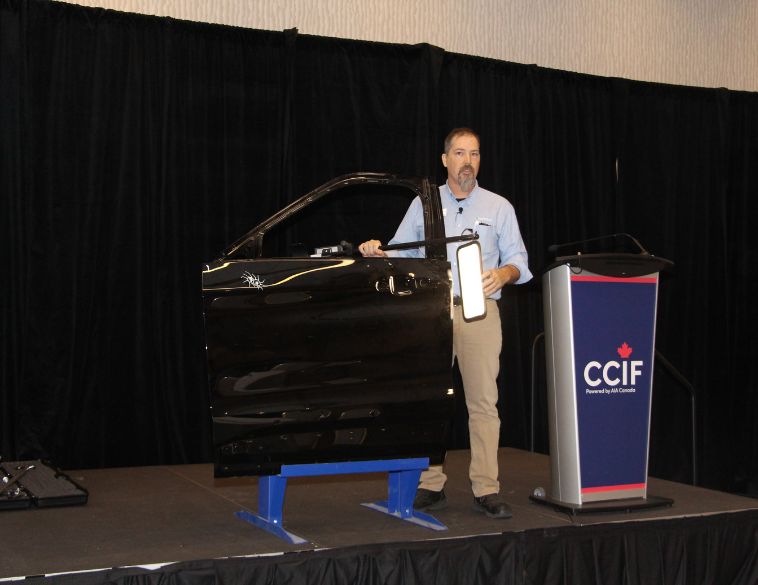
CCIF Calgary had two breakout sessions in 2025. One of them, was a hands-on session with BETAG North America, where attendees were treated to on-site dent-repair demonstrations that can enhance efficiency, accuracy, quality and profitability at the collision centre level.
The other, hosted by Dekra North America, looked at Profit-Driven Performance and ways to align OEM Certification with safety practices and sustainability for long term success.
Balancing the bottom line
Following a networking lunch, the afternoon sessions kicked off with another panel discussion.
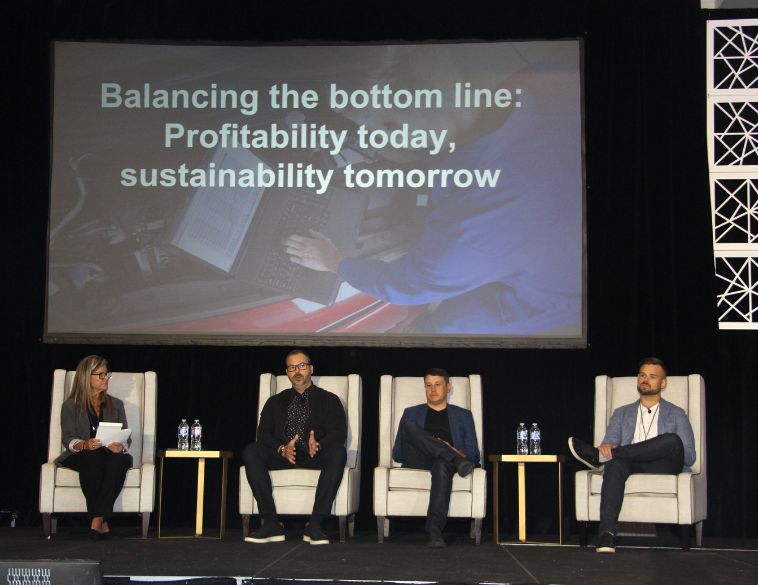
In Balancing the Bottom Line: Profitability Today, Sustainability Tomorrow, Moderator Kari Barton, Affiliate Services Director for Certified Collision Group, put forward a series of questions on this subject to the assembled panelists. The group consisted of Bennett Douglas, co-owner of CSN Harolds; Brad Green, Director, Operations and Performance Management for CARSTAR Raydar Collision Group and Senad Mujcin from Hak’s Autobody.
The panel discussed the need to be resilient in today’s industry, where economic and market conditions are constantly changing, while focusing on long-term growth. Brad Green noted that it was important for shops to maintain what he called “a certain level of discomfort,” which is essential to keep moving forward and growing. “If everything feels safe and easy, you’re probably not investing in equipment, tooling and training and you’re not growing.”
The final session of the day came from Dave Luehr, from Elite Body Shop Solutions. Luehr, who is a big advocate for quality customer service, talked about the need to thrive during challenging times and how taking an out-of-the-box approach when it comes to your business, allows you to stand apart from the herd, boost referrals and attain new heights in customer satisfaction and long-term loyalty. And often, he said, it boils down to simple things, that can increase productivity by as much as 20%, without having to invest in hiring more staff or raise overhead costs. He noted that in one case, a collision centre in Northern California, presents each finished vehicle as a gift to the customer, complete with a bow and the team on hand to congratulate the owner. A simple gesture but one that’s proved highlight effective and enables the business to stand head and shoulders above the competition.


JOBS
 |  DORVAL DORVAL Full time Full time |
| ST-HUBERT Full time |
 | MONTRÉAL Permanent |
 | SASKATOON Full time |
| MONTRÉAL-NORD Permanent |