
A Logical Approach
Autosphere » Mechanical »
Mark Lemay, President, Auto Aide Technical Services. Credit: Mark Lemay
Trick Honda CR-V no start leads to specific steps
Here’s an interesting case that goes to show that how you approach a problem is as important as your knowledge of systems and components.
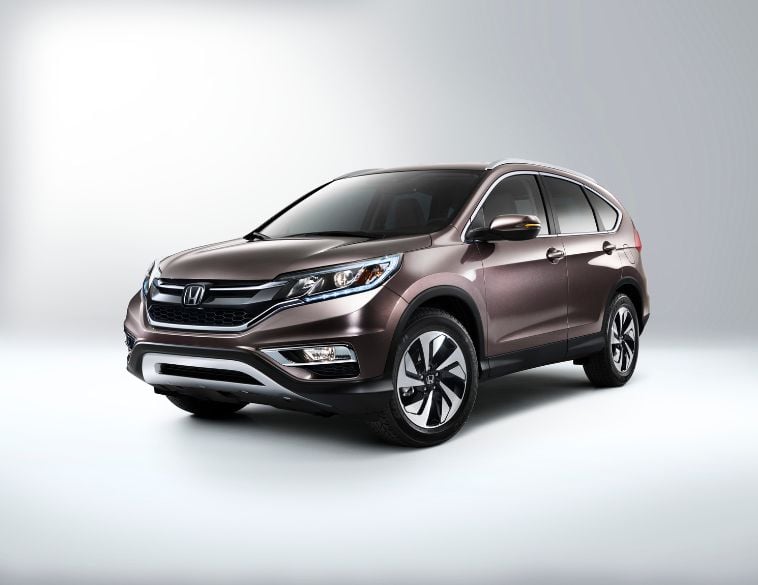
First a little background, the vehicle in question for this particular case was a 2015 Honda CRV with a 2.5-litre four-cylinder engine. The customer complained of an intermittent no start issue. The CR-V has a Push Button start system and the problem was somewhat unusual.
Sitting issue
When we tried to start the vehicle after it had been sitting for 2-3 hours the engine would crank but not fire up. Trying to start it repeatedly would eventually enable the engine to start. We were also able to get the CR-V to start by putting the vehicle in ignition on mode and waiting about five minutes. Once started it would continue to start until the next time it sat for a while.
This had been an ongoing problem for about a year and during that time this CR-V had been to both an independent garage and Honda dealership without a resolution. The aftermarket shop put a Body Control Module on the vehicle and the dealership stated that they were unable to locate the problem.
The vehicle owner is one of my wife’s friends and I recommended a shop that I deal with regularly. They looked at the vehicle but could not locate the source of the problem and called me. They performed a code scan, checked the battery and a few other basic checks but were unable to locate the problem. When I got a chance to look at the vehicle it did indeed crank and not start and the problem was easily duplicatable provided the CR-V sat again for a couple of hours.
Why would it not start?
My question was that in asking why the vehicle would not start, nobody was able to give me a good reason. This shop it was sent to is highly capable and does outstanding work, but they were unable to answer a basic question about this no start. I was not looking for what was wrong with the vehicle only the reason why it would not start. Let me explain what I mean.
When approaching a no start the problem, the issue must be straightforward. Either there is some type of security problem, or you are back to the basics. I always start with a code scan; this establishes two things. First, that the PCM is communicating and therefore functional and second, that there are no security problems with the vehicle. Once you get past this point there is no longer a use for the scan tool which can be removed from the vehicle. Now the problem becomes very basic, it must be a spark issue, an injector issue or a fuel pressure issue. Engine mechanics was not an issue as this wasn’t an intermittent problem.
Coil not firing
To test this theory, a scope was hooked up in the following manner. Channel 1 was hooked to the crank sensor, channel 2 on the camshaft sensor, channel 3 was a current probe on injector #1 and channel 4 was a current probe on coil #1.
The engine was cranked over, and it was clear from the scope reading that the coil was not firing. So now we knew that the reason it wasn’t starting was because it didn’t have any spark. The reason now was, to find out why it didn’t have any spark. The power and ground to the coil were tested and we found that the coil had no power. We then consulted a wiring diagram and were able to trace the coil power circuit back to a bad relay in the under-hood fuse box. A new relay was installed and vehicle returned to normal operation.
Critical thinking counts
In this particular case we used a logical approach to see what was missing and from there were able to trace the problem to the root cause. This example proved that critical thinking skills are every bit as important as technical knowledge when it comes to solving problems.
Bio: Mark Lemay is President of Auto Aide Technical Services. You can reach him at: [email protected]
Tags : Honda


JOBS
 |  DORVAL DORVAL Full time Full time |
| ST-HUBERT Full time |
 | MONTRÉAL Permanent |
 | SASKATOON Full time |
| MONTRÉAL-NORD Permanent |