
A New Supply Chain Reality
Autosphere » Tires »
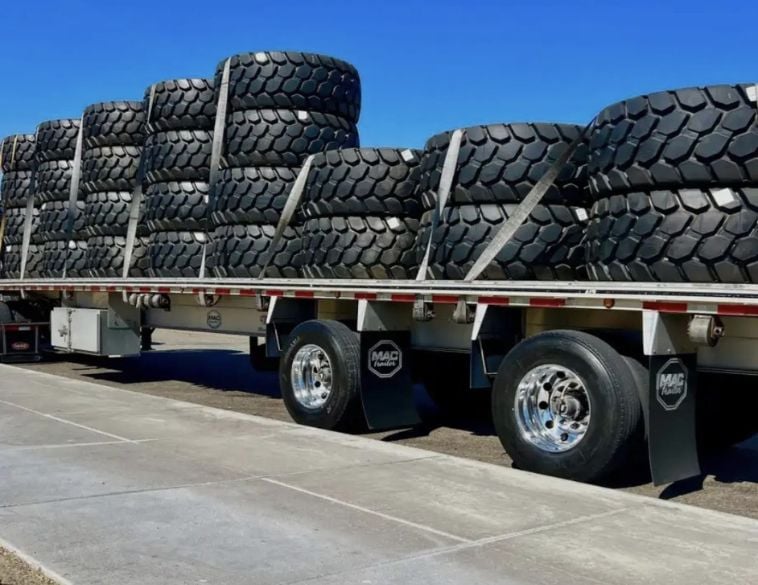
Volatility and disruptions continue to impact tire supply and distribution. Credit: MAC Trailers
Pandemic-era shortages may be over, but geopolitical conflicts, volatile freight costs and shifting trade policies are creating a new generation of challenges for the tire industry.
Just a few years ago, the tire industry was grappling with factory shutdowns, container shortages and clogged ports as the COVID-19 pandemic exposed vulnerabilities throughout the global supply chain. While those unprecedented disruptions have largely subsided, a new set of challenges is testing manufacturers, distributors and dealers once again.
This time, the threat is not widespread production shutdowns, but geopolitical instability, volatile energy prices, shifting trade policies and unpredictable freight costs. Industry executives say the supply chain is far more resilient than it was during the pandemic, but they also caution that the operating environment has become increasingly difficult to predict.
“Plan ahead, but don’t panic.”
– James McIntyre, SVP Sales Canada and Product Development NA, Sailun Tire Americas
A less predictable supply chain
Despite mounting global uncertainty, manufacturers agree that the tire industry is in a much stronger position than it was during the pandemic.
“The concern today is really the volatility of it all,” says James McIntyre, Senior Vice-President of Sales Canada and Product Development North America for Sailun Tire Americas. “Between geopolitical conflicts, changing trade policies and swings in freight and raw material pricing, things can change very quickly.”
That sentiment is echoed across the industry. Pirelli says years of disruption have fundamentally changed how tire manufacturers manage their global operations. Investments in forecasting, supply chain visibility, contingency planning and supplier collaboration have significantly improved the industry’s ability to respond to unexpected events.
Pirelli has also expanded its “local for local” manufacturing strategy, increasing production capacity closer to the markets it serves to reduce dependence on long, complex supply chains.
David Pulla, President of Dynamic Tire agrees that today’s challenges are more manageable than those experienced during COVID-19, largely because companies are far better prepared.
“We’ve invested significantly in supply chain planning, logistics and risk management,” he says. “Unlike the pandemic, factories remain operational and product availability is generally stable.”
The challenge, he notes, is that today’s disruption is being driven by geopolitical conflict rather than public health restrictions, creating an environment where uncertainty has become the industry’s biggest obstacle.
The Middle East’s growing influence
One of the biggest concerns today is the impact of ongoing tensions in the Middle East. The region remains home to some of the world’s most important shipping lanes and energy infrastructure. Even when military conflicts remain geographically isolated, they can have global consequences through higher oil prices, increased shipping costs and longer transit times.
Manufacturers are already adjusting. Sailun’s McIntyre says companies are reviewing alternative shipping routes, increasing monitoring of raw material inventories and building greater flexibility into production and delivery schedules.
Dynamic Tire is taking similar steps. “We’re proactively rerouting shipments where necessary, building additional lead time into our planning and working closely with our supplier partners to minimize disruption,” says Pulla.
Overall, companies are facing longer lead times, increased freight costs and less predictable shipping schedules. Pirelli says maintaining flexibility throughout its logistics network is a core operating strategy, allowing the company to minimize customer impacts despite global transportation disruptions.
Raw materials under pressure
Although tire availability remains relatively stable, manufacturers are closely monitoring the cost of key raw materials. Virtually every executive interviewed identified petroleum-related products as the greatest area of concern.
Oil prices influence far more than transportation costs. Synthetic rubber, carbon black, processing oils and many of the specialty chemicals used in tire manufacturing are tied to oil and natural gas, McIntyre explains.
“When oil prices increase, it doesn’t just impact transportation,” he adds. “It also raises the cost of many of the raw materials that go into building a tire, along with the energy required to manufacture and ship the finished product.”
Dynamic Tire’s Pulla identifies crude oil and fuel as the industry’s largest risks because they affect virtually every stage of the supply chain. Natural rubber and steel also remain important variables, although executives generally agree their availability is currently stable.
McIntyre points out that production disruptions don’t necessarily require widespread shortages. “Sometimes one key component can delay an entire manufacturing schedule,” he says.
Higher retail costs
Although manufacturers often absorb cost increases in the short term, prolonged disruptions inevitably work their way through the supply chain. Higher freight rates, insurance costs, tariffs, currency fluctuations and rising energy prices all contribute to increased manufacturing costs.
Pulla says companies attempt to shield customers whenever possible, but sustained increases eventually influence wholesale and retail pricing.
McIntyre describes it as a gradual process that begins with higher oil, freight and insurance costs before affecting raw materials, manufacturing, importers, distributors, dealers and, ultimately, consumers.
For Canadian businesses, Pulla adds, the weaker Canadian dollar has added another layer of complexity, increasing the cost of imported products and further pressuring margins.
Plan, don’t panic
If there is one consistent message emerging from manufacturers, it is that disciplined inventory management has become one of the industry’s greatest competitive advantages.
Rather than reacting to every geopolitical headline, suppliers recommend thoughtful planning based on local demand and close communication throughout the supply chain.
Pirelli encourages dealers to focus on carrying the right product mix while maintaining regular dialogue with manufacturing and distribution partners.
Dynamic Tire advises customers to remain disciplined but avoid waiting until the last minute to purchase core products. “Focus on your core, fast-moving products and plan further ahead than usual,” says Pulla.
McIntyre offers similar advice, particularly for winter tires, high-volume fitments and products coming from a single factory or region.
“Plan ahead, but don’t panic,” he says. “Secure the products you know you can’t afford to be without earlier than you normally would, but don’t overbuy everything.”
Agility: your competitive advantage
While few industry observers expect a return to the severe shortages experienced during the pandemic, the consensus is that uncertainty has become the new normal.
Rather than a single catastrophic event, today’s supply chain is being shaped by multiple overlapping risks, from geopolitical conflicts and shifting trade policies to energy markets and shipping volatility.
For manufacturers, success increasingly depends on diversified sourcing, flexible production and robust logistics planning.
For dealers, the winning strategy is likely to be built on strong supplier relationships, disciplined inventory management and earlier purchasing decisions.
The global tire supply chain may be considerably stronger than it was four years ago, but in today’s volatile environment, resilience alone is no longer enough. The businesses best positioned for the year ahead will be those that can anticipate change, adapt quickly and make informed decisions before disruption reaches their customers.
Tags : Dynamic tire


JOBS
 |  SAINT-EUSTACHE SAINT-EUSTACHE Full time Full time |
 | MONTRÉAL Full time |
 | BROSSARD Full time |
 | SOREL-TRACY Permanent |
 | JOLIETTE Full time |