
Terry Maxwell: An Extraordinary Automotive Journey
Autosphere » Collision »
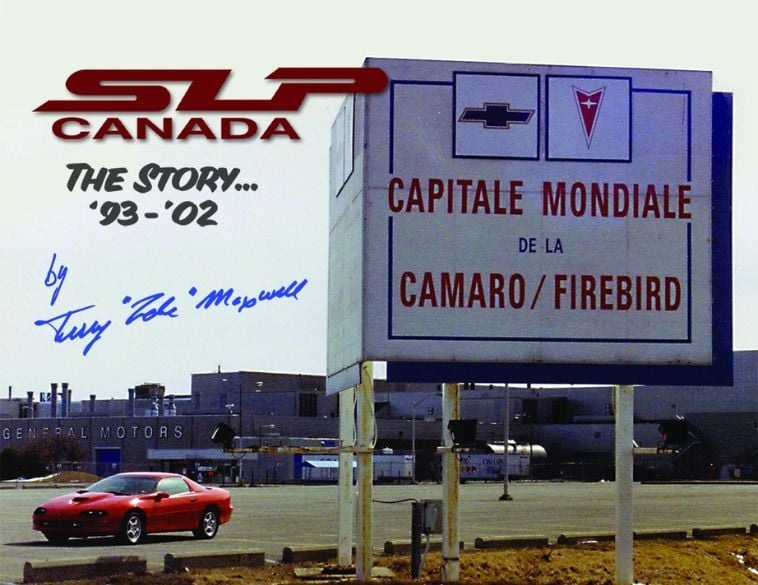
Terry’s 1996 Camaro SS outside the GM F-car plant in Ste Therese. Credit: Terry Maxwell
Part 2: SLP and the Canadian Connection
Welcome back to the second of our two part interview series with Terry Maxwell. In part one we talked about his journey fixing cars, getting involved in drag racing, becoming a go-to-mechanic for known racers on the NHRA circuit and more. Here we talk about his time working with SLP and creating some of the most memorable Chevrolet Camaros and Pontiac Firebirds ever built.
Autosphere: We touched upon this briefly in part one, but can you provide more details on how you met Ed Hamburger and your business dealings with him?
Terry Maxwell: I first met Ed in 1970. It was when Sanair International Drag Strip opened, which was near Granby, Que. There was a NHRA World Championship Points Race and all the top guys came for that one. Ed Hamburger was there, campaigning his 340-powered Plymouth Duster. I listened to how the top guys built and tuned their combinations to go extremely fast at the track. By then, I had become a known race mechanic on NHRA Pro Stock and Super Stock cars and ended up traveling all over the U.S. and Canada. I became friends with Ed and worked on his car. That’s how it started.
AS: How did this relationship evolve, and how did it lead to the establishment of SLP Canada?
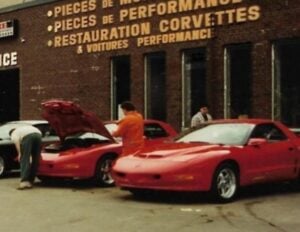
TM: By 1974, when I’d opened Zekes, Ed had set up a company offering go-faster parts. He had some really trick stuff for 340 and later 360 Mopar engines, including low-tension piston rings and adjustable cam gears. You could set the cam timing without having to take the cover off! Later he developed his own proprietary aluminum oil pans that were used extensively in all different types of motorsport. At Zeke’s Performance, we’d buy parts from him and we stayed in touch over the years. In the mid-1980s, he founded a company called Street Legal Performance (SLP) that was designed to help owners of the next generation of muscle cars improve performance while remaining street legal and emissions compliant. These included intake manifolds and exhaust systems for the third generation Chevy Camaro and Pontiac Firebird. In 1991, Ed realized the ambition of having his own car, the SLP Firebird Firehawk. Based on the 1991-92 Pontiac Firebird Formula, it had a modified Corvette 5.7-litre V8, ZF-six-speed manual transmission and whole bunch of other goodies. It was a serious performer, 0-60 mph (0-96 km/h) in 4.6 seconds, but was also very expensive, costing $25,000 on top of the base Formula and only 25 were built. Seeking more appeal, Ed put together a more affordable package designed for the new fourth-generation Firebird. Additionally, with General Motors announcing they were moving F-car production from Van Nuys California, to Ste. Therese in Quebec, he called me up and asked if our shop would be interested in assembling a few special edition Firebird Firehawks. Naturally, I said yes!
AS: Can you tell us about the first run of Firebirds you did for the 1993 model year?
TM: We had agreed to start production in the spring of 1993, so we spent that winter getting ready. We made a plan to use the indoor loading dock at Zeke’s to bring the cars in. Our 11,400 square foot shop had ample space, plus we were close to a first class paint facility, had easy access to major highways and the Ste. Therese F-car assembly plant was less than 45 km away. Production was organized by April and the first cars started arriving from Ste. Therese in May. We had to do a few things, such as modifying the factory hood hinge brackets so they were fully adjustable when installing the replacement Ram Air SLP hoods that came up from New Jersey. We had to ensure that colour matching was first rate and that we ended up with a show car quality finish. We worked with Roland Guerette’s paint shop and his guys did an amazing job! The ROH wheels came all the way from Australia and we had to buff them to achieve a factory OEM look and installed the SLP exhaust tips. In total we ended up assembling 201 Firehawks for the 1993 model year, all of which sold out right away!
AS: If applicable, can you run us through the process of converting a Firebird into a Firehawk, including the parts used, testing, and marketing/selling?
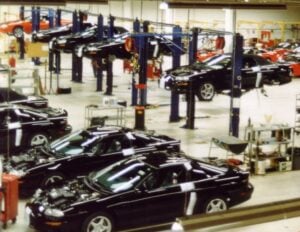
TM: There were several parts to it. SLP, in Troy, Michigan, handled all the market marketing, while we assembled and finished the cars, so they were ready to be sent to dealers across Canada and the U.S. Installing the hoods was tricky because you had to make sure you got everything just right. Everything had to go through an approval process with GM to ensure all the parts we used met their specifications. For us, it was relatively straightforward to build 200 cars all the same, since previously, each car was built or modified to an individual customer’s requirements. We had regular visits from GM staff to ensure everything was on track and quality standards were met. It all worked out really well. After that first year order, we were asked to assemble 500 1994 model year Firehawks!
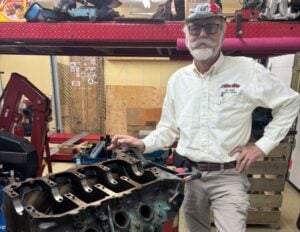
AS: Tell us a little about that, the need to expand your facility and how production of the Firehawk evolved?
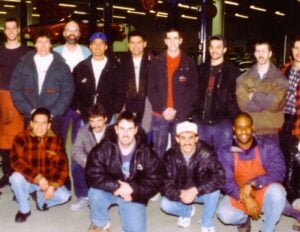
TM: Production of the ’94 model year cars began in August 1993 and Pontiac gave SLP more colours and options for these cars. Because of the increase in production and new colours and options, we needed more space, and luckily we were able to get a sublet on the building next store, cleaned it out and modified it for SLP Firehawk production. This was an exclusive SLP facility with an on-site paint booth and it was a lot of work to make sure we could match all the new colours to the best possible standard. As sales volumes increased, GM required us to crash-test the parts we installed so they would meet safety requirements and this meant building specific crash test cars for this work. The results were very successful. For the 1995 model year, production expanded again, and we leased a new 48,000 square foot facility to handle assembly. We ended up building 684 Firehawks, plus 72 Comp Trans Ams, the latter all finished in silver. By that stage our SLP Canada team had evolved into 35 efficient, detail-oriented and highly contentious professionals.
“It was incredible, it was one of those once in a lifetime experiences, something that had never happened before and likely won’t happen again. It was 10 very exciting, high pressure years that were both challenging and also very rewarding.”
– Terry Maxwell
AS. How did the Firehawk resonate, not only with enthusiasts, but the public, given its exposure in media and magazines at the time?
TM: For a niche car, it was very popular. Ed was great at marketing, and we had a ready audience because he’d done all the legwork with his 1992 Firehawk. It also got a lot of newspaper, TV and magazine press and for the 1995 new car introduction at Pocono Raceway in Pennsylvania, I brought my own personal Firehawk for journalists to test because a SLP press car wasn’t available. That Firehawk performed flawlessly and the car was praised by many for its looks, handling, comfort and sound!
AS: How did the Camaro SS program come about?
TM: Ed had always wanted to a Camaro SS, and Chevrolet announced that the Camaro SS would return for the 1996 model year, and SLP would assemble the cars. The problem was that Camaro’s sales and production volumes were much higher than the Firebird, plus with Pontiac also requesting SLP to build several thousand Firebird Formula and Trans Am WS6 models for ’96, a new, dedicated assembly plant was needed. Luckily, we found a suitable building in July 1995 in LaSalle with a massive, fenced-in yard. We all hustled like mad to get everything ready, including installing equipment, new offices and plumbing, electrical, wiring etc., plus painting the facility, all the while our guys were still building cars! We also needed to expand our workforce to cope with the higher volumes. We hired and trained anyone that was willing and put them to work, including ex-cons and addicts. Those who got through the trial period tended to stay on, and we were able to help them by sending them to rehab or whatever they needed, it ended up working out really well for both them and for us at SLP Canada. By the end of 1996 we were a true small-volume manufacturing facility with 250 employees and 7 divisions.
AS: Tell us a little about the 30th Anniversary Camaro SS LT4. That was a really special project wasn’t it?
TM: Yes, for 1997, Chevy was celebrating the 30th anniversary of the Camaro. SLP wanted to do something special and came up with a plan to use the LT4 engine found in some 1996 Corvettes and give the team at Zeke’s an opportunity to create something very special that was still fully safety and emissions compliant. We redesigned Zeke’s to accommodate the inspection, blue printing, reassembly and dyno testing of these engines. We did 135 engines and they were all completed over a six-month period. Twenty-nine of them went into Firehawks, and the rest were installed in the anniversary Camaros. The 330 hp 1997 Camaro SS LT4 30th Anniversary edition was a very special car and today is highly desirable, with only 106 made, six of which were originally made for Canadian customers.
AS: Looking back, what did SLP Canada represent for you on both a professional and personal level?
TM: It was incredible, it was one of those once in a lifetime experiences, something that had never happened before and likely won’t happen again. It was 10 very exciting, high pressure years that were both challenging and also very rewarding. It was incredible to see the SLP Canada team evolve from a group of rookies putting together some cars in the back of a speed shop, to a fully-fledged manufacturing team, putting together highly desirable performance cars at the highest level of quality standards and professionalism. Not one aftermarket company has come close to these production volumes and quality level and to this day, I am so proud of each and every person that was part of that incredible team.
AS: Can you tell us a little about your experiences post SLP, and perhaps a summary of your incredible automotive career?
TM: When GM wrapped up F-car production at Ste. Therese in 2002 that was the end of the Camaro SS and Firebird Firehawk. I busied myself with other projects, including the Allard J2X Mk III, and later the Corbin Motors Sparrow and Merlin electric cars, but when Corbin declared bankruptcy, SLP Canada was forced to do the same, since we could not cover our overhead. The high performance world had also changed. I ended up selling Zeke’s to my employees and taking on various jobs, including working at Bert Transmission as production manager, as well as serving as General Manager at John Nichols Enterprises, which built race cars, including award winning rally-spec Mitsubishis. I retired in 2015 to take care of my wife, Claudette who was showing signs of dementia and ultimately passed away. I needed to keep myself busy, so I started a company called Precision Tuning and Engines in my three car garage at home. I also started buying cars again, first a beautiful 1964 Mercury Marauder two-door hardtop that I used as a carb dynomometer test car, and then a gorgeous, original 1965 Chevy Malibu SS convertible. Today I’m still busy, playing around with cars, building engines and banging on the drums. You could say my life has come full circle!
Tags : SLP Canada

JOBS
 |  POINTE-CLAIRE POINTE-CLAIRE Full time Full time |
 | MONTRÉAL Full time |
 | DORVAL Full time |
 | POINTE-CLAIRE Other |
 | ETOBICOKE Full time |