
When AI Dulls Drivers’ Reflexes
Autosphere » Mechanical »
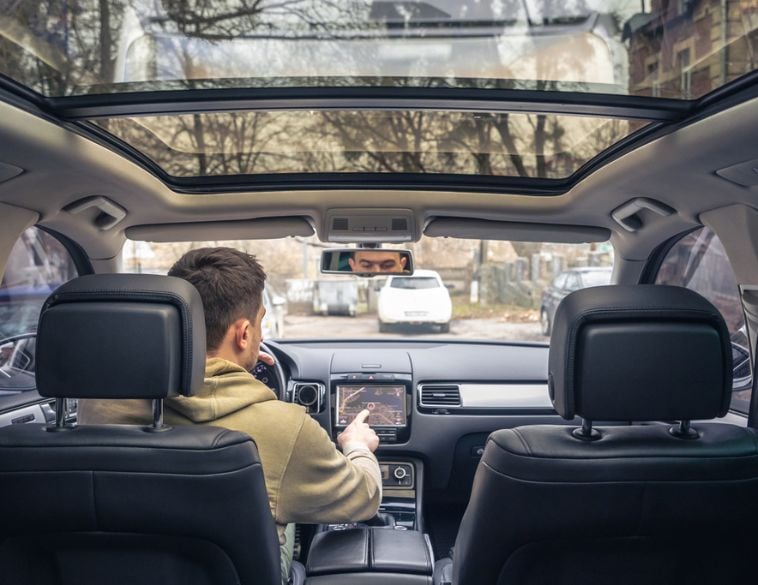
Regardless of the advanced driver assistance systems in place, driver alertness remains essential. Credit: Envato
We need to listen closely—and sometimes skeptically—to customers who point fingers at an “AI failure” to justify a fender bender.
While the debate over legal liability remains open, it highlights a brutal mechanical truth: the decline of human alertness due to advanced driver assistance systems.
Throughout my diagnostic work, one observation consistently stands out: the more advanced the technology becomes, the more drivers tend to let their guard down, ironically increasing the risk of an accident. This is the paradox of our era.
To be sure, proactive alerts, blind-spot monitoring, radar, and emergency braking systems are indispensable safety nets. But we must beware of the illusion: a system that “corrects” is not a system that “replaces.” For a driver who has already mentally checked out, even the most sophisticated electronics will ultimately be nothing more than a helpless spectator to a crash. In automotive repair, just like on the open road, a tool is only as good as the hand guiding it.
The Driver Remains in Command
Make no mistake: despite the overwhelming abundance of sensors, the driver remains—both legally and technically—the only true guardian of the vehicle. For Level 1 and Level 2 systems, the lane-keep assist and adaptive cruise control features we see every day in the shop, keeping hands on the wheel isn’t optional; it is an absolute requirement for safety.
The game changes once we shift to the vanguard of Level 3 autonomy. In these setups, provided specific conditions are met, the law finally permits delegating driving tasks. However, this currently applies only to certain regions, and it is in these precise instances where liability shifts toward the manufacturer or designer.
But we must remember the reality check: until we are riding around in fully 100% autonomous rolling lounges (Levels 4 and 5), human judgment still outperforms any algorithm. AI is merely a tool, no different than a brake caliper or a camshaft—it assists, it does not replace.
When facing a client who blames their vehicle following an accident, our role shifts. We must be both factual and empathetic: listen to the customer’s anxiety, certainly, but steer the conversation back to hard technical realities. Analyzing a vehicle’s data to determine if the AI was active is a highly complex science—one that leaves very little room for doubt.
Tags : AI driving

JOBS
 |  DORVAL DORVAL Full time Full time |
| ST-HUBERT Full time |
 | MONTRÉAL Permanent |
 | SASKATOON Full time |
| MONTRÉAL-NORD Permanent |