
Automotive Lighting Automation
Autosphere » Mechanical » Editorial »
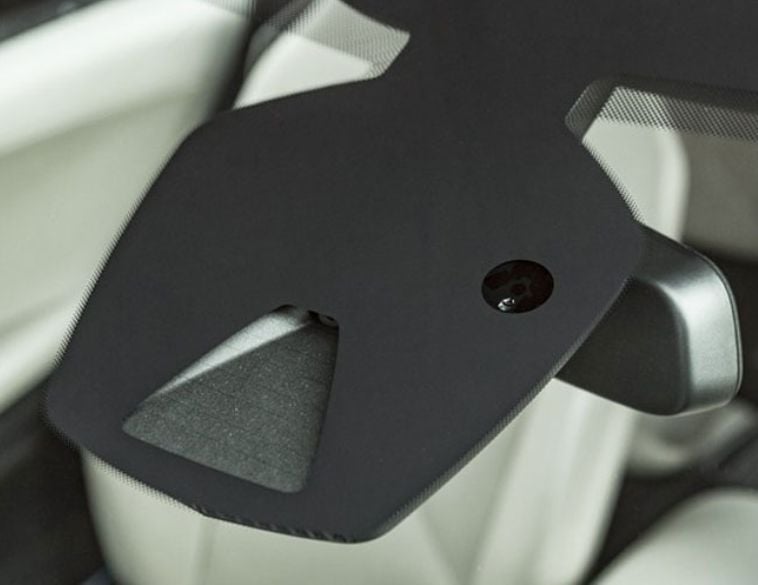
Light sensors ensure optimal brightness for both the dashboard and the headlights. (Credit : Mark Potvin)
Light adjustment sensors are now a necessity for several reasons.
They play an important role depending on weather conditions and dusk, which vary with the seasons. For several years now, automakers have been equipping their vehicles with technologies designed to make driving safer and more comfortable. Among them, light adjustment sensors, often called light sensors or automatic headlight sensors, have taken on an increasingly central role. Their purpose is simple: adapt the vehicle’s lighting to outside conditions without any driver input.
The operating principle is based on a small sensor, usually located behind the windshield near the rear-view mirror or in the centre of the dashboard. This photosensitive electronic eye measures ambient brightness in real time. As soon as the light level drops, for example at dusk, in a tunnel or during a sudden storm, the system automatically switches on the low beams.
Conversely, when there is sufficient light, the headlights turn off to avoid unnecessary energy consumption. Their role, however, goes beyond this basic function.
Safety first
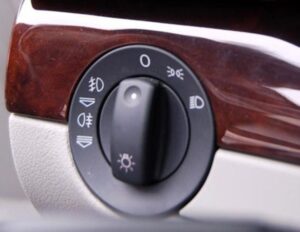
On the latest models, they integrate with other systems such as rain sensors or vehicle detection cameras. This enables more advanced “smart” features: automatic switching between high and low beams when another car is approaching, adaptive light management based on speed or terrain, and even directional lighting for improved visibility through corners. The benefits are undeniable.
From a safety standpoint, these sensors reduce the risk of driver oversight: no need to think about turning on headlights when entering a tunnel or driving through heavy rain. They also ensure better visibility while avoiding glare for other road users.
Seamless comfort
In terms of comfort, drivers can focus more on the road since they’re freed from a repetitive task. Optimizing lighting not only prolongs bulb life but also reduces consumption. Older vehicles with manual controls, however, still carry the risk of battery drain.
Of course, this technology is not perfect. Some drivers report late activation at dusk, or on the contrary, over-sensitivity when driving through shaded areas. But these issues are being corrected as systems evolve, particularly with the integration of onboard artificial intelligence and wireless technology. These will allow automatic updates to continuously improve vehicle performance.
Zero maintenance, but…
For consumers, the good news is that no maintenance is required, since these systems almost never fail. For repair shops, however, cameras and systems such as lane departure or blind-spot detection still generate their share of technical issues that professionals must address.
Ultimately, light adjustment sensors perfectly illustrate today’s automotive trend: making driving more intuitive and safer thanks to invisible assistance. A small, discreet sensor that makes a big difference in daily driving and helps keep us safe on the road.


JOBS
 |  PINCOURT PINCOURT  Full time Full time |
 | DRUMMONDVILLE Full time |
 | SAINTE-AGATHE-DES MONTS Full time |
 | SAINT-JÉRÔME Full time |
 | BOISBRIAND Full time |