
Used Vehicle Market: Canadian Used Car Inflation Ends
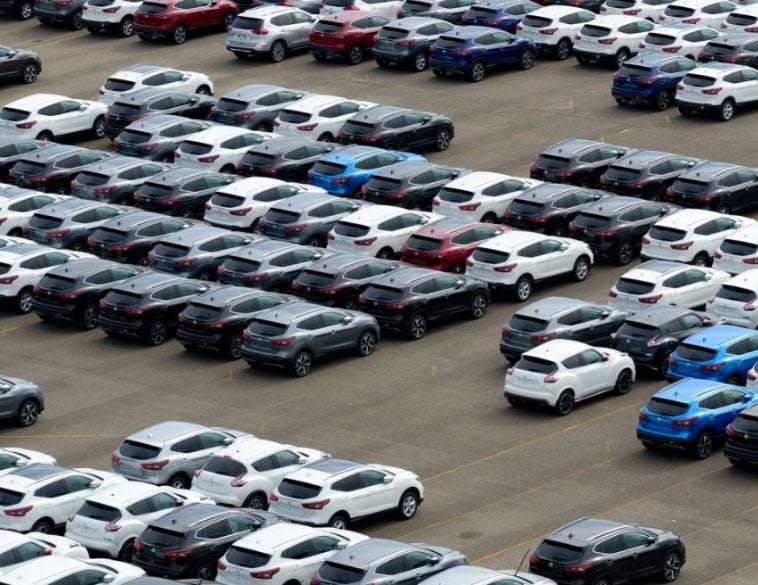
The shift marks a major correction from twelve months ago, when annual used car price growth was pacing at 7.9%.
According to the latest national market report from online automotive platform Clutch, used-vehicle price inflation in Canada has come to an end. In July 2026, the national average selling price for a used vehicle dropped to $33,786, down 1.0% from June—the largest single-month decline since last November—and virtually flat (+0.3%) compared to July 2025.
The shift marks a major correction from twelve months ago, when annual used car price growth was pacing at 7.9%.
Like-for-Like Pricing: 1.8% Drop on Comparable Vehicles
While the national average price appears steady year-over-year, underlying transaction data reveals a buyer-friendly shift. Consumers are acquiring newer and larger vehicles for their money: a mix shift toward newer, larger, and electrified models added roughly $698 to the top-line average. However, on a same-model, same-age basis, comparable used vehicles cost 1.8% less than a year ago (an average discount of $595). This price easing is concentrated in one-to-six-year-old vehicles (-2.3% to -2.5%), whereas older entry-level models (7+ years) remain price-stable.
Provincial Trends: Price Easing Goes Nationwide
In contrast to prior months where Eastern and Western provincial markets diverged, July saw price drops across 9 out of 10 provinces:
-
British Columbia: The sole market to record a monthly increase (+0.8%), taking top spot as Canada’s most expensive used vehicle market at $37,393, closely followed by Alberta ($37,260).
-
Ontario: Slid back below the $34,000 threshold to $33,958 (-0.6% month-over-month).
-
Quebec: Remains the most affordable major provincial market with an average selling price of $29,831.
-
Prince Edward Island: Recorded the lowest average price in Canada at $27,325.
Used Electric Vehicles Find Price Floor
Following two years of sharp valuation declines, the used EV segment stabilized in July:
-
Flat Like-for-Like Pricing: On a same-model, same-age basis, used EV prices held flat (0.0%) year-over-year, outperforming comparable internal combustion vehicles which fell 2.0%.
-
Tesla Reversal: Used Teslas rebounded above zero on an age-adjusted basis, costing slightly more than last July, while non-Tesla EV brands flattened out.
-
Record Days to Turn: Used EVs sold in a median of 23 days in July—the fastest turn rate of any fuel type recorded (compared to 30 days for hybrids and 31 days for gas vehicles).
-
Affordability Entry Points: The Tesla Model 3 averaged $29,165 (~$4,600 below the overall used vehicle average), while the Chevrolet Bolt EUV anchored the entry-level EV segment at $25,011.
Hybrids Expand Sub-$40,000 Share
Hybrids represented 6.5% of total used vehicle sales in July. For the second consecutive month, over half (50.6%) of used hybrids sold under $40,000 (up from 47% a year ago). The volume-leading Toyota RAV4 Hybrid averaged $38,745 (-3.8% year-over-year).
SUVs Reach Record Market Share
Buyer migration toward crossovers and SUVs continues to reshape the Canadian market:
-
SUVs: Reached a record 64.2% share of used vehicle sales in July (averaging $32,689).
-
Cars (Sedans & Hatchbacks): Dropped to an all-time low share of 21.2% (averaging $24,425).
-
Trucks: Average selling price dropped 2.5% to $46,951. However, like-for-like pricing dropped only 1.4%, indicating truck buyers actively chose lower trim levels and less expensive configurations rather than truck models losing intrinsic value.
Outlook for Retailers and Fleets
With Canadian Black Book wholesale values declining consistently through July (-0.3% to -0.4% weekly), retail pricing is expected to see continued downward pressure into late summer. For auto dealers and fleet management teams across Canada, inventory strategies will require disciplined acquisition in the sub-$20,000 price band while leveraging high turn rates on used EVs and SUVs under $35,000.
Tags : Used Vehicle Market


JOBS
 |  RIVE-SUD DE MONTRÉAL RIVE-SUD DE MONTRÉAL Full time Full time |
 | MONTRÉAL Full time |
| MONTRÉAL Permanent |
 | BROSSARD Full time |
 | SAINT-BRUNO Full time |